When planning a kitchen remodel, homeowners spend countless hours selecting cabinets, countertops, and appliances. However, one of the most critical elements of a successful kitchen design is often overlooked until the end: lighting.
Proper lighting does more than just illuminate a room. It enhances the beauty of your materials, improves safety during food preparation, and sets the mood for entertaining. A truly well-designed kitchen requires a layered approach to lighting, utilizing different types of fixtures to serve specific purposes.
In this complete homeowner's guide, we will explore the three essential layers of kitchen lighting—recessed lights, pendant lights, and under-cabinet lighting—and explain how to combine them to create a space that is both highly functional and visually stunning.
Recessed Lighting: The Foundation of Kitchen Illumination
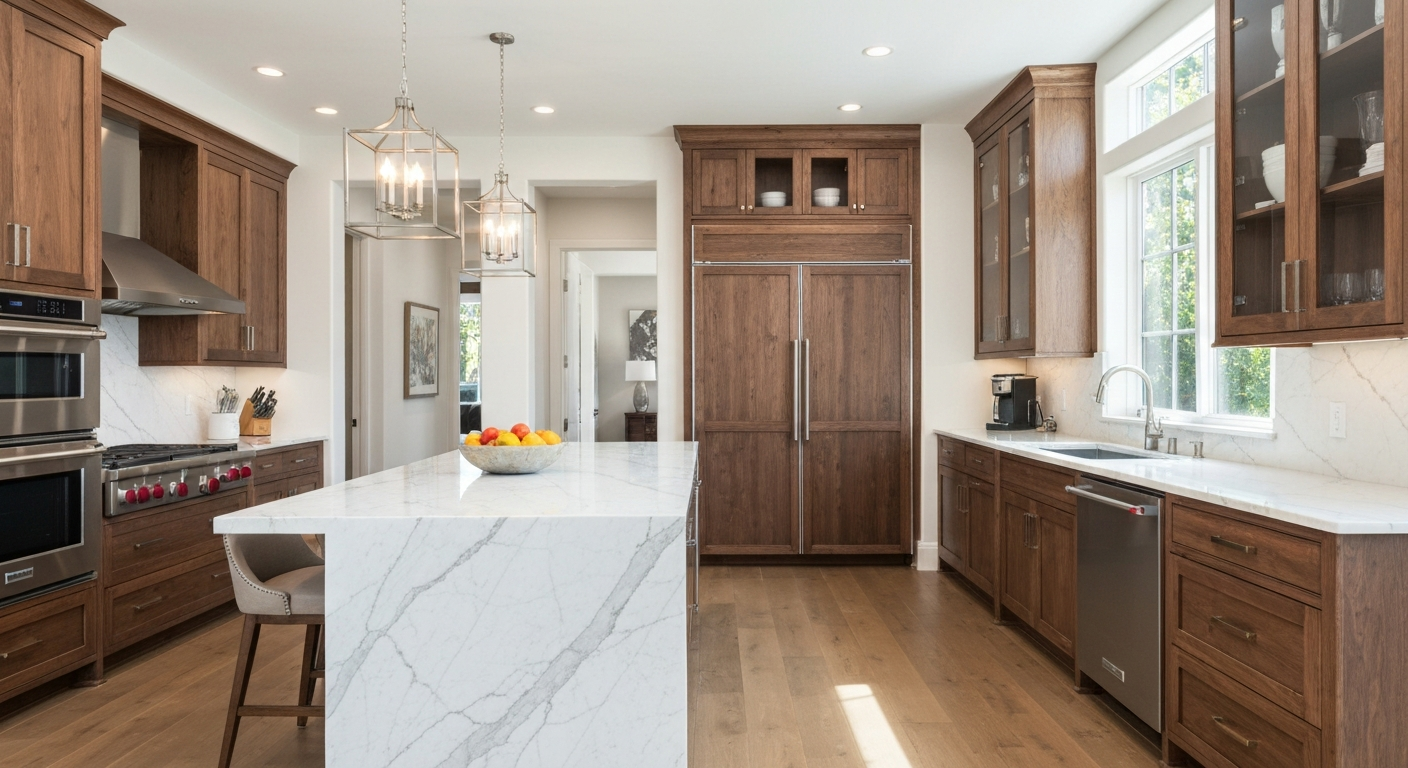
Recessed lighting, often referred to as "can lights" or "downlights," provides the foundational ambient light for your kitchen. Installed directly into the ceiling, these fixtures are designed to blend seamlessly into the architecture while casting a wide, even pool of light across the entire room.
Because they do not protrude into the space, recessed lights are ideal for maintaining a clean, open feel, particularly in kitchens with standard or lower ceiling heights. They ensure that there are no dark corners and provide the general illumination needed for moving safely through the space.
Advantages of Recessed Lighting
- Clean Aesthetic: They provide necessary light without visual clutter.
- Even Coverage: When spaced correctly, they eliminate dark spots across the entire kitchen.
- Flexibility: Modern LED recessed lights offer adjustable color temperatures and dimming capabilities.
While recessed lighting is essential for overall brightness, relying on it entirely can create harsh shadows on countertops when you stand at the prep area. This is why recessed lighting must be paired with task and accent lighting to create a complete design.
Pendant Lighting: The Architectural Focal Point
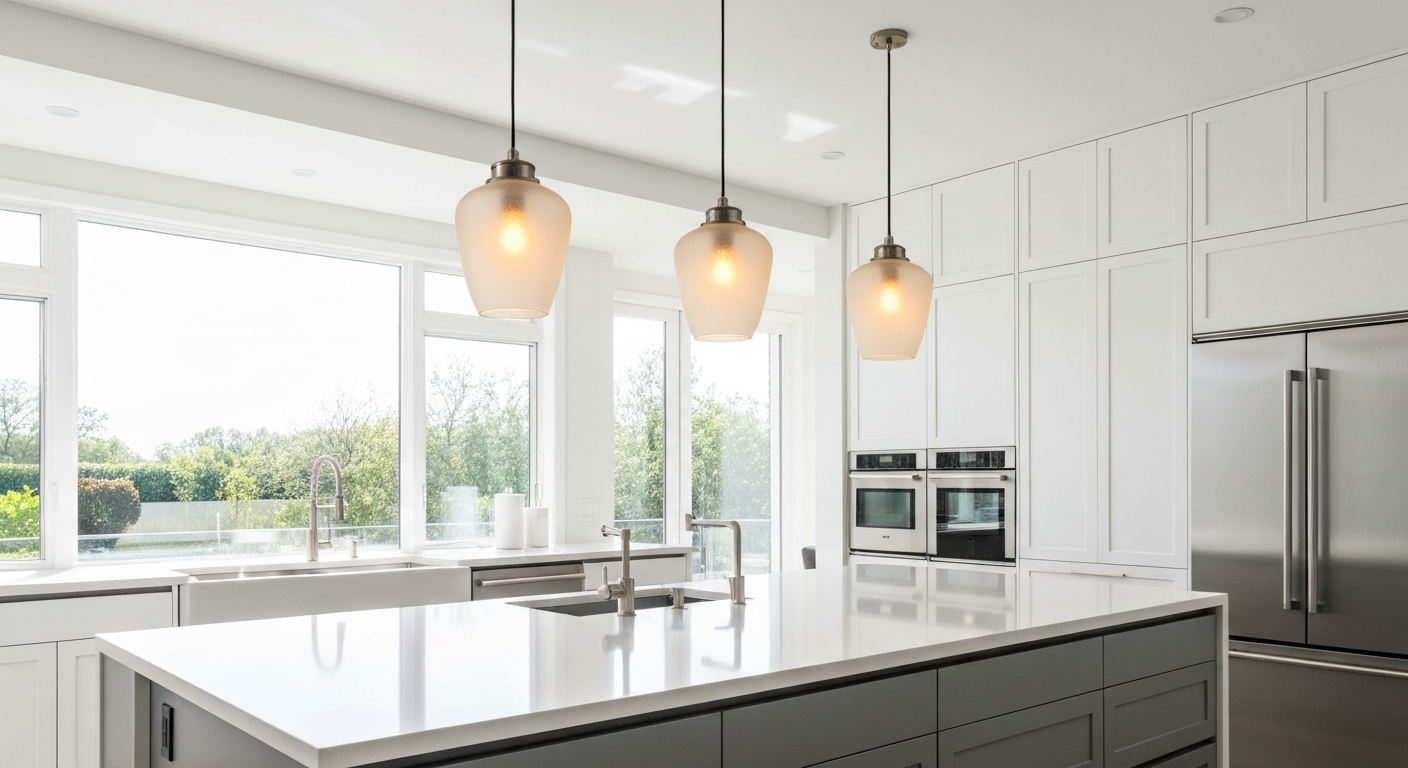
If recessed lighting provides the foundation of a kitchen's illumination, pendant lights are often its centerpiece.
Pendant lighting has become one of the defining features of modern kitchen design. More than just a source of light, pendants serve as architectural focal points that introduce personality, texture, scale, and visual balance.
Whether installed above a kitchen island, peninsula, breakfast bar, or dining nook, pendant fixtures help anchor the space while providing targeted task lighting exactly where it's needed.
Today's homeowners can choose from thousands of pendant designs, including:
Because pendant lights are available in nearly every material, finish, and shape imaginable, they have become one of the easiest ways to personalize a kitchen remodel.
Advantages of Pendant Lighting
Creates a Visual Focal Point
Kitchen islands naturally become gathering spaces. Installing pendant lights above the island helps define this area while adding depth and sophistication to the overall design. Many luxury kitchens intentionally treat pendant fixtures as decorative "jewelry" for the room.
Excellent Task Lighting
Pendant lights direct illumination downward onto kitchen islands, breakfast bars, prep stations, and seating areas. This focused lighting makes food preparation, homework, dining, and entertaining more comfortable.
Adds Personality
Unlike recessed lighting, which intentionally disappears into the ceiling, pendant fixtures become part of the kitchen's design language. Homeowners can use pendant lighting to introduce brass finishes, matte black accents, natural wood, glass, woven textures, and sculptural forms. These details often tie together cabinetry, hardware, faucets, and appliances.
Potential Drawbacks
Pendant lighting requires thoughtful planning. Improper sizing or placement can negatively affect both aesthetics and functionality.
Common issues include:
- Hanging too low
- Hanging too high
- Oversized fixtures overwhelming the island
- Fixtures spaced too closely together
- Poor alignment with cabinetry
These mistakes can make an otherwise beautiful kitchen feel visually unbalanced.
Recommended Pendant Height
Although every kitchen is different, a common guideline is to position pendant lights approximately 30 to 36 inches above the countertop surface. This height generally provides effective task lighting while maintaining clear sightlines across the room. For higher ceilings, pendants may be raised slightly to preserve proportion.
How Many Pendant Lights Should You Install?
The answer depends primarily on island size.
- Small Islands (4–5 feet): One larger pendant or two compact pendants often creates balanced illumination.
- Medium Islands (6–7 feet): Two medium-sized pendants generally provide even lighting and visual symmetry.
- Large Islands (8 feet or longer): Three pendants are commonly used to distribute light evenly while reinforcing the island's proportions.
Rather than focusing solely on fixture count, designers evaluate island length, fixture diameter, ceiling height, overall kitchen scale, and desired visual impact.
Under-Cabinet Lighting: The Unsung Hero
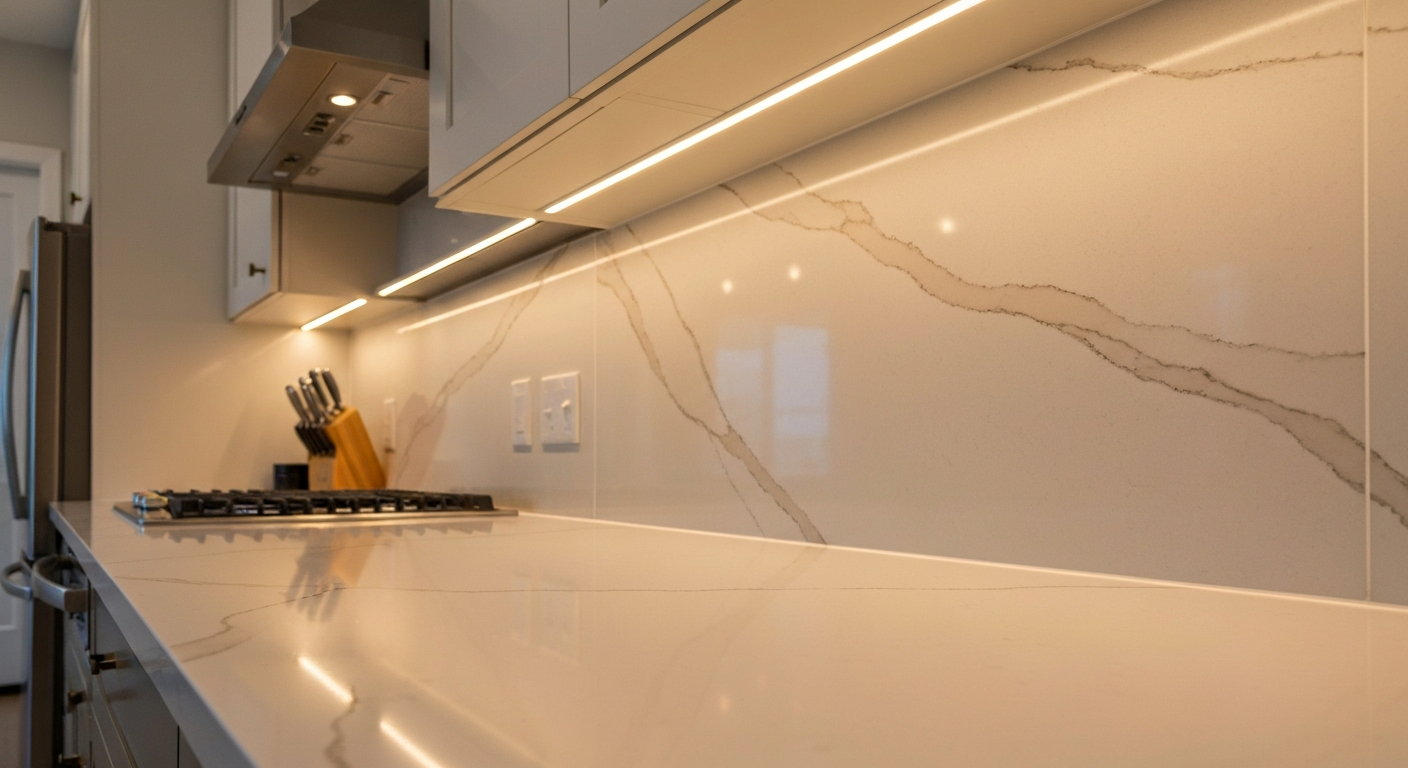
Among all kitchen lighting upgrades, under-cabinet lighting often delivers one of the greatest improvements in everyday functionality.
Although it is frequently overlooked during planning, many homeowners consider it one of their favorite features after completing a remodel. Under-cabinet lighting places illumination directly onto the countertop rather than from overhead.
This significantly reduces shadows created by ceiling lighting, making food preparation safer, easier, and more comfortable.
Why Under-Cabinet Lighting Matters
Imagine preparing meals beneath recessed ceiling lights. As you stand at the countertop, your body blocks much of the overhead light, creating shadows exactly where you need illumination. Under-cabinet lighting solves this problem by directing light onto the workspace itself.
This creates better visibility, improved safety, reduced eye strain, and an enhanced countertop appearance.
Advantages of Under-Cabinet Lighting
Superior Task Lighting
Food preparation becomes easier because the countertop is illuminated directly. This is particularly beneficial when chopping vegetables, reading recipes, measuring ingredients, preparing meals, and cleaning countertops.
Highlights Premium Finishes
Under-cabinet lighting dramatically enhances quartz countertops, granite countertops, marble surfaces, decorative backsplashes, and tile textures. Even subtle materials appear richer when illuminated from above.
Creates Evening Ambiance
Many homeowners use under-cabinet lighting independently from ceiling lights. During evenings, these fixtures create a warm, inviting atmosphere without the brightness of full overhead illumination. This softer lighting is ideal for entertaining guests, family dinners, early mornings, and late-night snacks.
Energy Efficient
Most modern systems use LED technology. LED fixtures consume very little electricity while providing a long lifespan, minimal heat, excellent brightness, and low maintenance. Many LED systems last tens of thousands of hours before requiring replacement.
Types of Under-Cabinet Lighting
- LED Strip Lights: The most popular option today. Advantages include continuous light output, slim profile, easy concealment, excellent efficiency, and modern appearance.
- LED Light Bars: Rigid fixtures offering consistent brightness. Often selected for larger kitchens, premium installations, and uniform illumination.
- Puck Lights: Small circular fixtures producing concentrated pools of light. Suitable for decorative applications but may create brighter spots rather than continuous lighting.
Best Color Temperature
For most kitchens, professionals recommend 2700K–3000K. This produces a warm white appearance that complements cabinetry while remaining bright enough for cooking.
Homes with very modern interiors sometimes prefer 3500K for a cleaner appearance. Cooler temperatures above 4000K may appear overly clinical in residential kitchens and should be selected carefully.
Toe-Kick Lighting: The Luxury Touch
Toe-kick lighting is one of the fastest-growing trends in luxury kitchen remodeling. Installed beneath base cabinets, these hidden LED strips create a soft glow that appears to make cabinetry float above the floor.
Although primarily decorative, toe-kick lighting also improves nighttime visibility without requiring bright overhead lights.
Benefits of Toe-Kick Lighting
- Luxury Appearance: The subtle glow enhances architectural depth and creates a custom, high-end look often seen in designer kitchens.
- Improved Nighttime Navigation: Many homeowners activate toe-kick lighting during evening hours. It provides sufficient illumination for walking through the kitchen without disturbing others with full ceiling lighting.
- Enhances Open-Concept Spaces: Toe-kick lighting adds depth and dimension, especially in kitchens connected to living and dining areas. It contributes to a layered lighting design that feels sophisticated rather than overly bright.
Layering These Lighting Types Together
The most successful kitchen lighting plans rarely rely on just one fixture type. Instead, they combine multiple layers to support different activities throughout the day.
A typical luxury kitchen lighting plan might include:
- Ambient Lighting: LED recessed ceiling lights
- Task Lighting: Under-cabinet LED strips and pendant lights above the island
- Accent Lighting: Toe-kick lighting, glass cabinet lighting, and floating shelf lighting
This layered approach creates a kitchen that is practical for cooking, comfortable for gathering, and visually striking.
Expert Insight
Professional lighting designers rarely ask, "Which lighting fixture is best?" Instead, they ask: "What job should each light perform?" Every fixture should have a clear purpose. Recessed lighting provides overall illumination. Pendant lighting defines gathering spaces and supports island tasks. Under-cabinet lighting improves visibility where meals are prepared. Accent lighting adds warmth and architectural interest. When these layers work together, the kitchen feels brighter, more functional, and more inviting without relying on excessive brightness from a single source.
Color Temperature Explained (Kelvin)
One of the most important—but often misunderstood—aspects of kitchen lighting is color temperature.
Many homeowners focus on choosing attractive light fixtures but overlook the color of the light those fixtures produce. Yet color temperature has a profound effect on how your kitchen looks, how comfortable it feels, and even how accurately you perceive the colors of your cabinetry, countertops, flooring, and food.
Color temperature is measured in Kelvin (K). Lower Kelvin values create a warmer, softer appearance, while higher values produce a cooler, brighter light. Understanding these differences is essential for creating a kitchen that feels both functional and inviting.
2700K – Warm White
Appearance: Warm, soft, slightly yellow, cozy, and relaxing. 2700K is commonly used in living rooms, bedrooms, and dining rooms. While it creates a welcoming atmosphere, many homeowners find it slightly too warm for primary kitchen task lighting. However, it works beautifully for accent lighting, toe-kick lighting, decorative cabinet lighting, and evening ambiance.
3000K – Soft White
3000K is widely considered the sweet spot for modern kitchens. It provides a warm appearance, excellent visibility, a comfortable atmosphere, and natural-looking finishes. Most professional kitchen designers recommend 3000K because it complements white cabinetry, wood cabinetry, quartz countertops, marble, granite, and stainless steel appliances without appearing overly yellow or clinical.
3500K – Neutral White
3500K offers a slightly brighter, cleaner appearance while maintaining residential warmth. This temperature is often selected for contemporary homes, modern kitchens, and transitional interiors. It provides excellent task lighting while remaining comfortable for everyday living.
4000K – Cool White
4000K produces a crisp, bright appearance. Although common in offices, medical facilities, and commercial buildings, some homeowners also prefer it for ultra-modern kitchens. However, in residential settings it can sometimes make natural materials appear less warm and inviting.
5000K and Above
Daylight color temperatures are rarely recommended for residential kitchens. While extremely bright, they may create a sterile atmosphere that feels more like a commercial workspace than a family gathering place.
Expert Recommendation
For most kitchen remodels, professional designers recommend 3000K throughout the primary kitchen lighting plan. This provides an excellent balance between functionality and comfort while accurately showcasing cabinetry, countertops, flooring, and decorative finishes. Accent lighting may use slightly warmer temperatures to create depth and ambiance during evening hours.
Understanding Brightness (Lumens)
Another common misconception is that wattage determines brightness. In modern LED lighting, brightness is measured in lumens, while wattage simply indicates energy consumption. Higher lumens produce more light—not necessarily higher energy costs.
General Kitchen Brightness
Most kitchens benefit from layered lighting that provides sufficient illumination without excessive glare. Rather than relying on one extremely bright ceiling fixture, designers distribute light across multiple fixtures. Typical targets include ambient lighting for overall room illumination, focused task lighting over work surfaces, and accent lighting for atmosphere. This layered approach creates balanced illumination while reducing shadows.
Why Layered Brightness Matters
Imagine preparing food beneath one large ceiling light. Your body naturally blocks the light, creating shadows exactly where you're working. By combining recessed lights with under-cabinet lighting and pendants, brightness is distributed from multiple angles. Benefits include better visibility, reduced eye strain, safer food preparation, and improved visual comfort.
Kitchen Lighting Calculator
Estimate lumens and fixture counts for your kitchen remodel
Total Area
144
sq ft
Total Lumens
5,040
lm needed
Color Temp
3000K
recommended
Fixture Spacing
4.5
ft apart
Recessed Lights
8
LED cans (~700 lm each)
Pendant Lights
1
over island (5 ft)
Under-Cabinet Bars
12
LED strip sections
Estimates are based on industry-standard lighting guidelines for residential kitchens. Actual requirements may vary based on cabinet color, natural light, wall surfaces, and personal preference. Consult with a Venguard Construction lighting designer for a custom plan.
Understanding CRI (Color Rendering Index)
While brightness and color temperature receive most of the attention, another specification significantly affects how your kitchen looks: Color Rendering Index (CRI). CRI measures how accurately a light source displays colors compared to natural daylight. The scale ranges from 0–100. Higher numbers indicate more accurate color reproduction.
Why CRI Matters
Poor-quality lighting can distort colors. Cabinets may appear dull. Quartz countertops may lose depth. Fresh produce may look less vibrant. Paint colors can appear completely different than expected. High-quality LED lighting helps preserve the true appearance of materials.
Recommended CRI
For kitchen remodeling projects, professionals generally recommend 90 CRI or higher. Benefits include better food appearance, more natural wood tones, accurate countertop colors, improved paint color representation, and a premium overall appearance. High CRI lighting is especially valuable in kitchens featuring white cabinetry, marble, quartz, luxury finishes, and designer paint colors.
Recessed Lighting Layout
Proper fixture placement is just as important as fixture selection. Poor spacing can create dark corners, uneven brightness, excessive glare, and distracting hot spots. Professional lighting plans distribute recessed fixtures strategically rather than placing them in a simple grid.
General Layout Principles
Instead of centering lights solely in the room, designers focus on illuminating countertops, walkways, sink areas, cooktops, and islands. The goal is to place light where people actually work.
Avoid Casting Shadows
One common mistake is positioning recessed lights directly behind the homeowner. When standing at the counter, the person's body blocks the light. Professional layouts move fixtures slightly forward so illumination falls directly onto work surfaces.
Kitchen Island Lighting Layout
Kitchen islands typically benefit from multiple lighting layers. Common combinations include pendant lights, recessed lights, under-cabinet lighting (for nearby counters), and toe-kick lighting. Rather than relying solely on pendants, recessed lighting surrounding the island provides balanced illumination throughout the space.
Open Concept Lighting
Modern homes increasingly feature kitchens connected to dining rooms, family rooms, and great rooms. Lighting should reinforce this continuity. Rather than abruptly changing fixture styles between rooms, designers coordinate finishes, color temperature, and brightness levels throughout the open-concept space. This creates visual harmony while allowing each area to maintain its own lighting function.
Smart Kitchen Lighting
Smart home technology has transformed residential lighting. Instead of simply turning lights on and off, homeowners can now automate entire lighting scenes. Popular smart lighting features include voice control, smartphone control, scheduling, motion sensors, occupancy detection, vacation mode, energy monitoring, and remote dimming. These systems improve both convenience and energy efficiency.
Benefits of Smart Lighting
- Customized Scenes: Many homeowners create lighting presets such as "Cooking" (all task lighting at full brightness), "Dining" (pendant lights softened, accent lighting activated), "Entertaining" (warm layered lighting), and "Night Mode" (only toe-kick and under-cabinet lighting on).
- Dimmers: One of the Best Investments: Few upgrades provide as much flexibility as installing dimmer switches. Rather than creating one fixed brightness level, dimmers allow homeowners to adapt the kitchen throughout the day.
- Energy Efficiency: Modern LED lighting dramatically reduces energy consumption compared with older incandescent or halogen fixtures, offering lower utility bills, reduced heat output, longer fixture lifespan, minimal maintenance, and improved sustainability.
Sample Lighting Plan for a Medium-Sized Kitchen
A balanced lighting design might include:
- Ambient Lighting: Six recessed LED ceiling lights
- Task Lighting: Two pendant lights above the island and continuous LED under-cabinet lighting
- Accent Lighting: Toe-kick lighting, glass cabinet lighting, and floating shelf lighting
- Controls: Independent dimmer switches, smart scheduling, and voice control integration
This layered approach gives homeowners complete control over brightness, mood, and functionality.
Kitchen Lighting Installation Costs
Lighting is one of the most impactful investments in a kitchen remodel, but costs vary depending on fixture selection, wiring requirements, ceiling access, and the overall scope of the renovation.
Rather than focusing solely on fixture prices, homeowners should evaluate the complete installation, including:
- Electrical wiring
- New switches and dimmers
- Smart lighting integration
- Ceiling modifications
- Drywall repair (if required)
- Trim installation
- Programming of smart systems
Professional installation ensures the lighting system is safe, code-compliant, and designed for long-term performance.
Factors That Influence Lighting Costs
Every kitchen is different. The following factors have the greatest impact on the overall lighting budget:
Kitchen Size
Larger kitchens typically require more recessed fixtures, additional circuits, more pendant lights, and longer LED strip runs.
Ceiling Height
Higher ceilings often require larger fixtures, longer pendant rods, different beam angles, and specialized installation equipment.
Existing Electrical System
Older homes may require additional wiring, new junction boxes, electrical panel upgrades, or circuit modifications. Planning these upgrades during a full kitchen remodel is generally more efficient than adding them later.
Smart Home Integration
Homeowners choosing smart lighting systems should also consider smart dimmers, Wi-Fi or Zigbee controllers, voice assistant compatibility, mobile app configuration, and scene programming. Although these upgrades increase the initial investment, they also improve convenience, flexibility, and energy efficiency.
Choosing the Right Light Fixtures
Lighting fixtures should complement—not compete with—the kitchen's overall design. When selecting fixtures, consider:
Scale
Oversized fixtures can overwhelm a compact kitchen, while undersized fixtures may appear insignificant over a large island. Maintaining proper proportion creates visual balance.
Finish
Coordinate lighting finishes with cabinet hardware, faucets, appliances, door handles, and window hardware. Popular finishes include Matte Black, Brushed Nickel, Satin Brass, Polished Chrome, and Oil-Rubbed Bronze. Repeating finishes throughout the kitchen creates a cohesive appearance.
Material
Pendant fixtures are available in many materials, including glass, metal, wood, fabric, concrete, and natural woven fibers. The material should complement the home's architectural style rather than follow short-lived trends.
Lighting Design Tips from Professional Remodelers
Experienced kitchen designers typically follow several best practices that consistently produce attractive, functional results.
- Layer Every Kitchen: Even small kitchens benefit from combining ambient, task, and accent lighting. Layering creates greater flexibility while improving both aesthetics and usability.
- Place Function Before Decoration: Beautiful pendant lights cannot compensate for poor task lighting. Ensure food preparation areas receive sufficient illumination before selecting decorative fixtures.
- Think Beyond Day One: Lighting should continue to perform well years after the remodel is complete. Choose durable LED fixtures from reputable manufacturers with readily available replacement components and strong warranties.
- Consider Future Flexibility: Installing additional switches or smart controls during remodeling allows homeowners to adapt the kitchen as technology evolves. Adding these features later is generally more expensive.
Kitchen Lighting Trends for 2026
Kitchen lighting continues to evolve alongside changes in architecture, technology, and homeowner preferences. Some of the strongest trends include:
- Layered Lighting as the Standard: Rather than relying on a single ceiling fixture, modern kitchens routinely combine recessed lighting, pendants, under-cabinet lighting, and accent lighting. Layered lighting has become the benchmark for premium kitchen design.
- Warm, Comfortable Light: Designers continue moving away from overly cool lighting. Color temperatures around 3000K remain the preferred choice for creating inviting kitchens that still provide excellent visibility.
- Integrated LED Technology: Slim, energy-efficient LED fixtures are replacing bulky traditional lighting, offering a longer lifespan, lower maintenance, reduced energy consumption, and a cleaner architectural appearance.
- Minimalist Fixture Designs: Simple geometric forms and clean lines continue to dominate contemporary kitchen lighting, complementing modern cabinetry without overwhelming the space.
- Smart Home Integration: Voice-controlled lighting, automated scenes, occupancy sensors, and mobile app control are increasingly expected in both new construction and high-end remodeling projects.
Common Kitchen Lighting Mistakes
Even high-end remodels can be compromised by poor lighting decisions. Avoid these common mistakes:
- Depending on One Ceiling Fixture: A single central light cannot evenly illuminate the entire kitchen, often resulting in shadows over work surfaces and inconsistent brightness.
- Ignoring Under-Cabinet Lighting: Skipping under-cabinet lighting is one of the most common remodeling regrets. Without it, homeowners frequently notice shadows while preparing meals.
- Choosing the Wrong Color Temperature: Lighting that is too cool can make a kitchen feel sterile, while lighting that is too warm may reduce visual clarity during food preparation. Selecting a consistent color temperature throughout the space creates a more harmonious appearance.
- Installing Decorative Fixtures Without Considering Scale: Pendant lights should match the proportions of the island and the overall room. Fixtures that are too large or too small can disrupt visual balance.
- Forgetting About Dimmers: Without dimmers, homeowners lose the ability to adjust lighting for cooking, dining, entertaining, or relaxing. Adding dimmers during the remodel is one of the most cost-effective upgrades available.
Frequently Asked Questions
What is the best lighting for a kitchen?
A layered lighting design that combines recessed lighting, pendant lights, and under-cabinet lighting provides the best balance of functionality, comfort, and visual appeal.
How many recessed lights should a kitchen have?
The ideal number depends on the kitchen's size, ceiling height, layout, and lighting goals. A professional lighting plan considers fixture spacing, work areas, and overall illumination rather than following a one-size-fits-all formula.
Are pendant lights necessary?
Not always, but they are highly recommended for kitchen islands and peninsulas because they provide focused task lighting while creating an attractive focal point.
Is under-cabinet lighting worth it?
Yes. Under-cabinet lighting improves visibility for food preparation, reduces countertop shadows, highlights premium finishes, and enhances the kitchen's ambiance.
What color temperature is best for kitchens?
For most residential kitchens, 3000K offers an excellent balance between warmth and functionality, making it the preferred choice for many professional designers.
Should kitchen lights be dimmable?
Yes. Dimmers allow homeowners to adjust brightness throughout the day, creating brighter conditions for cooking and softer lighting for dining or entertaining.
Final Thoughts
Lighting is often described as the finishing touch of a kitchen remodel, but in reality, it influences every aspect of how the space looks and functions.
The right lighting plan highlights cabinetry, enhances countertop materials, improves visibility, creates ambiance, and makes everyday activities more enjoyable.
Rather than selecting fixtures independently, successful kitchen lighting is designed as a complete system where ambient, task, and accent lighting work together to support the way you live.
Whether your style is modern, transitional, coastal, or traditional, thoughtful lighting design can dramatically elevate the appearance, comfort, and long-term value of your kitchen.
Why Homeowners Trust Venguard Construction
At Venguard Construction, we believe exceptional kitchens begin with thoughtful planning—not guesswork.
Our design-build process considers lighting alongside cabinetry, flooring, countertops, appliances, and layout to ensure every element works together as one cohesive design.
From selecting the ideal recessed lighting layout to choosing pendant fixtures, integrating under-cabinet LEDs, and planning smart lighting controls, our experienced team helps homeowners make informed decisions that balance beauty, functionality, and long-term value.
Whether you're updating a single kitchen or planning a complete home renovation in Orange County or Los Angeles County, we're committed to delivering craftsmanship, clear communication, and personalized service from concept to completion.
Ready to Illuminate Your Dream Kitchen?
A well-lit kitchen changes everything. Our design-build experts can help you create a custom lighting plan that perfectly balances beauty and functionality for your home.