Best Kitchen Cabinet Materials: MDF vs. Plywood vs. Solid Wood
Kitchen cabinets do far more than store dishes and cookware—they define the appearance, functionality, and longevity of your entire kitchen. In fact, cabinetry is often the largest single investment in a kitchen remodel, accounting for 30–40% of the total remodeling budget in many projects.
Because cabinets occupy so much visual and functional space, choosing the right material is one of the most important decisions you'll make during your renovation.
Many homeowners begin their search by asking:
- Should I choose plywood or MDF?
- Are solid wood cabinets worth the extra cost?
- Which cabinet material lasts the longest?
- What do professional contractors recommend?
- Which material performs best in busy family kitchens?
- Will cabinet materials affect my home's resale value?
The answers aren't always straightforward. Each material has strengths and limitations, and the best choice depends on your lifestyle, design preferences, maintenance expectations, budget, and long-term goals.
For example, a growing family that cooks every day may prioritize durability and moisture resistance, while a homeowner focused on achieving a smooth painted finish might prefer a different material altogether. Understanding these trade-offs before placing an order can help you make a more confident investment and avoid costly regrets later.
In this comprehensive guide, we'll explain how modern kitchen cabinets are built, compare the most common cabinet materials, and provide practical recommendations based on real-world remodeling scenarios. Whether you're planning a contemporary kitchen in Irvine, updating a coastal home in Newport Beach, or renovating a family home in Anaheim, this guide will help you choose cabinet materials that balance beauty, performance, and value.
Table of Contents
- Why Cabinet Materials Matter
- Understanding Cabinet Construction
- Cabinet Boxes vs. Cabinet Doors
- MDF Explained
- Plywood Explained
- Solid Wood Explained
- Particleboard Explained
- Material Comparison
- Durability & Moisture Resistance
- Cost Comparison & Maintenance
- Luxury Kitchen Recommendations
- Frequently Asked Questions
Why Cabinet Material Matters
When homeowners shop for cabinets, they often focus first on style and color. While those elements certainly influence the appearance of the finished kitchen, the material beneath the finish plays an even more important role in long-term performance.
The material used in your cabinets affects:
- Structural strength
- Resistance to moisture and humidity
- Weight
- Ability to hold screws and hardware
- Durability over decades of use
- Maintenance requirements
- Refinishing potential
- Overall project cost
Two cabinets may look nearly identical from the outside yet perform very differently over time because of the materials used in their construction.
For this reason, experienced design-build contractors evaluate cabinet quality based on more than appearance. They consider how each material will perform in the specific environment where it will be installed.
Understanding How Kitchen Cabinets Are Built
One of the biggest misconceptions among homeowners is that a cabinet is made from a single material throughout.
In reality, most cabinets are a combination of different materials, each chosen for its specific purpose.
A typical cabinet consists of several components:
- Cabinet box (the structural frame)
- Cabinet doors
- Drawer fronts
- Drawer boxes
- Shelving
- Face frame (for framed cabinets)
- Hinges & Drawer slides
- Hardware
Each of these parts may be constructed from different materials to optimize strength, appearance, and cost.
For example:
- Cabinet boxes are often made from plywood or engineered wood.
- Painted cabinet doors may be constructed from MDF to achieve an exceptionally smooth finish.
- Drawer boxes are frequently built from plywood or solid hardwood because they must withstand repeated opening, closing, and weight.
- Decorative moldings may be crafted from solid wood for easier shaping and finishing.
Understanding these distinctions helps homeowners compare cabinet proposals more accurately rather than assuming all cabinets are built the same way.
Cabinet Boxes vs. Cabinet Doors
Before comparing materials, it's important to distinguish between cabinet boxes and cabinet doors because the best material isn't necessarily the same for both.
Cabinet Boxes
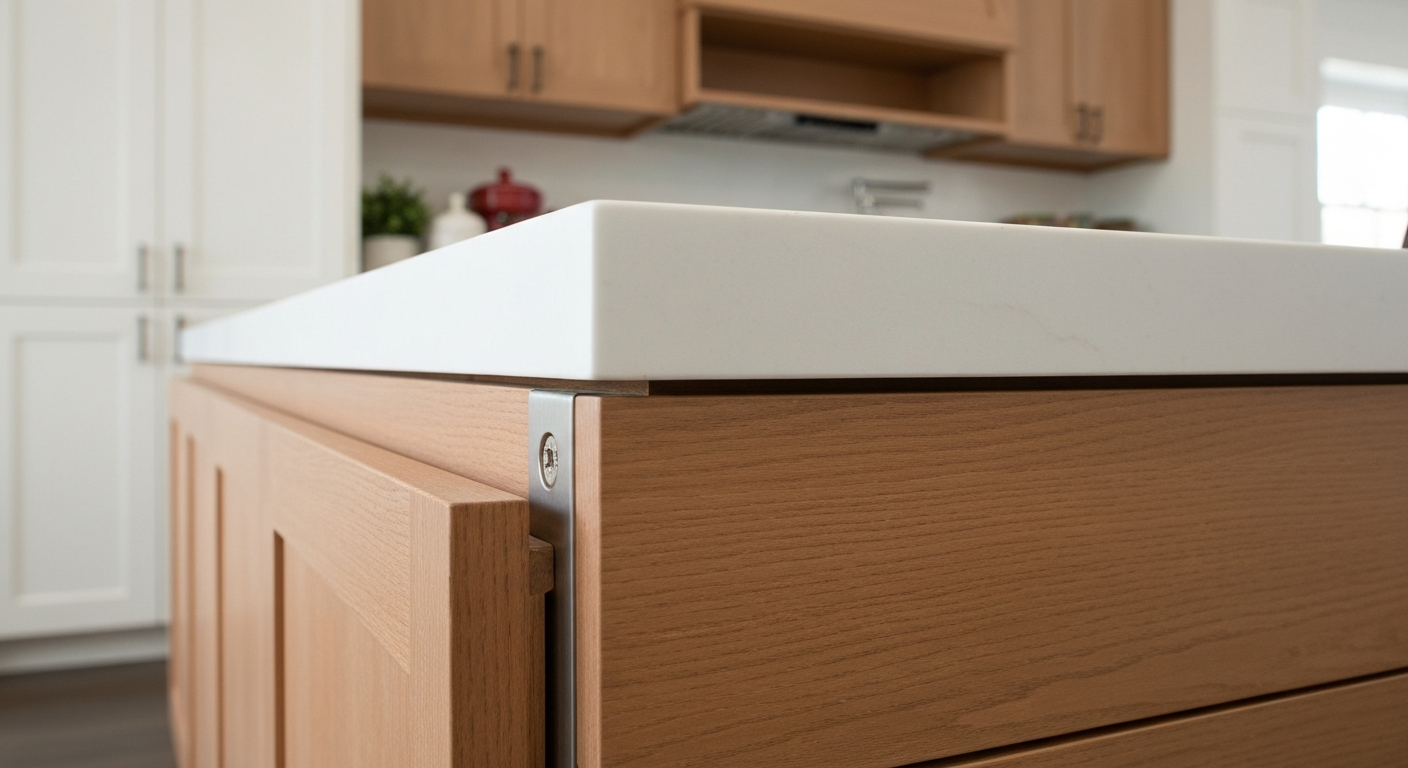
The cabinet box forms the structural foundation of the cabinet. It supports the countertop, stores heavy cookware, and anchors shelves, drawers, and hardware.
Because of these demands, cabinet boxes should prioritize:
- Structural integrity
- Screw-holding strength
- Moisture resistance
- Dimensional stability
Materials commonly used include:
- Plywood
- Furniture-grade particleboard
- MDF (less common for cabinet boxes)
- Engineered wood panels
Cabinet Doors
Cabinet doors serve a different purpose. They are the most visible component of the cabinetry and influence the overall design aesthetic.
Important characteristics include:
- Smooth finish
- Resistance to warping
- Paint quality
- Wood grain appearance
- Decorative detailing
Cabinet doors may be manufactured from:
- Solid wood
- MDF
- Plywood panels
- Veneered engineered wood
- Thermofoil over MDF
Because cabinet boxes and cabinet doors perform different functions, it's common—and often advantageous—to use different materials for each.
MDF (Medium-Density Fiberboard)
One of the most misunderstood cabinet materials is Medium-Density Fiberboard, commonly known as MDF.
Some homeowners immediately dismiss MDF because they assume it is "cheap" or inferior to wood. Others believe it is always the best choice for painted cabinetry.
The truth lies somewhere in between.
MDF is an engineered wood product manufactured by combining fine wood fibers with resin under high pressure and heat. The resulting panel is dense, uniform, and free of the knots, grain patterns, and natural imperfections found in solid wood.
This consistency gives MDF several unique advantages in cabinet construction.
Advantages of MDF
Exceptionally Smooth Surface
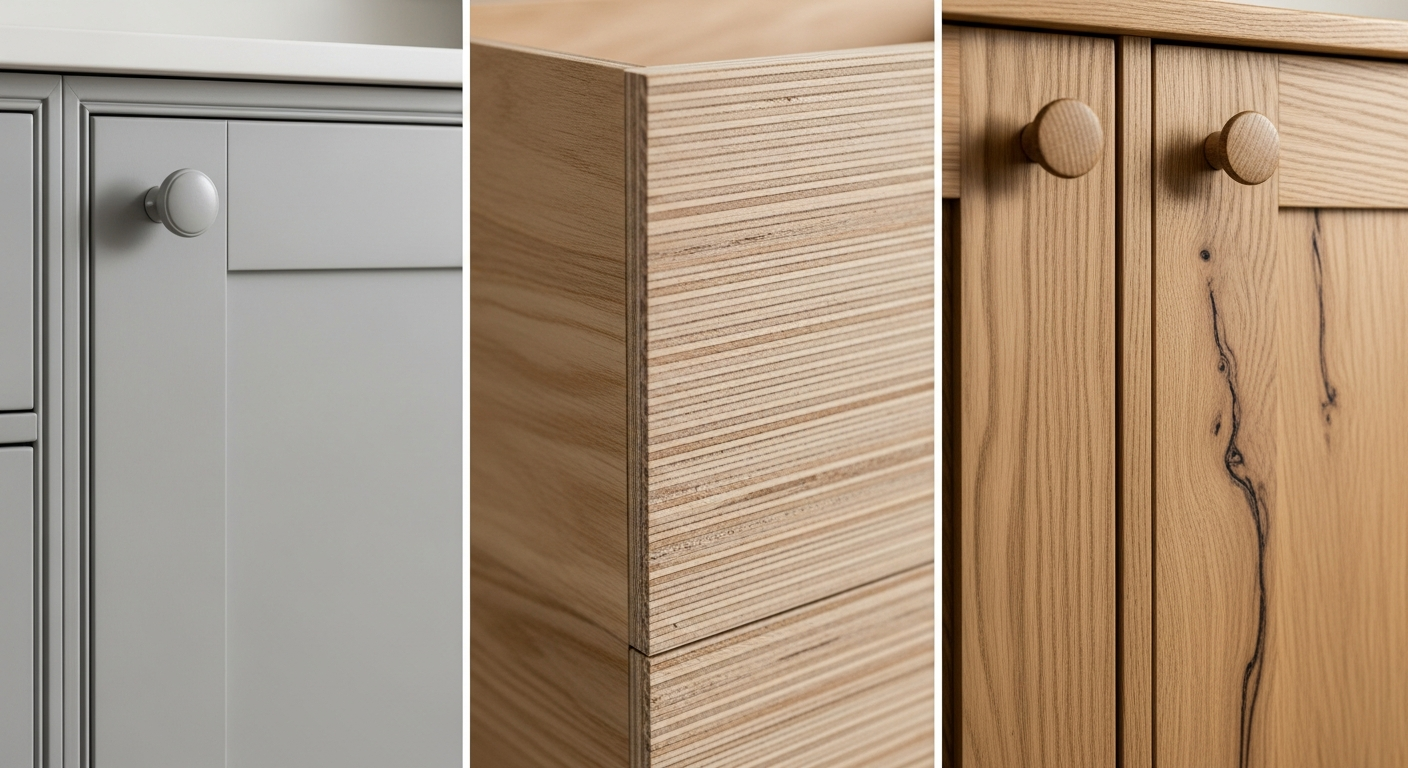
Because MDF contains no natural wood grain, it creates an incredibly smooth surface that accepts paint evenly. For this reason, many premium painted shaker cabinets use MDF for door panels.
Minimal Grain Telegraphing
Solid wood naturally expands and contracts with seasonal humidity changes. Over time, this movement can cause painted joints or wood grain to become slightly visible beneath the finish. MDF remains much more dimensionally stable, helping painted cabinets maintain a smoother appearance over many years.
Easy to Machine
Manufacturers can shape MDF into detailed door profiles with precision, making it popular for decorative painted cabinet styles.
Potential Limitations of MDF
Like every material, MDF has trade-offs.
Moisture Exposure
Although many modern MDF products include moisture-resistant formulations, prolonged exposure to standing water can still cause swelling or deterioration if the protective finish is compromised. Proper sealing, quality manufacturing, and careful installation are essential to ensure long-term performance.
Weight
MDF is generally denser and heavier than plywood, which can make large cabinet doors slightly heavier and place additional demands on hinges if not properly engineered.
Best Applications for MDF
MDF performs particularly well for:
- Painted shaker cabinet doors
- Decorative trim
- Raised-panel doors
- Contemporary painted kitchens
- Smooth modern cabinetry
Its uniform surface allows manufacturers to achieve crisp paint finishes that are difficult to replicate with natural wood.
Expert Insight
One common misconception is that solid wood is always superior to MDF. In reality, many high-end cabinet manufacturers intentionally use MDF for painted door panels because it resists the seasonal expansion and contraction that can make paint lines more visible on solid wood. The best choice depends on the intended finish, the cabinet component, and the performance goals—not simply the material's reputation.
[Note: This is Part 1 of our comprehensive guide on cabinet materials. In our upcoming posts, we'll dive deep into Plywood, Solid Wood, and Particleboard, and provide a full material comparison.]
Ready to Choose Your Perfect Cabinets?
Whether you prefer the flawless finish of MDF or the timeless durability of solid wood, our design-build team can help you select the perfect cabinetry for your home.