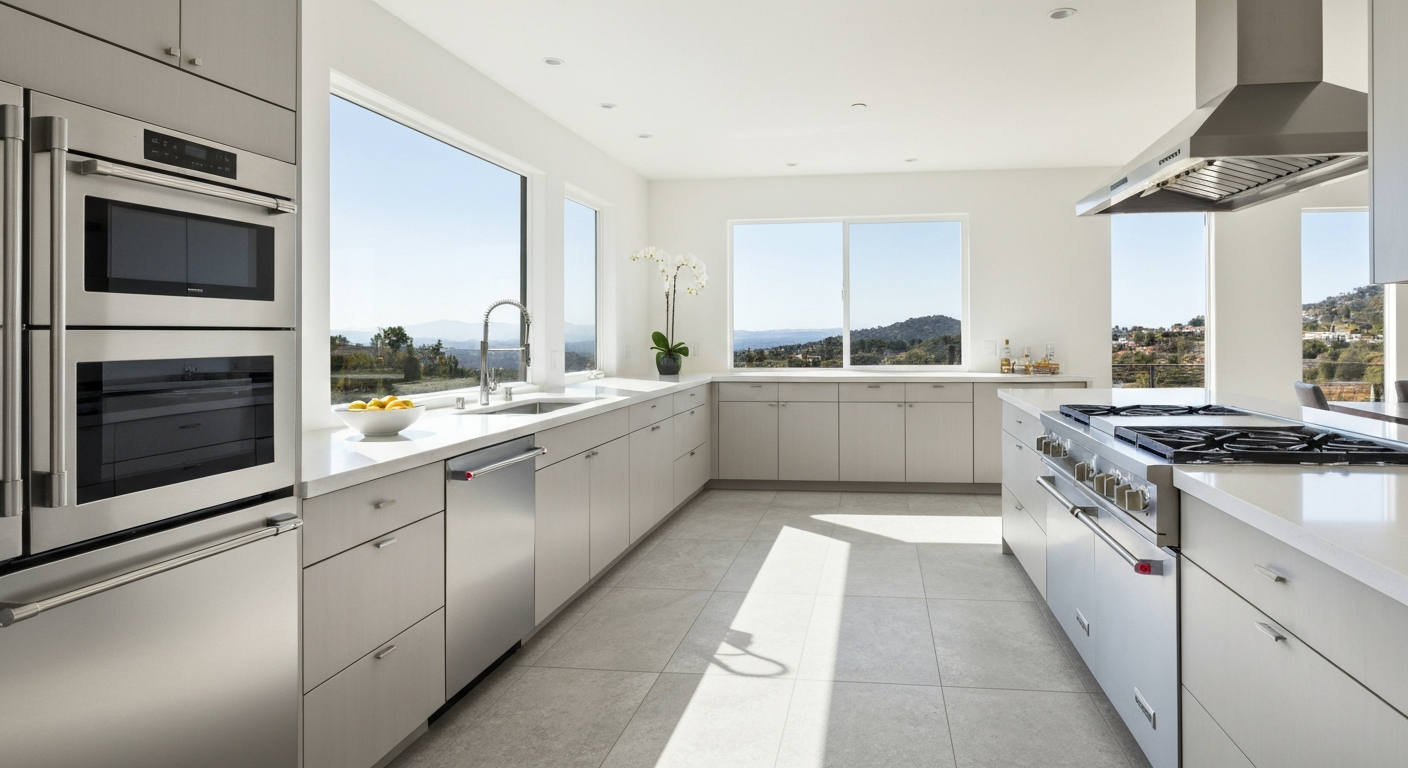
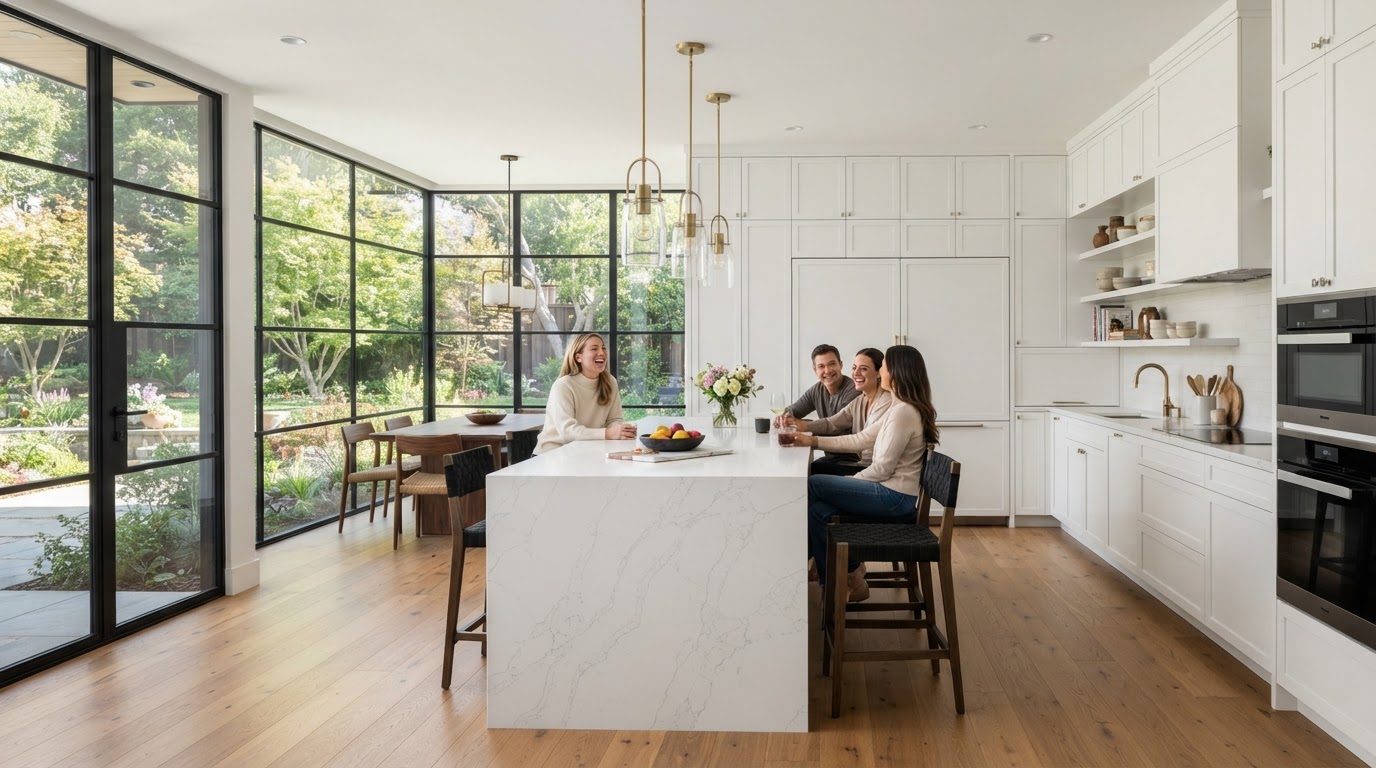
If you ask experienced remodeling contractors which flooring material consistently performs well in kitchens, porcelain tile is likely to be at the top of the list.
Porcelain has earned its reputation through decades of proven performance. It combines exceptional durability with water resistance, design versatility, and minimal maintenance—qualities that make it an excellent choice for one of the busiest rooms in the home.
Today, manufacturers produce porcelain tiles that convincingly replicate the appearance of:
- White oak hardwood
- Walnut
- Marble
- Travertine
- Slate
- Concrete
- Limestone
- Terrazzo
This means homeowners no longer have to choose between appearance and practicality. They can enjoy the look of premium natural materials while benefiting from porcelain's superior performance.
What Makes Porcelain Different?
Although porcelain and ceramic are often grouped together, they are not identical products. Porcelain is manufactured using finer clay and fired at significantly higher temperatures.
This process produces a tile that is denser, harder, less porous, more resistant to water, and better suited for heavy residential traffic. Because of its low water absorption rate, porcelain is frequently recommended not only for kitchens but also bathrooms, laundry rooms, patios, and commercial environments.
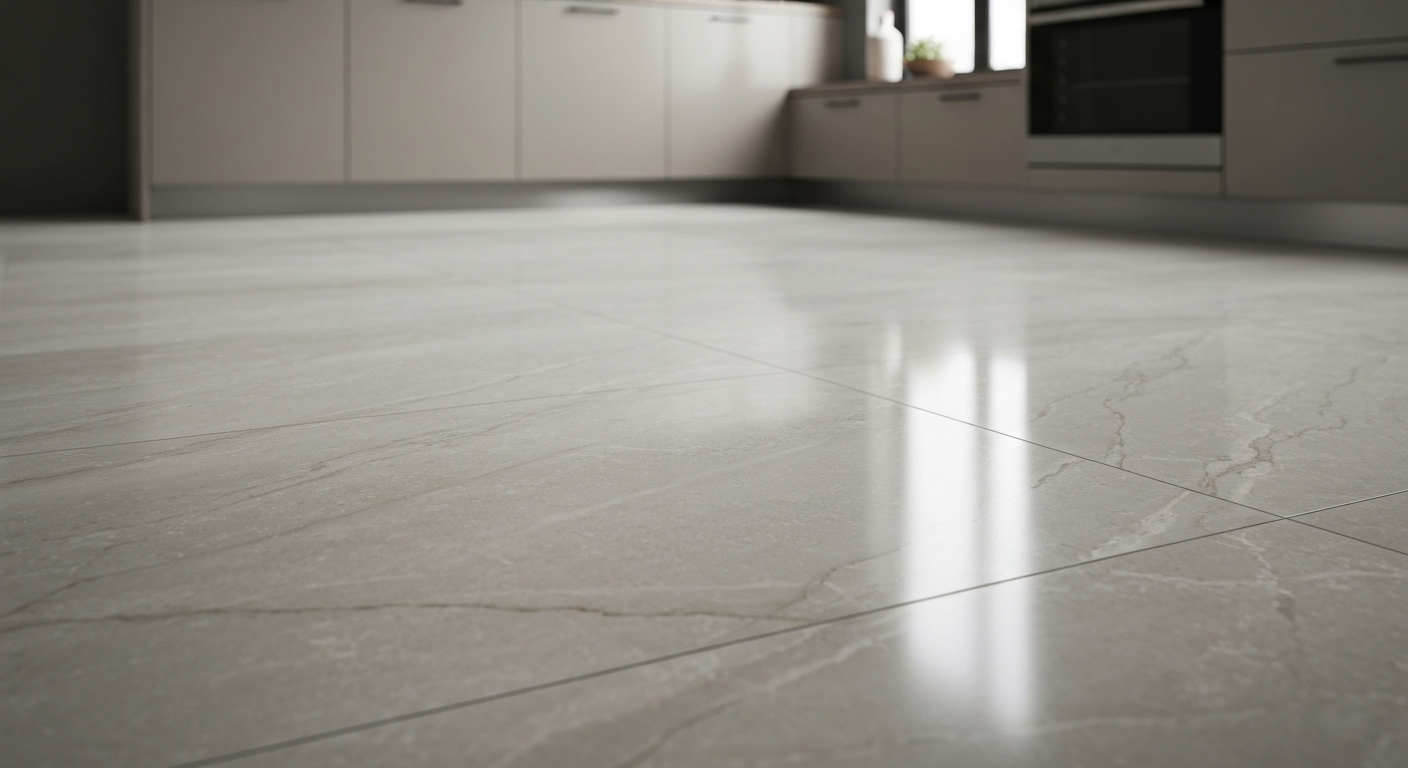
Porcelain tile offers the elegant look of natural stone with superior durability and water resistance.
Advantages of Porcelain Tile
Outstanding Durability
Kitchen floors endure constant abuse: heavy refrigerators, dropped cookware, dining chairs, rolling islands, foot traffic, pet nails, and children playing. Porcelain handles these daily demands exceptionally well. Properly installed porcelain flooring can remain beautiful for decades with minimal wear.
Excellent Water Resistance
One of porcelain's greatest strengths is its resistance to moisture. Unlike wood-based flooring products, porcelain will not swell, warp, or rot when exposed to routine kitchen spills. This makes it particularly appealing for homes with young children, large families, pets, and frequent entertaining.
Extremely Scratch Resistant
Dragging chairs across the floor, sliding appliances, dropped utensils, and pet claws—porcelain resists scratching better than almost every other residential flooring option. This is one reason many homeowners choose porcelain over hardwood in high-traffic kitchens.
Ceramic Tile
Ceramic tile shares many similarities with porcelain but differs in several important ways. It is manufactured using clay and minerals but fired at lower temperatures. As a result, ceramic tile is generally less dense, slightly softer, easier to cut, and often more affordable.
For many residential kitchens, ceramic still provides excellent performance, especially for budget-conscious remodels, starter homes, rental properties, or secondary kitchens.
Luxury Vinyl Plank (LVP)
Few flooring products have grown in popularity as rapidly as Luxury Vinyl Plank, commonly known as LVP. Over the last decade, significant improvements in manufacturing have transformed LVP from a budget alternative into a premium flooring solution capable of replicating hardwood with impressive realism.
Many homeowners are surprised to learn that high-quality LVP now appears in luxury custom homes—not simply because of its appearance, but because of its practical performance.
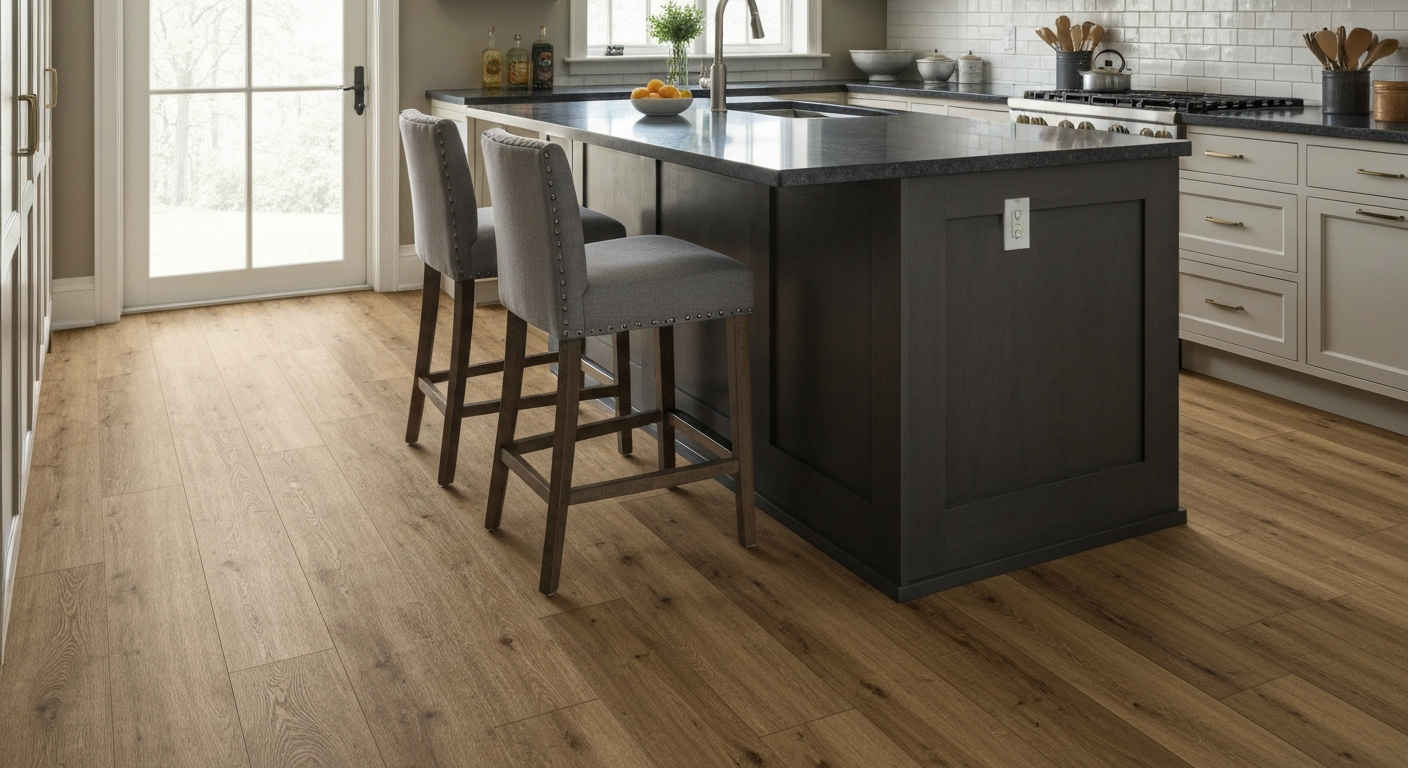
Modern Luxury Vinyl Plank (LVP) flooring convincingly mimics the look and texture of premium hardwood while offering waterproof performance.
Waterproof Performance
Unlike hardwood flooring, LVP is designed to resist everyday moisture. Spills can usually be wiped away without concern for swelling or warping. This makes it attractive for families with young children, pet owners, and busy kitchens.
Comfortable Underfoot
Compared with tile, LVP offers a slightly softer feel. Many homeowners appreciate the added comfort while cooking, baking, and preparing meals. Its flexibility also reduces fatigue during long periods of standing.
Realistic Appearance
Modern embossing technology has dramatically improved LVP aesthetics. Premium products now replicate white oak, European oak, walnut, hickory, maple, and reclaimed wood. Many homeowners find it difficult to distinguish quality LVP from genuine hardwood without close inspection.
Engineered Hardwood Flooring
For homeowners who love the warmth and elegance of hardwood but want better stability in a kitchen environment, engineered hardwood has become one of the most popular flooring choices.
Unlike solid hardwood, engineered hardwood is designed specifically to reduce the natural expansion and contraction that occurs with changes in humidity and temperature. It offers the authentic appearance of real wood while improving dimensional stability, making it an excellent option for many modern homes.
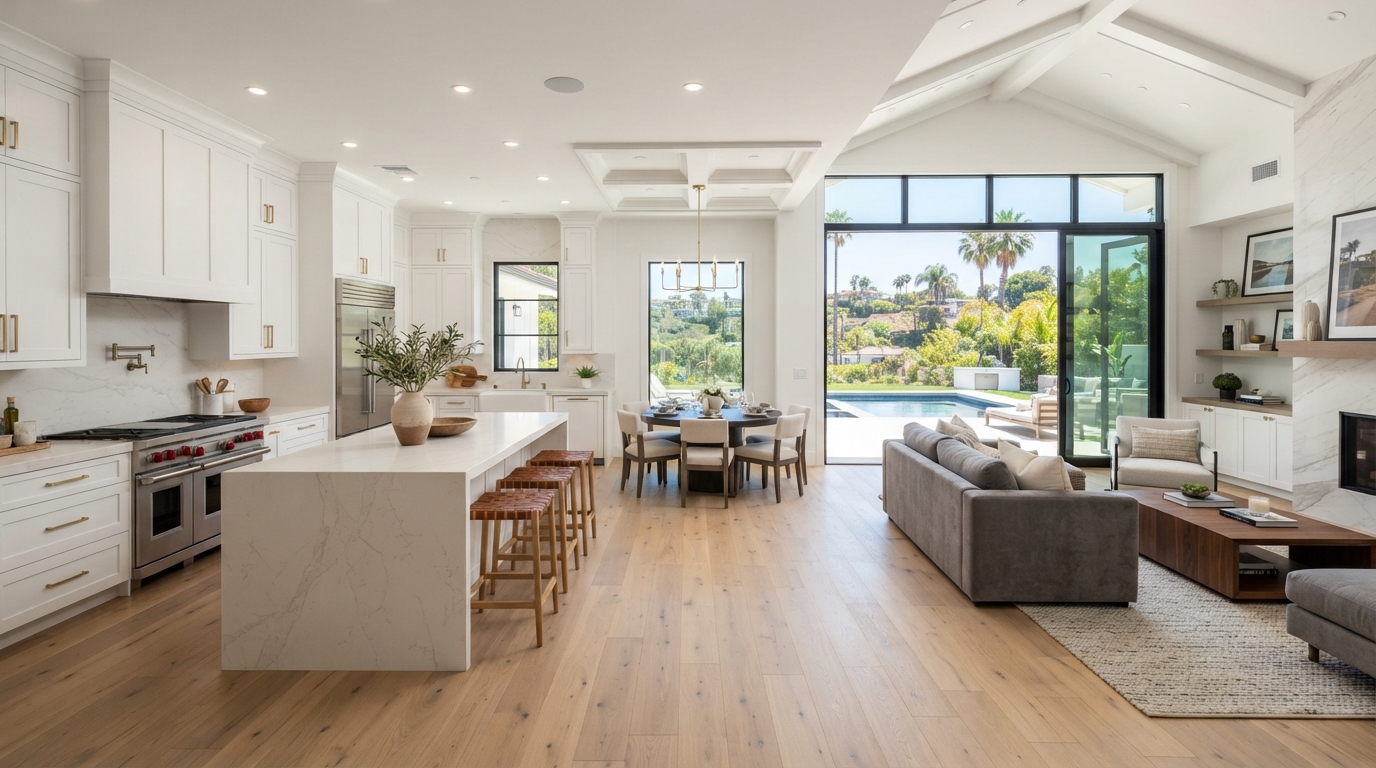
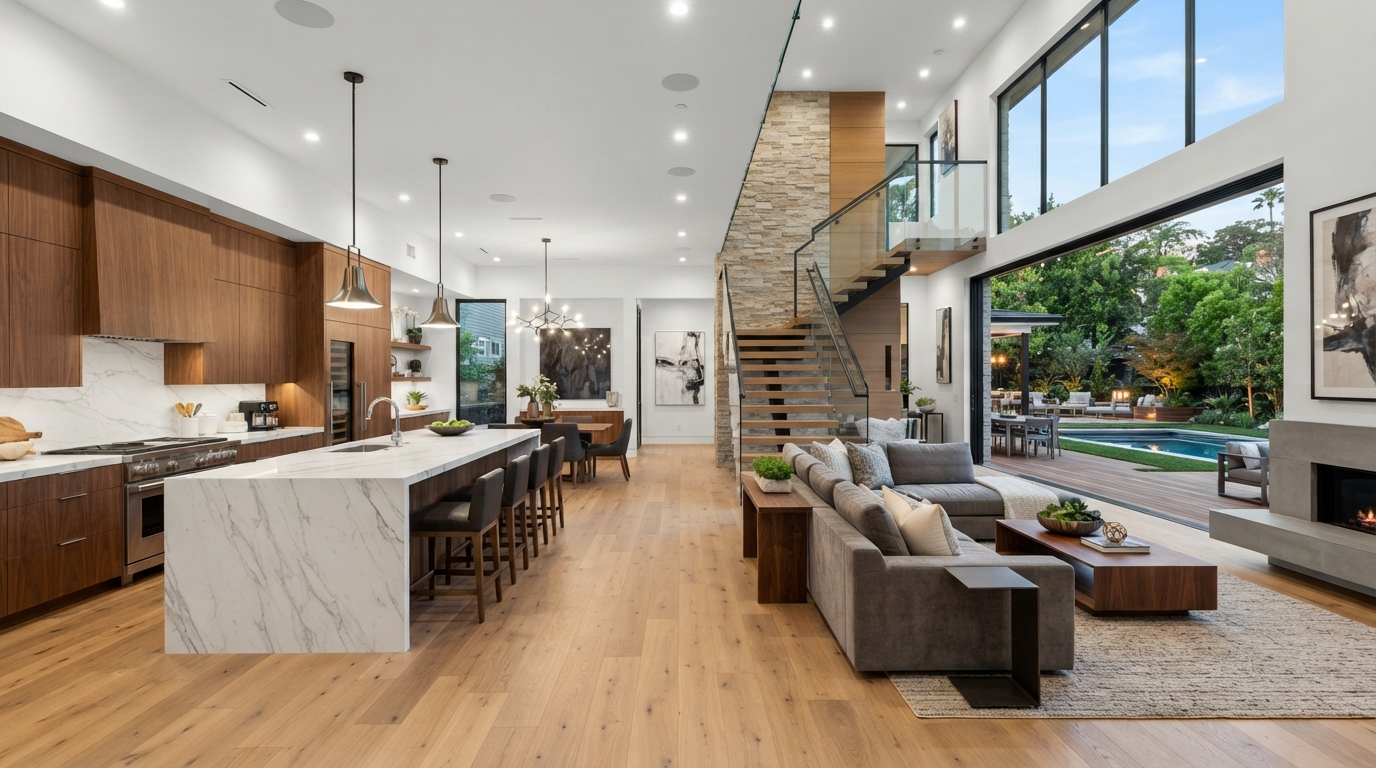
Today, many luxury homes throughout Orange County feature engineered hardwood in open-concept kitchens because it creates a seamless transition into dining rooms and living areas while maintaining a premium aesthetic.
What Is Engineered Hardwood?
Engineered hardwood consists of multiple layers. The top layer is a genuine hardwood veneer, while the core is made from several layers of plywood or high-density fiberboard bonded together under pressure. This layered construction helps minimize movement caused by seasonal humidity fluctuations.
The visible surface is real wood, meaning homeowners still enjoy authentic grain patterns, texture, and natural variation. Common species include White Oak, European Oak, Maple, Hickory, Walnut, and Red Oak.
Advantages of Engineered Hardwood
- Authentic Wood Appearance: Unlike laminate or vinyl products that imitate wood through printed images, engineered hardwood features a genuine hardwood surface.
- Better Stability Than Solid Hardwood: The layered construction helps reduce expansion, shrinking, warping, and seasonal movement.
- Ideal for Open Floor Plans: Engineered hardwood creates visual continuity that makes homes feel larger and more cohesive.
Potential Drawbacks
Although engineered hardwood handles humidity better than solid hardwood, it is not waterproof. Standing water should never be allowed to remain on the floor. Like all wood flooring, it can also develop scratches from pet nails, furniture movement, and heavy foot traffic.
Solid Hardwood Flooring
Few flooring materials have the timeless appeal of solid hardwood. For generations, hardwood has been considered the benchmark for luxury residential flooring. Its warmth, character, and ability to age gracefully have made it a favorite among homeowners and designers alike.
Unlike engineered flooring, each plank is milled from a single piece of hardwood. This allows solid hardwood to be sanded and refinished multiple times over its lifespan. Many century-old homes still feature their original hardwood flooring.
Advantages of Solid Hardwood
- Timeless Beauty: No manufactured product can perfectly duplicate the natural character of genuine hardwood. Each plank contains natural grain, color variation, texture, and organic imperfections.
- Long Lifespan: With proper maintenance, hardwood flooring can remain beautiful for 50 years or more.
- Can Be Refinished: Unlike most flooring materials, hardwood can be renewed. Rather than replacing worn flooring, homeowners can sand, stain, and refinish it.
Potential Drawbacks
Wood naturally absorbs and releases moisture. Repeated exposure to standing water can result in cupping, warping, swelling, and finish damage. Hardwood typically requires more ongoing care than porcelain or luxury vinyl, and premium hardwood flooring generally costs more.
Natural Stone Flooring
Natural stone offers unmatched elegance. Materials such as marble, travertine, slate, and limestone create kitchens with distinctive character that cannot be perfectly replicated by manufactured products. Every stone tile is unique, and this individuality is one of its greatest appeals.
- Marble: Known for elegant veining and a luxurious appearance. It requires regular maintenance due to its porous nature.
- Travertine: Provides warm earth tones and natural texture, commonly used in traditional and Tuscan-style homes.
- Slate: Offers excellent slip resistance, rich color variation, and exceptional durability.
- Limestone: Creates a softer, understated appearance favored in many contemporary and European-inspired interiors.
Potential Drawbacks
Natural stone requires greater homeowner commitment. Many stone products are porous and require periodic sealing to protect against moisture and staining. Stone generally requires more specialized cleaning products, and it is among the most expensive flooring options.
Polished Concrete Flooring
Polished concrete has become increasingly popular in modern and industrial-inspired homes. While once associated primarily with commercial spaces, advances in finishing techniques have transformed polished concrete into an attractive residential flooring option.
Advantages & Drawbacks
Concrete easily withstands heavy appliances, high foot traffic, and pet activity. Routine maintenance typically consists of sweeping, damp mopping, and occasional resealing. In homes built on slab foundations, polishing the existing concrete can reduce the need for additional flooring materials.
However, concrete is unforgiving underfoot, retains cool temperatures, and may develop hairline cracks over time due to natural settlement.
Flooring Comparison Matrix
| Feature | Porcelain Tile | LVP | Engineered Hardwood | Solid Hardwood | Natural Stone |
|---|---|---|---|---|---|
| Water Resistance | ★★★★★ | ★★★★★ | ★★★☆☆ | ★★☆☆☆ | ★★★☆☆ |
| Scratch Resistance | ★★★★★ | ★★★★☆ | ★★★☆☆ | ★★★☆☆ | ★★★★☆ |
| Comfort Underfoot | ★★☆☆☆ | ★★★★★ | ★★★★☆ | ★★★★☆ | ★★☆☆☆ |
| Maintenance | ★★★★★ | ★★★★★ | ★★★☆☆ | ★★★☆☆ | ★★☆☆☆ |
| Lifespan | 40–75+ Yrs | 15–30 Yrs | 25–50 Yrs | 50–100+ Yrs | 50–100+ Yrs |
| Relative Cost | $$–$$$ | $$ | $$$ | $$$$ | $$$$–$$$$$ |
Note: Lifespan and performance depend on product quality, installation, maintenance, and household conditions.
Which Flooring Is Right for Your Lifestyle?
Rather than asking, "What is the best kitchen flooring?", a better question is:
"What is the best kitchen flooring for the way my family lives?"
Choose Porcelain Tile If You:
- Want maximum durability
- Have children or pets
- Cook frequently
- Prefer minimal maintenance
- Plan to stay in your home long-term
Choose Luxury Vinyl Plank If You:
- Want waterproof flooring
- Prefer softer surfaces
- Have a limited budget
- Need whole-home flooring continuity
- Want realistic wood aesthetics
Choose Engineered Hardwood If You:
- Love real wood
- Have an open floor plan
- Want a balance between beauty and stability
- Are comfortable with moderate maintenance
Choose Solid Hardwood If You:
- Value timeless craftsmanship
- Plan to own the home for decades
- Appreciate flooring that can be refinished
- Prioritize resale appeal
Choose Natural Stone If You:
- Are building or remodeling a luxury home
- Want a unique, one-of-a-kind floor
- Don't mind periodic sealing
- Desire premium architectural finishes
A knowledgeable remodeling contractor can help evaluate your household's needs, design goals, and budget to recommend a flooring solution that fits your specific project.
Kitchen Flooring Cost Comparison
Flooring costs are one of the most significant considerations during a kitchen remodel. However, it's important to evaluate more than just the price per square foot. A flooring investment should also account for installation, maintenance, expected lifespan, and long-term value.
The ranges below reflect typical material and professional installation costs. Actual pricing varies depending on the product selected, the complexity of the installation, subfloor conditions, geographic location, and project scope.
| Flooring Material | Material Cost* | Installed Cost* | Expected Lifespan |
|---|---|---|---|
| Ceramic Tile | Lower | Moderate | 30–50+ years |
| Porcelain Tile | Moderate | Moderate to Higher | 40–75+ years |
| Luxury Vinyl Plank (LVP) | Lower to Moderate | Moderate | 15–30 years |
| Engineered Hardwood | Moderate to Higher | Higher | 25–50 years |
| Solid Hardwood | Higher | Higher | 50–100+ years (with refinishing) |
| Natural Stone | Higher | Higher | 50–100+ years |
| Polished Concrete | Varies | Moderate to Higher | 50+ years |
*Costs vary by product quality, installation complexity, and local labor rates. Obtain written estimates from qualified remodeling professionals for project-specific pricing.
Installation Considerations
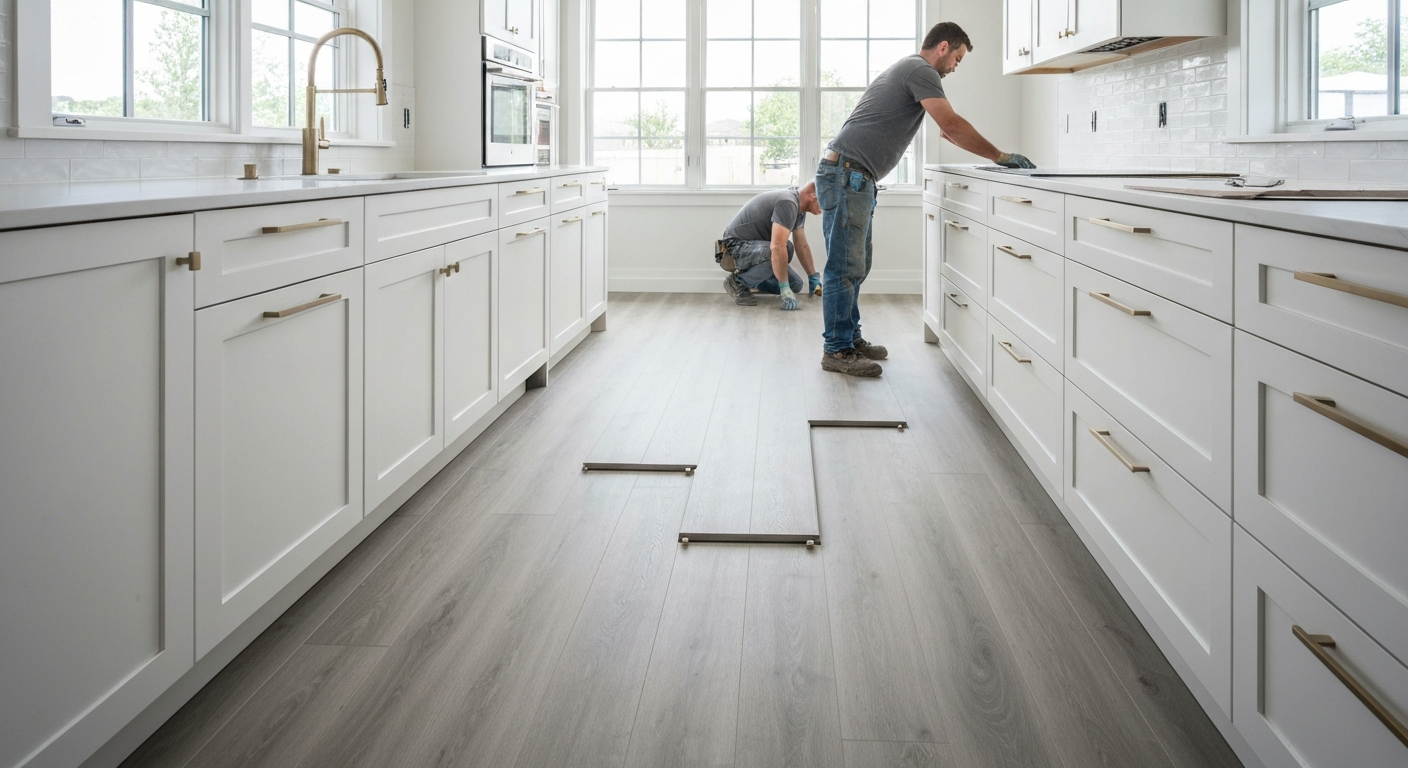
The quality of the installation is just as important as the flooring material itself. Even premium flooring can fail prematurely if installed over an uneven or improperly prepared subfloor.
Before new flooring is installed, professional remodelers typically evaluate:
- Subfloor condition
- Moisture levels
- Structural integrity
- Floor flatness
- Existing flooring removal requirements
- Transition heights to adjacent rooms
- Appliance clearances
- Cabinet installation sequence
Skipping these steps can lead to loose tiles, cracked grout, uneven planks, squeaks, gaps, and premature wear. For this reason, flooring should always be considered as part of the overall kitchen remodeling plan—not as an isolated upgrade.
Should Flooring Be Installed Before or After Cabinets?
This is one of the most common questions homeowners ask. The answer depends on the flooring material and the overall remodeling strategy.
Install Flooring Before Cabinets When:
- Installing glue-down flooring
- Creating a continuous floor throughout the home
- Future layout flexibility is desired
- Using tile across the entire room
Install Flooring After Cabinets When:
- Installing floating luxury vinyl plank
- Budget optimization is important
- Cabinet layout will remain permanent
- Manufacturer installation guidelines recommend it
An experienced design-build contractor will determine the best sequencing based on the flooring system, cabinet design, and appliance requirements.
Is Radiant Floor Heating Worth Considering?
Although Southern California enjoys a relatively mild climate, some homeowners choose radiant floor heating to improve comfort during cooler mornings. Radiant heating works particularly well beneath porcelain tile, ceramic tile, and natural stone. These materials conduct heat efficiently and provide consistent warmth across the floor.
Engineered hardwood may also be compatible with certain radiant heating systems, provided the manufacturer specifically approves its use. Solid hardwood and some vinyl products have more limitations and should only be installed over radiant systems when permitted by the flooring manufacturer.
How to Make Your Kitchen Floor Last Longer
Regardless of which material you choose, proper maintenance plays a significant role in maximizing its lifespan.
- Sweep or Vacuum RegularlyDust, sand, and small debris can act like sandpaper under foot traffic, gradually wearing the finish of many flooring materials. Regular cleaning helps reduce unnecessary abrasion.
- Clean Spills PromptlyEven highly water-resistant flooring benefits from prompt cleanup. Liquids left standing for extended periods can damage grout, seep beneath flooring, or affect adjacent cabinetry.
- Protect High-Traffic AreasPlace felt pads beneath chair legs and furniture to reduce scratching. In work zones near sinks or prep areas, anti-fatigue mats can improve comfort while helping protect the floor from dropped utensils.
- Follow Manufacturer Cleaning RecommendationsAvoid harsh chemicals or abrasive cleaners that may damage finishes or void manufacturer warranties. Use products appropriate for your specific flooring material.
Common Kitchen Flooring Mistakes
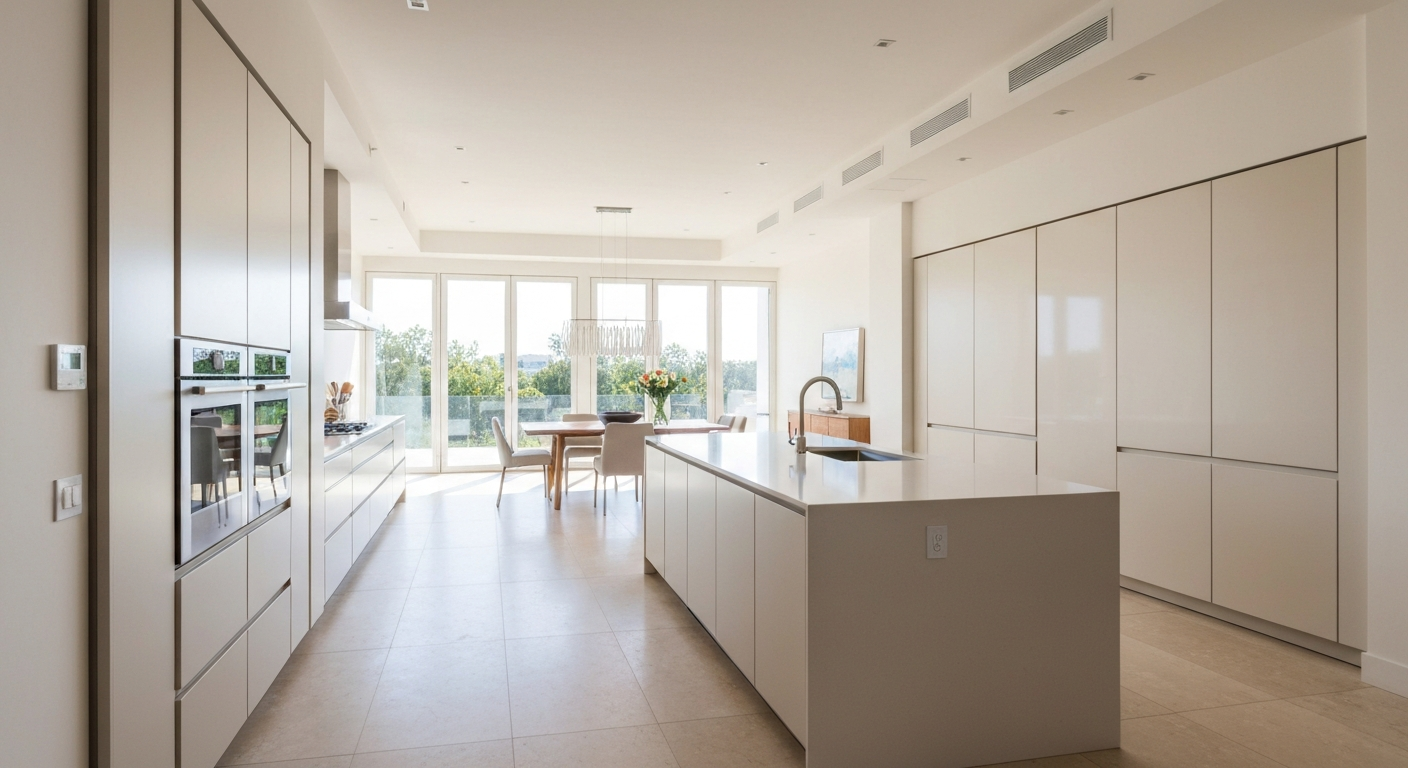
Selecting beautiful flooring is only part of a successful remodel. Avoiding common mistakes can save time, money, and frustration.
- Choosing Based Only on AppearanceA floor that looks stunning in a showroom may not be the best fit for a household with children, pets, or heavy daily cooking. Always balance aesthetics with performance.
- Ignoring Slip ResistanceHighly polished surfaces may become slippery when wet. Households with young children or older adults should consider textured finishes that provide additional traction.
- Underestimating MaintenanceSome materials require more ongoing care than others. Natural stone may need periodic sealing, while hardwood requires careful moisture management. Homeowners should select a flooring option that aligns with the amount of maintenance they are willing to perform.
- Not Considering Adjacent RoomsIn open-concept homes, abrupt flooring transitions can interrupt visual flow. Planning the flooring layout for the entire living space often creates a more cohesive design.
- Hiring Based Solely on PriceThe lowest installation quote does not always deliver the best value. Proper subfloor preparation, precision installation, and attention to detail have a direct impact on the longevity and appearance of your flooring.
Expert Recommendations
Every household has different priorities. Rather than recommending one flooring material for everyone, experienced remodeling professionals evaluate how the kitchen will actually be used.
Best Overall Performance
Porcelain Tile
Ideal for homeowners seeking exceptional durability, water resistance, and minimal maintenance.
Best Value
Luxury Vinyl Plank (LVP)
A practical choice for busy families who want waterproof performance, realistic wood visuals, and comfortable underfoot feel.
Best for Luxury Homes
Engineered Hardwood
Provides authentic wood beauty with greater dimensional stability than solid hardwood, making it a popular option for upscale open-concept homes.
Best Long-Term Investment
Solid Hardwood
When properly maintained, solid hardwood can provide decades of service and may be refinished multiple times, preserving its appearance and resale appeal.
Best Statement Floor
Natural Stone
Perfect for custom homes where distinctive character, timeless elegance, and architectural impact are top priorities.
Frequently Asked Questions
What is the most durable flooring for a kitchen?
Porcelain tile is widely regarded as one of the most durable kitchen flooring materials because it resists scratches, moisture, stains, and heavy foot traffic while requiring very little maintenance.
Is luxury vinyl plank good for kitchens?
Yes. High-quality luxury vinyl plank offers excellent water resistance, comfort underfoot, and realistic wood aesthetics, making it a popular choice for active households.
Can hardwood flooring be installed in a kitchen?
Yes. Both engineered and solid hardwood can be installed in kitchens, but homeowners should promptly clean spills and follow manufacturer maintenance recommendations to protect the wood from excessive moisture.
Which flooring adds the most resale value?
Buyer preferences vary by market, but porcelain tile, engineered hardwood, solid hardwood, and well-maintained natural stone are generally viewed as premium finishes that can enhance a home's appeal.
Is tile better than vinyl?
Neither material is universally better. Tile typically offers greater longevity and scratch resistance, while luxury vinyl plank provides improved comfort, easier installation, and excellent water resistance. The best choice depends on your lifestyle, design preferences, and budget.
Final Thoughts
Your kitchen floor is one of the few finishes you'll interact with every single day. It should not only complement your cabinets, countertops, and lighting—it should also support the way you live.
The right flooring balances beauty, durability, comfort, and long-term value. Whether you prefer the unmatched resilience of porcelain tile, the warmth of engineered hardwood, the practicality of luxury vinyl plank, or the timeless elegance of natural stone, making an informed decision now can help ensure your remodeled kitchen remains functional and beautiful for decades.
A successful kitchen remodel isn't about selecting the most expensive material—it's about choosing the material that best fits your family's lifestyle, maintenance expectations, and long-term goals.
Why Homeowners Choose Venguard Construction
At Venguard Construction, we believe every remodeling decision should be guided by expert advice—not sales pressure.
Our design-build approach helps homeowners evaluate flooring, cabinetry, countertops, lighting, and layouts as one cohesive system. By considering durability, functionality, and aesthetics together, we create kitchens that are not only beautiful on day one but continue to perform for years to come.
Whether you're planning a complete kitchen transformation or exploring flooring options as part of a larger renovation, our experienced team can help you compare materials, understand trade-offs, and make decisions that align with your vision and budget.
Schedule a consultation today to start designing a kitchen that's built for the way you live.
Ready to Upgrade Your Kitchen Floors?
Whether you prefer the durability of porcelain or the warmth of LVP, our design-build team can help you select the perfect flooring for your home.