Your home is likely the largest investment you will ever make. Choosing the wrong contractor can cost you tens of thousands of dollars, add months of stress to your life, and leave you with a finished product that falls far short of your vision.
The right contractor makes all the difference

Expert Guide
How to Hire the Right Remodeling Contractor
In Southern California, the construction industry is enormous. Orange County and Los Angeles combined have thousands of licensed contractors — and even more unlicensed ones operating in the shadows. Knowing how to separate the best from the rest is a critical skill for any homeowner. This guide from the team at Venguard Construction — with 20+ Years Combined Experience and 500+ completed projects across SoCal — gives you every question to ask, every red flag to watch for, and every credential to verify before signing a contract.
30%
of Homeowners
report contractor disputes on remodels
$15K+
Average Loss
from hiring unlicensed contractors
500+
Projects Completed
by Venguard Construction
4.9★
Star Rating
from 400+ verified clients
Step 1
Verify Licensing, Bonding & Insurance — Non-Negotiable
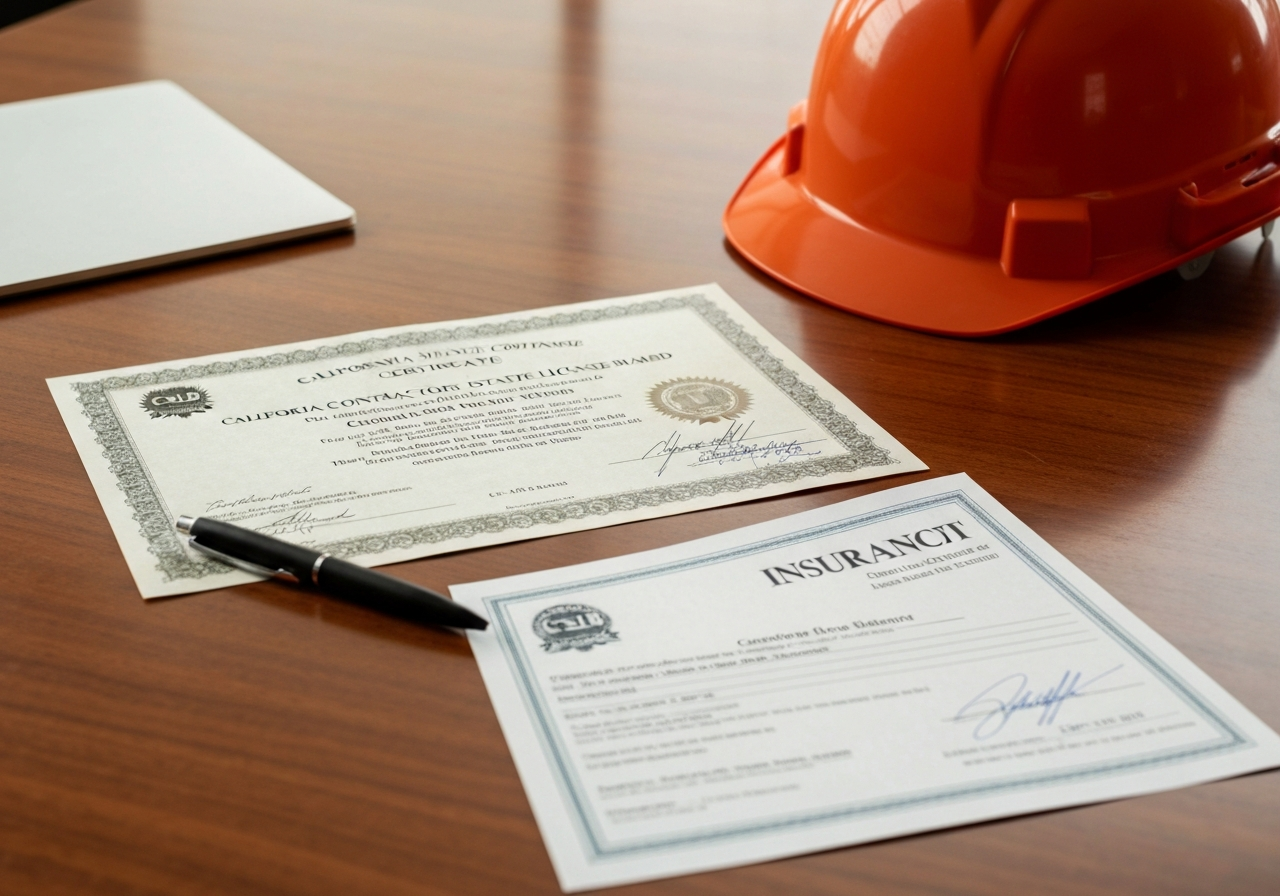
In California, all contractors performing work over $500 must hold a valid license issued by the California Contractors State License Board (CSLB). This is not optional — it is the law. Yet a surprising number of homeowners skip this step. Don't be one of them.
- CSLB License Verification: Visit cslb.ca.gov and search the contractor's name or license number. Confirm it is active, in good standing, and covers the correct classification (e.g., B — General Building Contractor).
- General Liability Insurance: Minimum $1 million in general liability coverage protects your property if accidents or damage occur during construction. Ask for a certificate of insurance — not just their word.
- Workers' Compensation: If a worker is injured on your property without workers' comp coverage, you can be held personally liable. This single oversight can cost homeowners hundreds of thousands of dollars.
- Contractor's Bond: A surety bond protects you financially if the contractor fails to complete the job or pay subcontractors. California requires a $25,000 bond minimum.
At Venguard Construction, we are fully licensed, bonded, and insured. We share our credentials upfront — no questions asked.
Red Flag: Cash-Only Deals & No Written Contract
Any contractor who asks for cash payment only, refuses to provide a written contract, or pressures you to start immediately without documentation is a major red flag. In California, all contracts over $500 must be in writing. Never waive this protection.

Portfolio Review
What to look for in a contractor's work
Step 2
Review Their Portfolio — Look for Relevant, Local Experience
A contractor's portfolio tells you more about their capabilities than any sales pitch. You want to see projects that match your scope, style, and scale. Browse Venguard's Project Portfolio to see our completed work across kitchen remodels, bathroom renovations, ADUs, outdoor living spaces, and more.
🏠
Similar Scope
Have they completed projects like yours — kitchens, bathrooms, ADUs, or full-home remodels?
📍
Local Experience
SoCal contractors familiar with Orange County and LA permitting processes save you time and money.
🎨
Design Range
Can they execute both modern and traditional styles? Versatility reflects deep craftsmanship.
🔍
Before & After
Real before-and-after photos prove results. Ask for project-specific photos, not just stock imagery.
Pro Tip: Visit a Completed Project If Possible
The best contractors will offer to connect you with past clients whose projects are similar to yours. Walking through a completed renovation in person gives you a true sense of material quality, finish work, and attention to detail that photos cannot fully capture. Ask for this — it is a standard practice among reputable firms.
Step 3
Demand Transparent, Itemized Pricing — No Surprises
One of the most common contractor complaints homeowners in Southern California make is unexpected cost overruns. A low initial bid often masks hidden fees, change orders, and material upgrades that balloon the final invoice. Our transparent design-build process is built to prevent exactly this.
| What to Compare | Reputable Contractor | Questionable Contractor |
|---|---|---|
| Estimate Type | ✓ Detailed, itemized line-by-line | ✗ Vague lump-sum only |
| Contract | ✓ Comprehensive written contract | ✗ Verbal agreement or one-page |
| Change Orders | ✓ Documented & approved in writing | ✗ Verbal or ad-hoc charges |
| Payment Schedule | ✓ Tied to project milestones | ✗ Large upfront deposit (>50%) |
| Warranty | ✓ Written workmanship warranty | ✗ No warranty provided |
| Permits | ✓ Pulls all required permits | ✗ Suggests skipping permits |
| Timeline | ✓ Realistic, milestone-based schedule | ✗ Vague or overpromised |
| Subcontractors | ✓ Vetted, insured subs disclosed | ✗ Unknown or unvetted crews |
Step 4
Check Reviews, References & Online Reputation
In the digital age, a contractor's reputation is highly visible — if you know where to look. A single glowing testimonial on their own website means nothing. You need third-party verification from multiple sources.
⭐
Google Reviews
The most trusted review platform. Look for consistent 4.5+ star ratings across many reviews, not just a few. Read the negative reviews too — how the company responds tells you everything about their culture.
🛡️
CSLB Complaint History
Visit cslb.ca.gov to check if the contractor has any filed complaints, disciplinary actions, or license suspensions. This is public record and takes 60 seconds to check.
📋
BBB Accreditation
The Better Business Bureau accreditation and complaint history provide another layer of third-party verification. An A+ BBB rating signals a commitment to resolving customer issues.
🏡
Houzz & Yelp Profiles
Industry-specific review platforms like Houzz show portfolio photos alongside verified client reviews, letting you connect quality of work to client satisfaction ratings.
🤝
Personal References
Ask for 2–3 references from projects completed within the past 12 months. Call them. Ask specifically about budget adherence, timeline, communication, and whether they would hire them again.
📱
Social Media Activity
An active Instagram or Facebook with real job-site photos and client tags is a positive signal. It shows pride in their work and ongoing, active business operations.
Step 5
Evaluate Communication Style — Before You Sign
Poor communication is the #1 cause of contractor disputes. During your initial consultation, you are not just evaluating their technical skills — you are evaluating how they will communicate with you throughout a 3–6 month project. Learn about our dedicated project support approach in our 5-Step Design-Build Process.
❓ "How do you handle unexpected issues or change orders?"
Why it matters: You want a structured, written process — not improvised verbal decisions mid-project.
❓ "Who is my dedicated point of contact during construction?"
Why it matters: You should have a single project manager, not be bounced between crew members.
❓ "How often will you provide progress updates?"
Why it matters: Weekly written updates with photos are standard for professional contractors.
❓ "What is your policy when the project falls behind schedule?"
Why it matters: A good contractor has a plan. An evasive answer predicts future delays.
❓ "How do you manage subcontractors on-site?"
Why it matters: Vetted, managed subcontractors produce consistent quality. Unknown subs are a liability.
❓ "Can I visit the job site at any time?"
Why it matters: Any hesitation here is a red flag. You own the home — you have full access rights.
Step 6
Understand the Permit Process — and Who Pulls Them
Permits are not optional bureaucracy. They protect you. In Southern California, all structural work, electrical upgrades, plumbing changes, and ADU construction require city permits. A contractor who suggests skipping permits to "save money" is exposing you to significant legal and financial risk. Our team handles all permitting as part of our full-service design-build process.
⚠️ Resale Complications
Unpermitted work must be disclosed when selling. Buyers may demand removal or price reductions that far exceed the original permit cost.
⚠️ Insurance Denial
If unpermitted construction causes damage (fire, flooding, structural failure), your homeowner's insurance may deny the claim entirely.
⚠️ City Stop-Work Orders
If discovered, the city can issue a stop-work order, requiring you to open walls and demolish completed work for inspection. A nightmare scenario.
⚠️ Safety Violations
Inspections exist to protect you. Electrical, structural, and plumbing work without inspection can create genuine safety hazards for your family.
⚠️ Fines & Penalties
Orange County and LA cities can issue significant fines for unpermitted construction — often double or triple the original permit fee.
⚠️ Contractor Liability Shift
An unlicensed, uninsured contractor performing unpermitted work shifts all liability to the homeowner. You become legally responsible.
Why Venguard
The Venguard Construction Difference
Every criterion in this guide, Venguard Construction meets — and exceeds. We built our reputation in Orange County and Los Angeles on the principles of radical transparency, expert craftsmanship, and unwavering client communication.
- ✓Licensed, Bonded & Insured (CSLB Verified)
- ✓20+ Years Combined Experience
- ✓500+ Projects Completed Across SoCal
- ✓4.9-Star Rating from 400+ Verified Clients
- ✓Detailed Written Contracts — No Surprises
- ✓Dedicated Project Manager on Every Job
- ✓All Permits Pulled & Managed by Our Team
- ✓Written Workmanship Warranty
- ✓On-Time, On-Budget Track Record

Your Reference Guide
The Ultimate Contractor Hiring Checklist
Common Questions
Frequently Asked Questions
Q: How do I verify a contractor's license in California?
A: Visit cslb.ca.gov and use the free license check tool. Enter the contractor's name or license number to see their status, classifications, expiration date, and any disciplinary actions. This takes under 60 seconds and could save you thousands.
Q: How much should I pay upfront to a contractor?
A: California law limits the initial deposit to 10% of the contract price or $1,000 — whichever is less. A contractor demanding 40–50% upfront before work begins is a major red flag. Payments should be tied to specific, completed project milestones.
Q: What is the difference between a licensed general contractor and a handyman?
A: A licensed general contractor (B license in California) can legally manage and perform work on projects over $500 involving multiple trades. Handymen are limited to minor repairs under $500. For any remodeling project — kitchen, bathroom, ADU, addition — you need a licensed general contractor.
Q: Do I need permits for a kitchen remodel in Southern California?
A: Yes — almost always. Any work involving electrical upgrades, plumbing changes, structural modifications, or ventilation changes requires a permit. A cosmetic swap (new cabinet doors, paint) may not. Your contractor should assess this during the design phase and pull all required permits.
Q: How long should a typical kitchen remodel take in Orange County?
A: A standard kitchen remodel in Orange County typically takes 6–12 weeks from permit approval to final walk-through. More complex projects with custom cabinetry, structural changes, or extensive tile work may run 12–16 weeks. Permitting alone can take 2–6 weeks depending on the city.
Q: What should a construction contract include?
A: A complete contract should include: project scope and specifications, start and completion dates, payment schedule tied to milestones, materials list with brands and model numbers, change order process, permit responsibilities, subcontractor disclosure, warranty terms, and dispute resolution process.
Q: Is it worth hiring a design-build firm instead of a general contractor?
A: For most homeowners, yes. A design-build firm like Venguard Construction manages the entire project — design, permitting, construction, and finishing — under one contract. This eliminates the coordination risk between a separate architect and contractor, reduces communication gaps, and typically results in faster, more cost-effective project delivery.
Q: What does 'bonded' mean for a contractor?
A: A bonded contractor has purchased a surety bond — a financial guarantee that protects you if the contractor fails to complete the work, abandons the project, or fails to pay subcontractors and suppliers. California requires licensed contractors to carry a minimum $25,000 bond.
Q: How do I protect myself from contractor fraud in Southern California?
A: Never pay in cash, never pay more than the legal 10% deposit, always get everything in writing, verify the CSLB license independently, check reviews across multiple platforms, and never allow work to start without a signed contract and active building permits.
Q: Can I check if a contractor has been sued or had complaints filed?
A: Yes. The CSLB website shows complaint history and disciplinary actions. You can also check Orange County Superior Court records for civil suits. Multiple complaints or lawsuits are a disqualifying red flag.
We Serve All of SoCal
Trusted Remodeling Contractor Across Southern California
We serve homeowners across Orange County and Los Angeles with the same licensed, transparent, and expert craftsmanship on every project.
Ready to Get Started?
Hire a Contractor You Can Trust
Venguard Construction is licensed, bonded, insured, and has earned 4.9 stars from 400+ verified Southern California homeowners. Let's build something exceptional together.