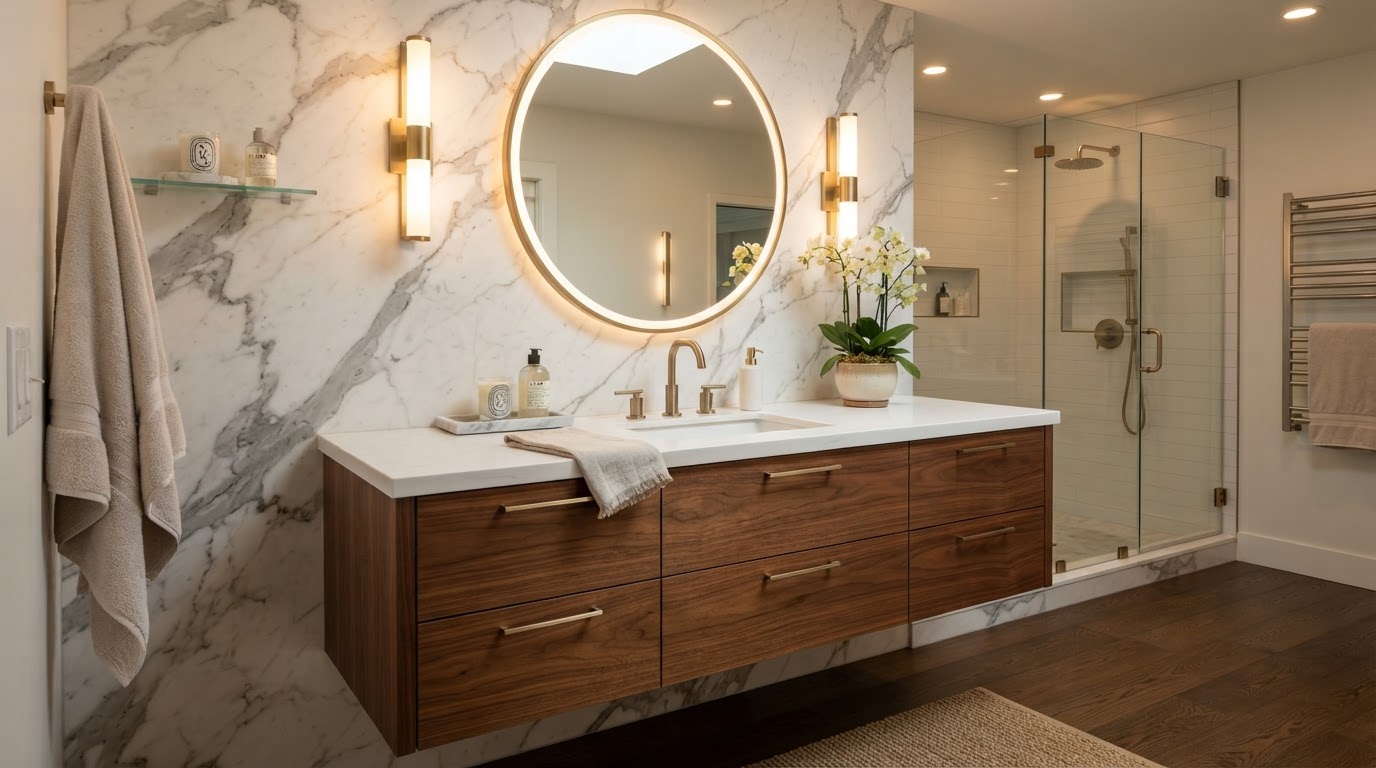
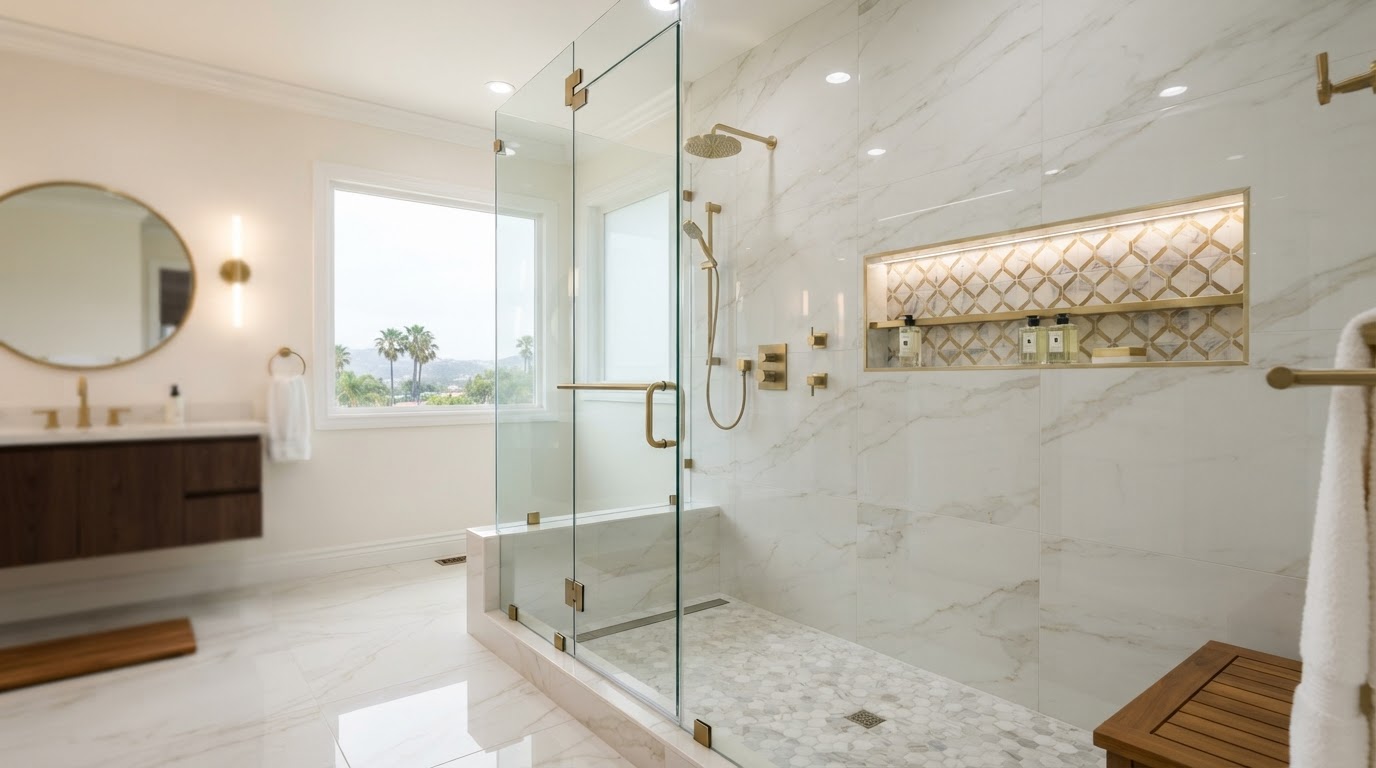
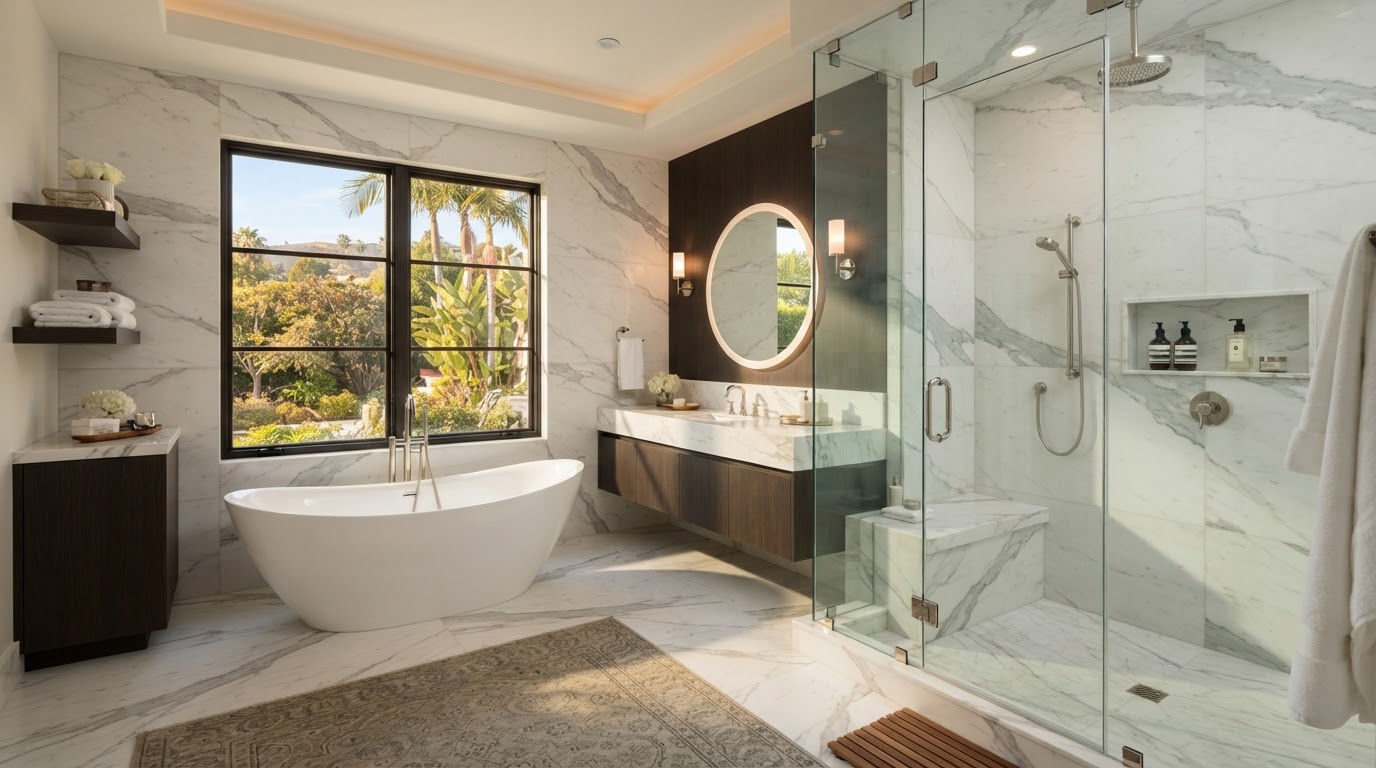
Bathroom flooring has to do more than look good. Unlike flooring in many other areas of the home, bathroom flooring is regularly exposed to water, humidity, moisture, cleaning products, bare feet, temperature changes, and daily traffic.
It is a performance decision, not just a design decision.
The right flooring should complement your bathroom design while being appropriate for a wet environment, practical to maintain, comfortable to use, and properly installed.
For homeowners remodeling a bathroom in Orange County or Los Angeles, there is another consideration: the existing condition of the bathroom. A beautiful new floor may require more preparation than expected if the existing substrate, waterproofing, plumbing, or floor height creates complications.
That's why bathroom flooring should be considered as part of the entire remodeling system, rather than selected as an isolated finish.
In this guide, we'll cover the most common bathroom flooring options, their advantages and limitations, design considerations, costs, installation issues, maintenance, and how to choose the right material for your project.
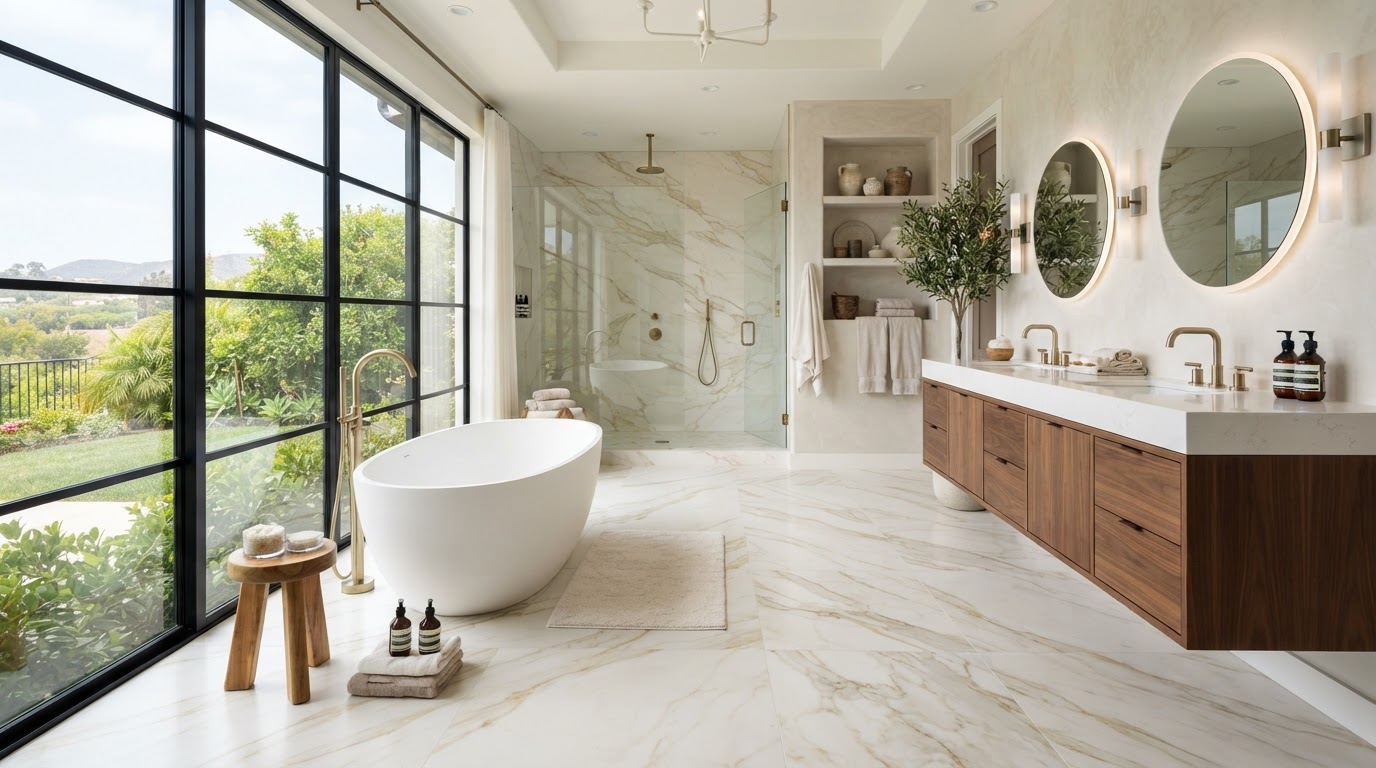
The right bathroom flooring balances beauty, durability, and moisture resistance.
What Is the Best Flooring for a Bathroom?
There isn't one material that is automatically the best for every bathroom. For many remodeling projects, porcelain tile is one of the strongest all-around options because it offers a combination of durability, moisture resistance, design flexibility, and relatively straightforward maintenance.
But other materials can make sense depending on the project:
Ceramic Tile
Can offer excellent design flexibility and affordability.
Natural Stone
Creates a luxurious, one-of-a-kind appearance.
Luxury Vinyl
Provides a softer, warmer feel underfoot.
Mosaic Tile
Works particularly well for shower floors with its natural traction.
Large-Format Tile
Creates a cleaner, more contemporary appearance with fewer grout lines.
The best choice depends on the bathroom's design, moisture exposure, maintenance requirements, budget, and installation conditions.
1. Porcelain Tile
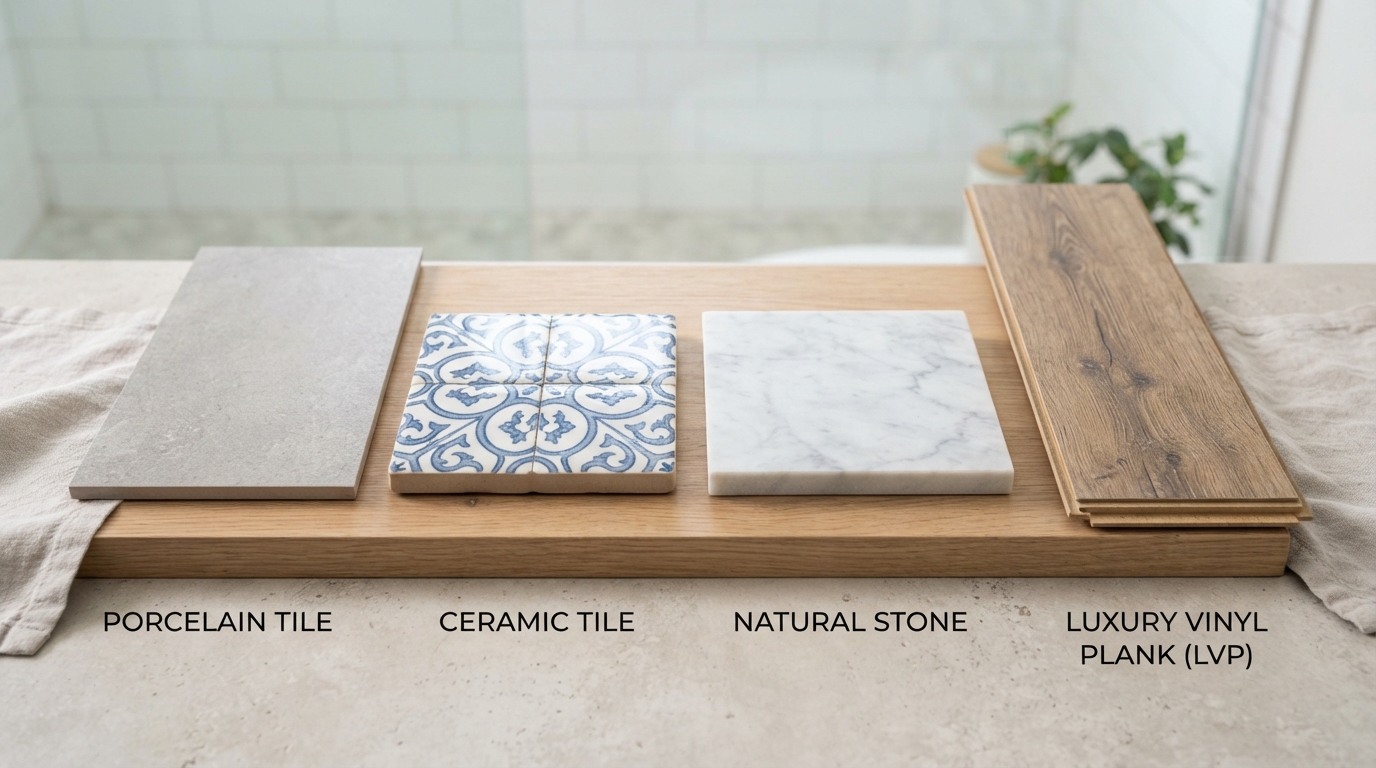
Porcelain is one of the most popular choices for bathroom floors. It is manufactured from refined clay and fired at high temperatures, producing a dense tile with low water absorption. That makes porcelain particularly well suited to bathroom environments.
Advantages
Porcelain can imitate marble, limestone, travertine, concrete, wood, and natural stone, giving homeowners considerable design flexibility.
Is Porcelain Tile Waterproof?
Porcelain tile itself has very low water absorption, but that doesn't mean a tiled bathroom floor is automatically waterproof. A successful bathroom floor is a system consisting of tile, grout, setting materials, substrate, waterproofing where required, and proper installation. Water can still travel through grout joints or other parts of an improperly constructed assembly. That's why installation quality matters just as much as the tile selection.
2. Ceramic Tile
Ceramic tile is another popular bathroom flooring material. Like porcelain, it comes in a wide range of colors, shapes, sizes, patterns, textures, and finishes. One of its biggest advantages is the sheer variety of available designs.
Porcelain
Generally denser and has lower water absorption, making it ideal for high-moisture environments.
Ceramic
Often provides a broader range of affordable decorative options and design flexibility.
Both can work well in bathrooms when appropriately selected and properly installed. Instead of choosing based solely on the word "porcelain" or "ceramic," consider the specific product specifications, application, slip characteristics, maintenance requirements, and installation conditions.
3. Natural Stone
Natural stone can create a distinctly upscale bathroom. Common options include marble, travertine, limestone, slate, and granite. Natural stone is especially attractive in luxury bathroom remodels because every piece has natural variation—no two installations are exactly alike.
Marble Bathroom Flooring
Marble creates elegant veining, a high-end appearance, and timeless visual appeal. But marble isn't maintenance-free. Homeowners may need to consider sealing, staining, etching, appropriate cleaning products, and long-term maintenance. If you love the appearance of marble but want easier maintenance, porcelain tile designed to resemble marble can be an alternative worth considering.
Travertine Bathroom Flooring
Travertine has a warmer, more natural appearance. It works well in Mediterranean-style bathrooms, traditional bathrooms, transitional spaces, and rustic designs. Because it is natural stone, it also requires appropriate maintenance and care.
Slate Bathroom Flooring
Slate can provide a darker, textured appearance. It can be a good fit for contemporary bathrooms, rustic bathrooms, and industrial-inspired spaces. Its texture can also provide useful traction depending on the specific product and finish.
4. Mosaic Tile
Mosaic tile isn't only decorative—it can also be highly functional. Small-format tiles create many grout joints, which can provide additional opportunities for traction. That's one reason mosaic tile is frequently used on shower floors. Mosaics are available in porcelain, ceramic, glass, and natural stone, and can also create beautiful borders and accent areas.
5. Large-Format Bathroom Tile
Large-format tile has become increasingly popular in contemporary bathroom design. Examples include 24×48-inch tiles, 24×24-inch tiles, and other oversized formats. Large tiles can reduce the number of visible grout joints, creating a more continuous visual appearance—especially effective in modern bathrooms.
Are Large Tiles Good for Small Bathrooms?
Yes. There's a common misconception that small bathrooms should always use small tiles. In reality, large-format tile can work extremely well in compact bathrooms because fewer grout lines make the floor appear less visually fragmented. However, the room needs to be measured carefully—the installer needs to consider floor dimensions, drain locations, door openings, walls, slopes, cuts, and transitions.
6. Luxury Vinyl Flooring
Luxury vinyl flooring can be attractive to homeowners who want a softer walking surface, warmer underfoot feel, wood-look designs, stone-look designs, and lower material costs. However, bathroom suitability depends heavily on the specific product and installation system. "Waterproof" marketing language doesn't eliminate the need for proper installation. Bathrooms are wet environments, and moisture can enter through seams, edges, penetrations, or improperly prepared substrates. Always evaluate the specific manufacturer's installation requirements.
7. Concrete Bathroom Floors
Concrete can create a minimalist, contemporary appearance that works particularly well with industrial designs, modern bathrooms, and minimalist interiors. But concrete requires careful consideration of cracking, moisture, sealing, surface finish, maintenance, and substrate conditions. It's not necessarily the simplest bathroom flooring option.
8. Wood Flooring in a Bathroom
Natural hardwood can be beautiful, but bathrooms create a challenging environment for wood. Water exposure, humidity, leaks, and standing moisture can create problems. For that reason, homeowners should carefully evaluate whether natural hardwood is appropriate for their particular bathroom. If you want the appearance of wood, porcelain or other water-resistant flooring products can provide a similar visual effect with different performance characteristics.
What Flooring Is Best for a Shower Floor?
The shower floor requires additional consideration because it must accommodate drainage and slope. Small-format tile is often advantageous because it can follow the slope of the shower floor more easily than large-format tile.
Popular shower floor options:
But the most important issue isn't simply the appearance. The shower floor must be properly sloped, waterproofed, drained, installed, grouted, and sealed where applicable.
Bathroom Floor Slip Resistance
One of the most important considerations for bathroom flooring is traction. A bathroom floor can become slippery when wet. When selecting flooring, pay attention to the product's intended application and slip-resistance characteristics. Don't assume that a particular finish is safe simply because it is labeled as bathroom flooring. This becomes even more important for shower floors, homes with accessibility requirements, households with older adults, and bathrooms frequently exposed to water.
Matte Tile
- • More natural appearance
- • Less visible water spotting
- • Less reflective glare
- • Contemporary appearance
Glossy Tile
- • Reflective appearance
- • Bright visual effect
- • Easy-to-wipe surface
- • Evaluate slip resistance carefully
How to Choose Bathroom Floor Tile Color
Color should work with the entire bathroom. Consider the vanity color, wall tile, shower tile, countertop, fixtures, paint, natural light, and artificial lighting.
Light Bathroom Floors
Make a bathroom feel brighter, cleaner, and more open. Work particularly well in small bathrooms.
Dark Bathroom Floors
Create drama, contrast, luxury, and depth. Work especially well with light walls, natural wood vanities, and brass fixtures.
Gray Bathroom Flooring
A popular neutral that bridges warm and cool palettes, modern and traditional styles.
Warm-Tone Bathroom Flooring
Beige, cream, taupe, and warm stone tones make a bathroom feel more inviting.
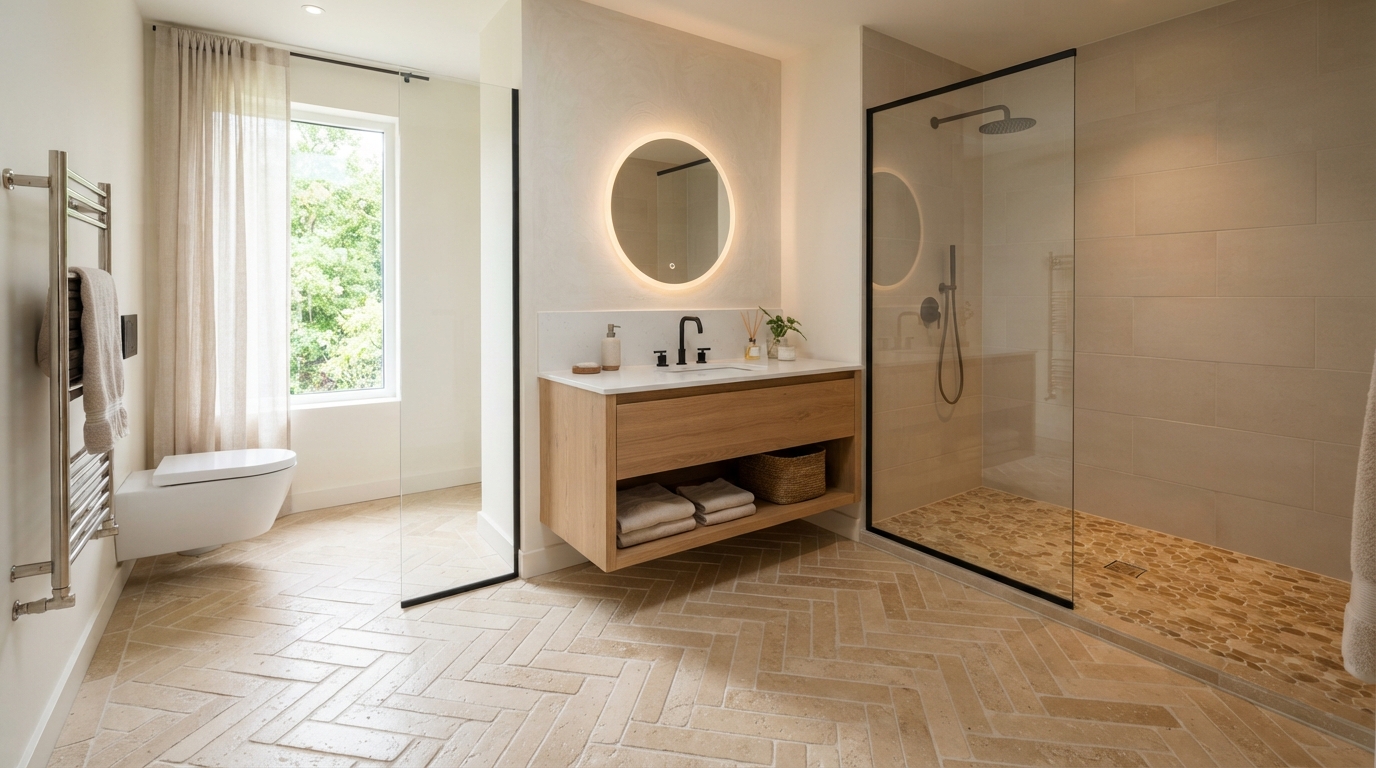
Herringbone and mosaic patterns add movement and sophistication.
Bathroom Flooring Design Ideas
Create a Continuous Floor
Using one flooring material throughout the bathroom creates a clean, seamless appearance.
Create a Shower Accent
Use a contrasting mosaic or small-format tile in the shower for visual interest.
Use a Border
A decorative border can create visual definition and architectural character.
Use Wood-Look Porcelain
Provides warmth while maintaining the visual consistency of a tile-based bathroom.
Combine Large and Small Formats
Large-format floor tile with mosaic shower floor creates contrast while serving a functional purpose.
Bathroom Floor Tile Patterns
Tile layout can dramatically change the appearance of a bathroom. The right pattern depends on room size, tile size, style, budget, and installation complexity.
Straight Lay
Simple and modern.
Grid
Clean and architectural.
Running Bond
Classic and versatile.
Herringbone
Adds movement and sophistication. Requires more cuts and careful installation.
Chevron
More geometric and dramatic.
Basketweave
Traditional and decorative.
How Much Does Bathroom Flooring Cost?
Bathroom flooring costs vary significantly. The final price can depend on material, square footage, tile size, pattern, demolition, subfloor condition, waterproofing, labor, grout, transitions, baseboards, and disposal. Material cost is only one part of the project.
Bathroom Flooring Cost Factors
For example, an inexpensive tile installed over a damaged or improperly prepared substrate can ultimately become a more expensive project if the underlying problem isn't addressed.
Bathroom Waterproofing vs. Bathroom Flooring
These are two different things. The floor finish protects the surface and provides the appearance you see. Waterproofing is part of the construction system that helps manage moisture. This distinction is especially important around showers, tub surrounds, wet walls, and curbless showers. A bathroom can have beautiful tile and still suffer from water damage if the underlying system isn't properly constructed.
Common Bathroom Flooring Mistakes
Choosing Tile Only for Appearance
A beautiful tile isn't necessarily appropriate for the floor.
Ignoring Slip Resistance
Bathrooms get wet. The flooring needs to be evaluated accordingly.
Using Wall Tile on the Floor
Not every wall tile is designed or rated for floor applications.
Ignoring the Substrate
Tile cannot compensate for an unsuitable or damaged base.
Choosing the Tile Too Late
Flooring affects door heights, toilet installation, vanity height, transitions, and shower elevations.
Buying Exactly the Required Square Footage
Tile installations require cuts and may encounter breakage. Order appropriate overage.
Bathroom Flooring for Small Bathrooms
Small bathrooms provide an opportunity to create a very clean visual design. Consider large-format tile for fewer grout lines, light colors for greater visual brightness, consistent materials for less visual fragmentation, simple patterns for a calmer appearance, wall-mounted vanities for more visible floor area, and large mirrors for additional reflected light.
For more ideas, see our Small Bathroom Remodeling Ideas guide.
Bathroom Flooring for Primary Bathrooms
Primary bathrooms offer more opportunities for material combinations. You might combine large-format floor tile, mosaic shower floor, marble-look shower walls, custom vanity, heated flooring, and decorative accent tile. The key is creating a coherent design.
Heated Bathroom Floors
Heated flooring can add comfort, particularly during cooler mornings. Electric radiant systems are commonly incorporated beneath compatible floor finishes. However, installation requires careful planning around floor height, electrical requirements, waterproofing, controls, fixtures, and flooring material. If heated flooring is something you want, it should be considered during the design stage rather than after the tile has already been installed.
How to Choose Bathroom Flooring: The 10-Point Checklist
If the answer to all ten is yes, you're much more likely to end up with a successful flooring installation.
Frequently Asked Questions
What is the best flooring for a bathroom?
Porcelain tile is one of the most versatile bathroom flooring choices because of its durability, low water absorption, design variety, and maintenance characteristics. However, the best material depends on the specific bathroom, installation conditions, and homeowner preferences.
Is porcelain or ceramic tile better for bathrooms?
Both can work well. Porcelain generally has lower water absorption and higher density, while ceramic offers a wide range of styles and applications. The specific product and intended application should be evaluated.
What is the best tile for a shower floor?
Small-format tile or mosaics are commonly useful for shower floors because they can accommodate the required slope toward the drain. The specific tile must also be appropriate for the wet application and have suitable surface characteristics.
Are large tiles good for small bathrooms?
Yes. Large-format tiles can reduce visible grout lines and create a more continuous appearance. However, the room dimensions and tile layout need to be carefully planned.
Is marble good for bathroom floors?
Marble can be an excellent luxury material, but it requires more maintenance than many manufactured alternatives. Homeowners should understand sealing, cleaning, staining, and etching considerations before choosing it.
Are bathroom floors waterproof?
The flooring surface itself may be highly water resistant, but the complete bathroom floor assembly isn't automatically waterproof simply because tile has been installed. Proper substrate preparation, waterproofing where required, drainage, and installation are essential.
What color floor makes a small bathroom look bigger?
Light and neutral colors can help create a brighter, more open appearance. Large-format tile and fewer visual breaks can also contribute to the perception of greater space.
Should bathroom floor tile match the shower tile?
No. Matching tile creates continuity, while complementary materials can create contrast and visual interest. The important thing is that the materials work together.
How much does bathroom flooring cost?
Bathroom flooring costs depend on the material, square footage, demolition, substrate preparation, installation complexity, pattern, waterproofing requirements, and labor.
How long does bathroom tile flooring last?
Properly selected and installed tile flooring can last for many years and potentially decades. The longevity depends on the product, installation, maintenance, and conditions of the bathroom.
Can you put heated floors under bathroom tile?
Yes, compatible radiant heating systems can be installed beneath certain bathroom floor finishes. The system needs to be planned before installation so electrical, floor height, waterproofing, and flooring requirements can be coordinated.
Do I need to replace the subfloor during a bathroom remodel?
Not necessarily. The existing subfloor should be evaluated. Replacement or repair may be necessary if there is water damage, rot, movement, or other conditions that make the existing substrate unsuitable.
Ready to Remodel Your Bathroom?
Let's Create a Bathroom Where Every Detail Works Together
Choosing the right floor is only one piece of a successful bathroom renovation. Venguard Construction's design-build process brings consultation, site evaluation, design, material selection, estimating, construction, and project management together into one coordinated process.
Schedule Your Complimentary ConsultationServing Homeowners Across Southern California
Venguard Construction provides bathroom remodeling services throughout Orange County and Los Angeles County.