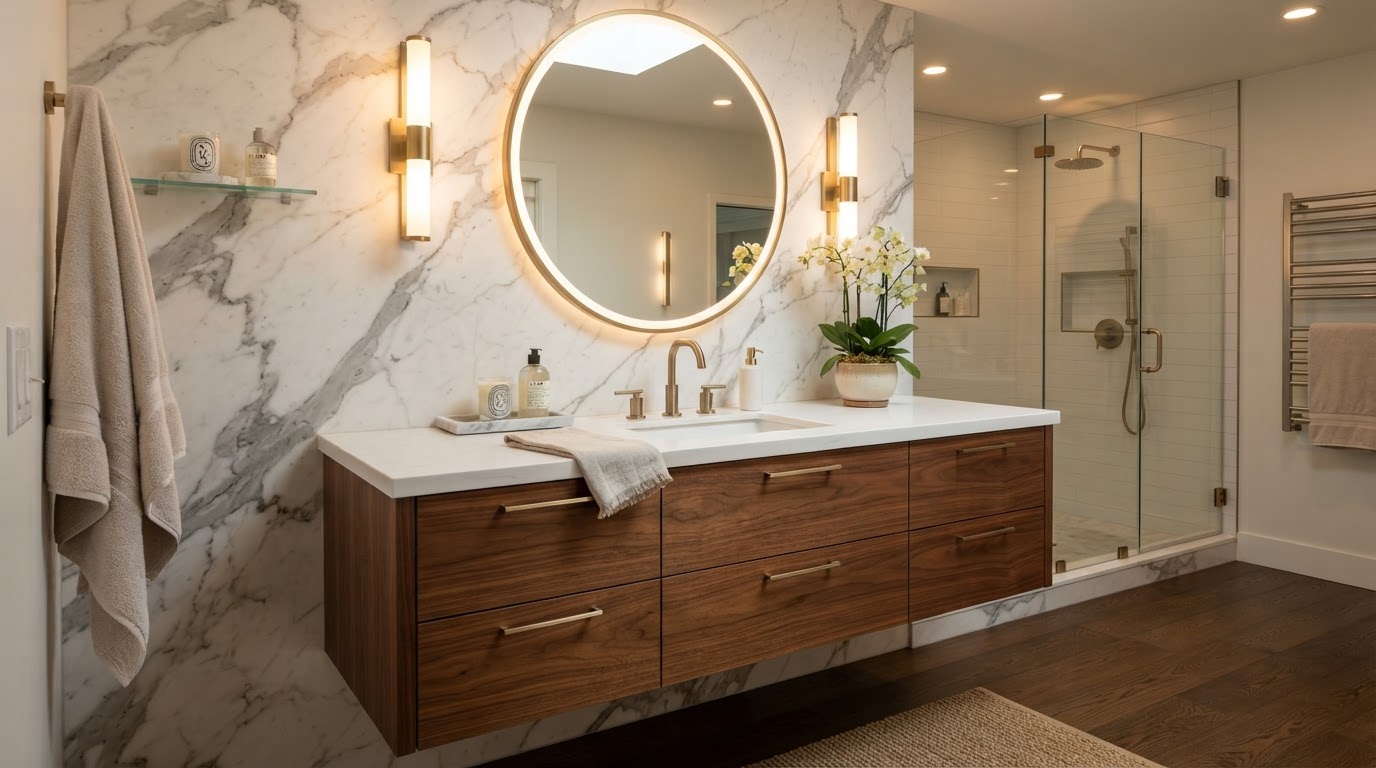
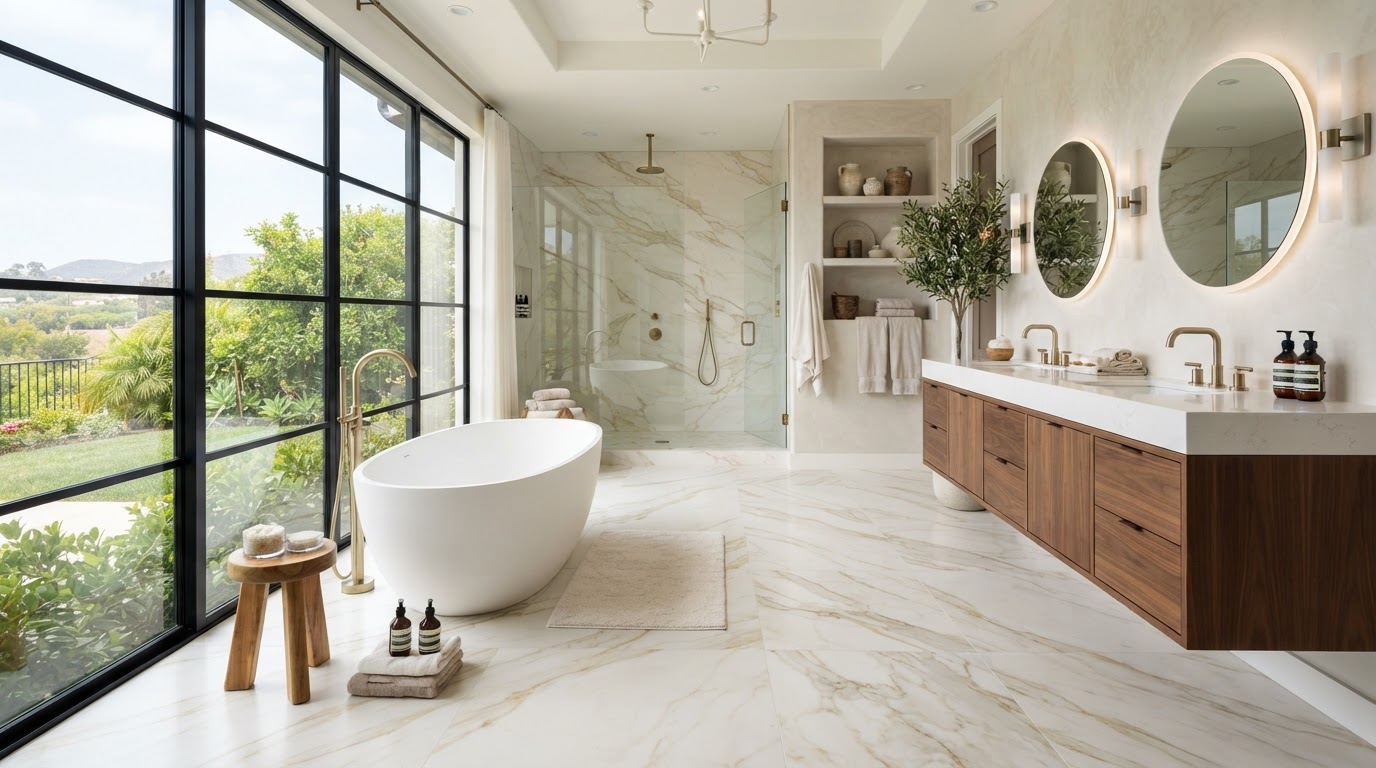
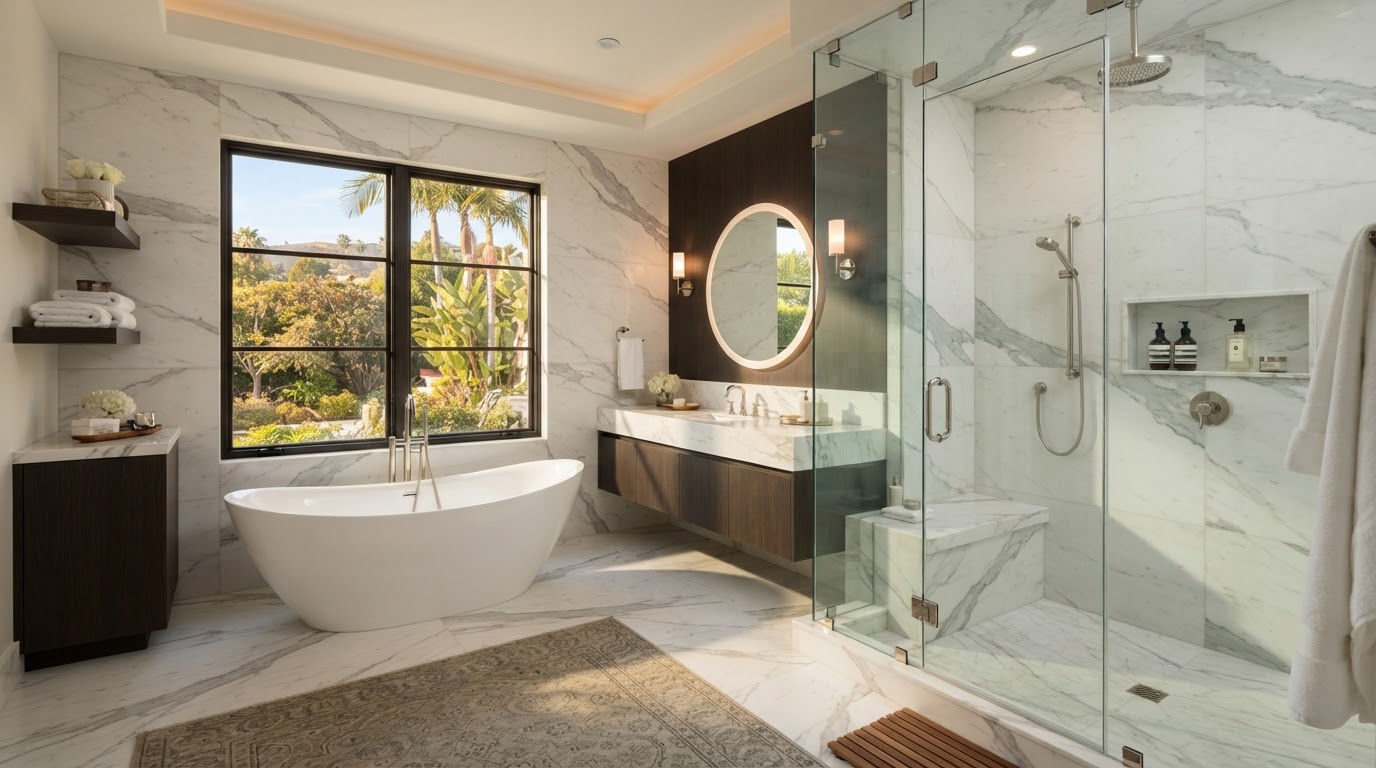
Few elements have as much visual impact in a bathroom as the shower tile. The right tile can make a shower feel larger, brighter, more luxurious, more modern, more timeless, and more architectural.
But shower tile isn't simply a decorative decision.
The shower is one of the most demanding areas of a bathroom because it is constantly exposed to water and moisture. That means the tile needs to work with the entire shower construction system, including the substrate, waterproofing, drainage, layout, grout, sealants where applicable, and installation.
For homeowners remodeling a bathroom in Orange County or Los Angeles, this becomes especially important when remodeling an older bathroom or completely rebuilding a shower. A beautiful tile selected without considering the underlying construction can create problems later.
So in this guide, we'll cover 25 bathroom shower tile ideas, the most common shower tile materials, patterns, colors, formats, niches, maintenance considerations, installation issues, and how to choose the right tile for your remodel.
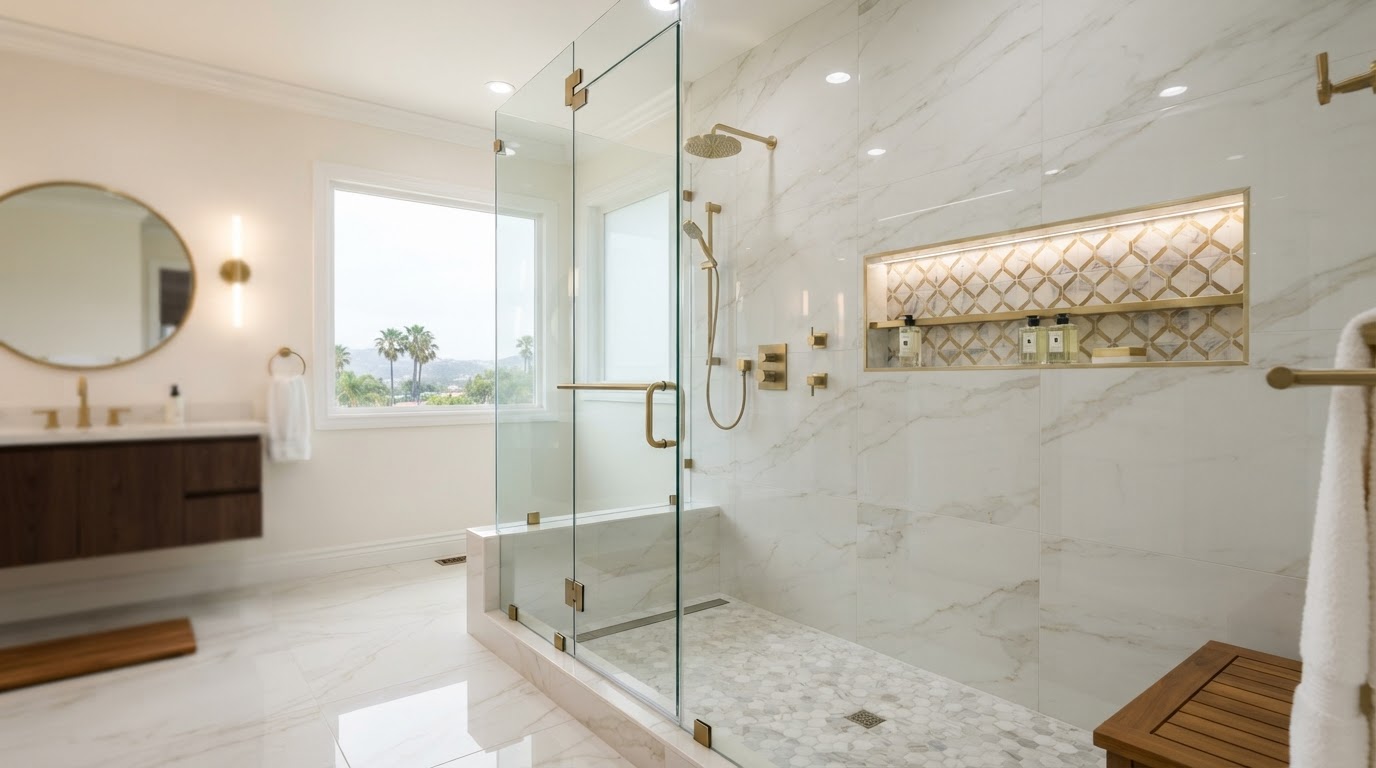
The right shower tile balances beauty, durability, and proper waterproofing.
Why Shower Tile Matters So Much
The shower is often one of the largest surfaces in a bathroom. Unlike a small decorative accessory, shower tile can cover multiple walls, the shower floor, a niche, a bench, a curb, and accent walls. That makes tile one of the primary design elements of the entire room.
Light Large-Format Tile
Can create a bright, open appearance.
Dark Stone-Look Tile
Can create a dramatic, luxurious atmosphere.
Small Mosaic Tile
Can introduce texture and visual detail.
Marble-Look Porcelain
Can create an upscale appearance with a more consistent manufactured surface.
Natural Stone
Can provide authentic variation and character.
25 Bathroom Shower Tile Ideas
1. Large-Format Marble-Look Porcelain
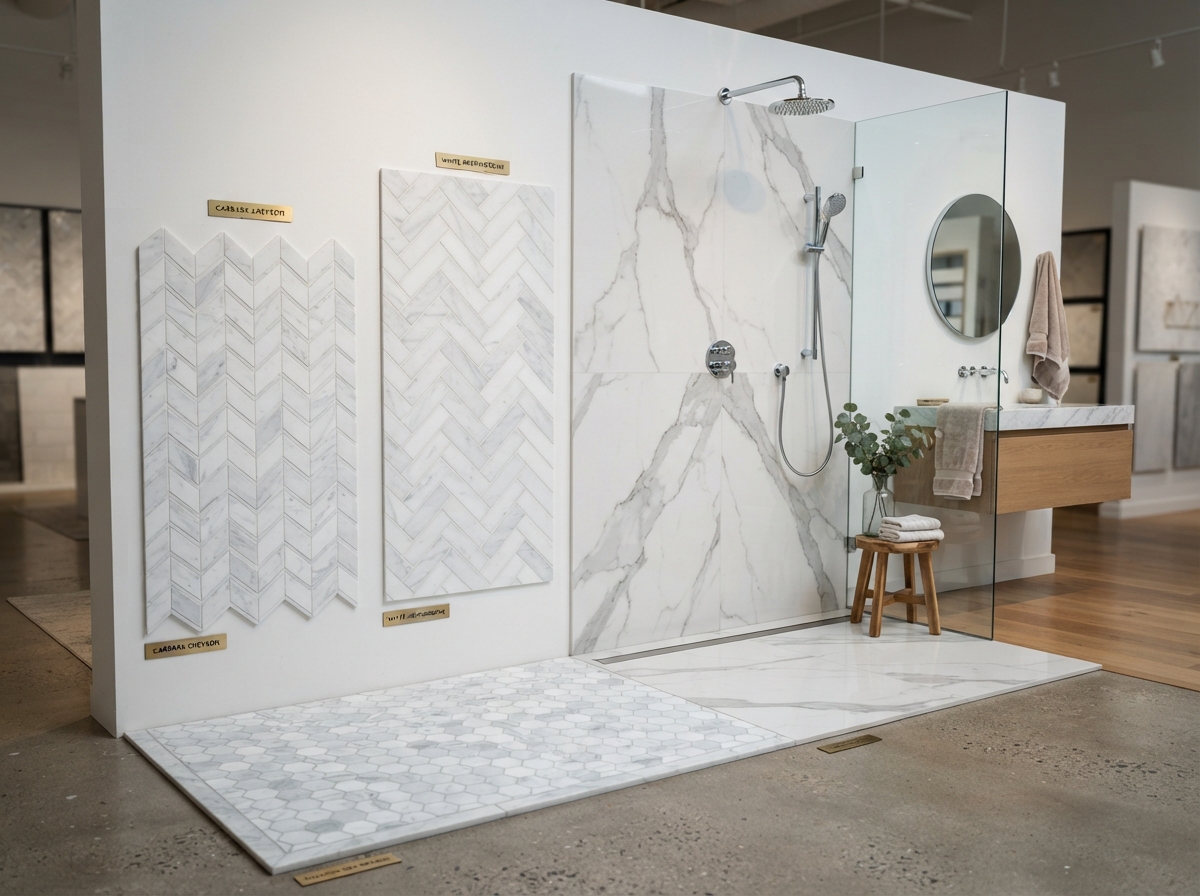
One of the most versatile contemporary shower designs is large-format porcelain that resembles marble. You can achieve the appearance of white marble, Calacatta-style stone, gray veined marble, or warm beige stone without necessarily using natural marble. Large-format panels or tiles can also reduce the number of visible grout joints, creating a cleaner visual field.
2. Classic White Subway Tile
Subway tile remains popular because it is versatile and timeless. It can work with traditional, transitional, farmhouse-inspired, and modern bathrooms. The design can be changed dramatically simply by changing grout color, tile orientation, tile size, accent materials, and hardware.
3. Vertical Subway Tile
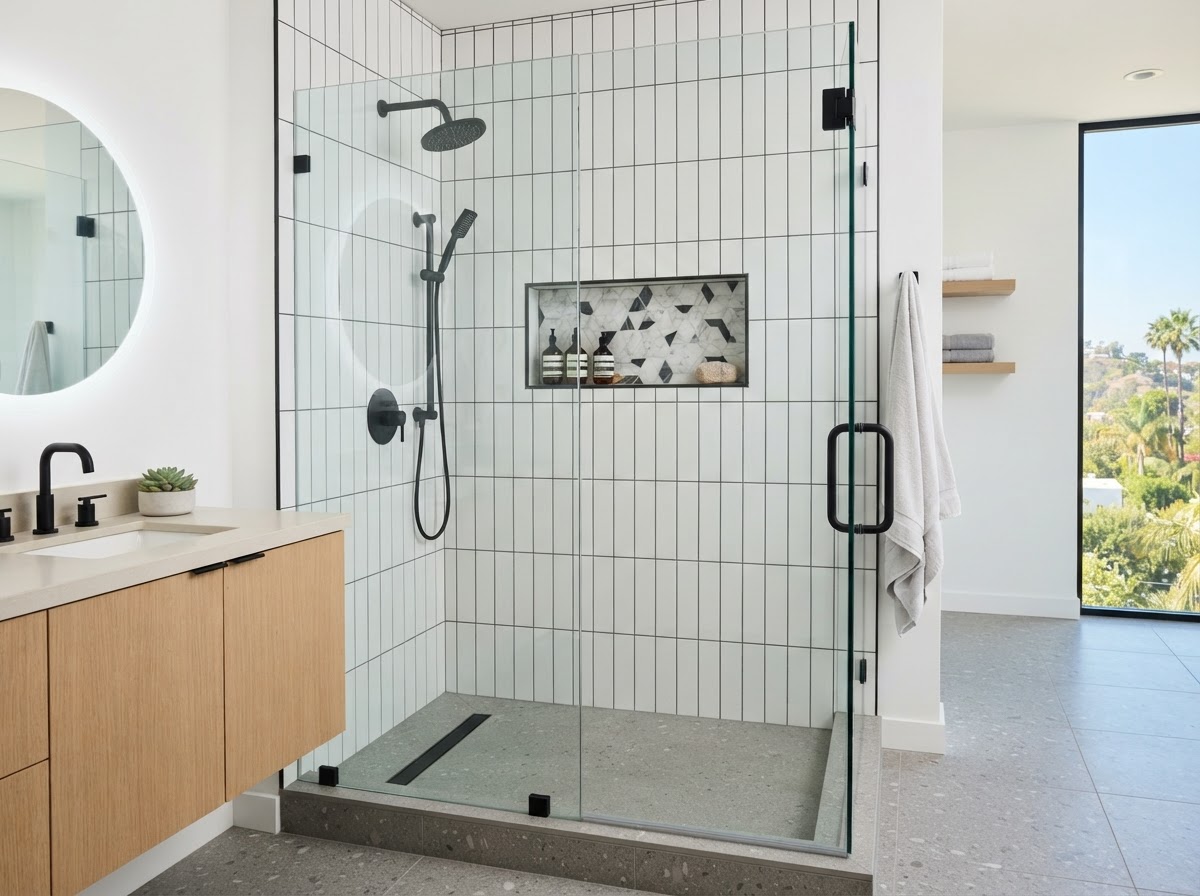
Instead of installing subway tile horizontally, rotate it vertically. This can draw the eye upward and create the perception of greater height. It's particularly useful in bathrooms with relatively low ceilings. The result is simple but visually distinctive.
4. Herringbone Shower Tile
Herringbone is one of the most recognizable decorative tile patterns. It can be created with subway tile, marble tile, porcelain, or stone. The pattern introduces movement without requiring an entirely different material. Because the pattern requires more cutting and careful alignment, it may also involve more installation labor than a straightforward layout.
5. Chevron Shower Tile
Chevron resembles herringbone but creates a continuous V-shaped pattern. It can provide a more geometric and architectural appearance. Venguard's portfolio specifically includes a Chevron Marble Shower, making this a useful design example.
6. Floor-to-Ceiling Shower Tile
Instead of stopping tile at a standard height, continue it all the way toward the ceiling. This can emphasize ceiling height, create a more finished appearance, reduce visual interruptions, and make the shower feel more substantial. It works especially well with large-format tile.
7. Same Tile on the Bathroom Floor and Shower Walls
For a highly cohesive design, use the same or closely related material throughout the bathroom. For example: bathroom floor → shower floor → shower walls. This creates continuity. However, the shower floor has different performance requirements than a vertical wall, so the specific product and format should be appropriate for each application.
8. Contrasting Shower Floor
Another approach is to make the shower floor the accent. For example, large white marble-look porcelain on the shower walls paired with a small dark gray mosaic on the shower floor. This creates contrast while also giving the shower floor a different scale and texture.
9. Mosaic Shower Floor
Mosaic tile is particularly useful for shower floors because smaller tiles can accommodate the slope toward the drain more easily. Popular choices include hexagon, square mosaic, penny round, and small stone mosaics. The exact tile must still be appropriate for the wet application and installed correctly.
10. Hexagon Shower Tile
Hexagon tile provides geometric interest without being overly complicated. It works well in modern, transitional, and contemporary bathrooms. You can use it on shower floors, shower walls, and accent areas.
11. Penny Tile
Penny-round tile creates a distinctive vintage-inspired appearance. It can work particularly well in traditional bathrooms, vintage-inspired remodels, and transitional designs. It's also commonly used as an accent rather than covering every surface.
12. Natural Stone Shower Tile
Natural stone can create a highly authentic luxury appearance. Potential materials include marble, travertine, slate, limestone, and granite. The advantage is natural variation. The disadvantage is that natural stone generally requires more material-specific maintenance than many manufactured alternatives.
13. Marble Shower Tile
Marble remains one of the most recognizable luxury bathroom materials. It can create dramatic veining and a high-end appearance. However, homeowners should understand sealing requirements, cleaning requirements, potential staining, etching, and maintenance before choosing natural marble for a shower. If you want the marble aesthetic with potentially simpler maintenance, marble-look porcelain is worth considering.
14. Dark Shower Tile
Dark tile can create a dramatic, sophisticated shower. Think charcoal, graphite, deep gray, black, or dark stone. Dark tile pairs especially well with brass, brushed gold, chrome, light wood, and white vanities. However, dark surfaces may show mineral deposits, soap residue, or water spotting more readily depending on the finish and local water conditions.
15. Warm Neutral Shower Tile
If you want a softer bathroom, consider beige, taupe, cream, warm gray, sand, or natural stone tones. These colors work beautifully with natural wood vanities and warm metal finishes.
16. Black-and-White Shower Tile
Black and white creates strong contrast. For example, white shower walls with a black shower floor, or white subway tile with a black accent niche. This is a classic combination that can be adapted to modern or traditional bathrooms.
17. Wood-Look Shower Tile
Natural wood isn't generally the first material you'd think of for a shower. But wood-look porcelain can provide warmth while being designed for wet-area applications when the specific product is suitable. This can be particularly attractive in spa-inspired bathrooms, organic modern bathrooms, and warm contemporary interiors.
18. Concrete-Look Shower Tile
Concrete-look porcelain can create an industrial-modern aesthetic. Pair it with matte black fixtures, a minimalist vanity, frameless glass, and simple lighting. The result can feel architectural without being overly decorative.
19. Shower Accent Wall
Instead of using the same tile everywhere, choose one wall as the focal point. For example, soft neutral porcelain on three walls with dramatic marble-look tile on the back shower wall. This creates a focal point without overwhelming the entire bathroom.
20. Shower Niche With Accent Tile
A shower niche is already a natural focal point. Use a different material inside it. For example, white marble-look porcelain on the shower walls with a dark mosaic in the niche. This creates a subtle design detail.
21. Matching Shower Niche and Shower Floor
For a cohesive look, use the same accent tile in both places. For example, hexagon marble-look tile on the shower floor and the same hexagon tile in the niche. This creates visual repetition and makes the design feel intentional.
22. Frameless Glass + Minimal Tile
Sometimes the best tile design is one that isn't visually interrupted. Pair large-format tile, minimal grout, frameless glass, and simple hardware. This creates an exceptionally clean contemporary appearance. Venguard's portfolio includes both walk-in glass shower and sliding glass shower projects that can provide useful visual examples.
23. Arched Shower With Tile
Architectural details can make an ordinary shower more distinctive. An arched shower opening can create a softer transition than a standard rectangular opening. Venguard's portfolio features an elegant arched shower, making this a particularly relevant design direction.
24. Full Marble-Look Shower
For a luxury bathroom, large marble-look porcelain across the shower walls can create a dramatic effect. Combine it with frameless glass, minimal grout, premium fixtures, a large mirror, and a custom vanity. The result can feel more like a luxury hotel than a standard bathroom.
25. Mix Tile Sizes
You don't have to use one tile size everywhere. For example, 24 × 48-inch large-format tile on the shower walls, a 2-inch mosaic on the shower floor, and small-format accent tile in the niche. The different scales create visual hierarchy while serving different functional purposes.
Best Materials for Shower Walls
Let's compare the most common options.
Porcelain
Best for: Versatility and durability
- • Low water absorption
- • Many styles and stone-look options
- • Large formats available
- • Easy maintenance
Ceramic
Best for: Design flexibility and decorative applications
- • Wide range of colors and patterns
- • Many price points
- • Easy to coordinate
Natural Stone
Best for: Authentic luxury
- • Natural variation and unique character
- • High-end appearance
- • Requires maintenance, sealing, and material-specific care
Glass Tile
Best for: Decorative accents
- • Beautiful reflective effects
- • Works as niche accent, border, or feature wall
- • Not automatically appropriate for every shower-floor application
What Is the Best Tile for a Shower Floor?
The shower floor is different from the shower wall. You need to consider drainage, slope, traction, tile size, grout, and waterproofing. Small-format tile is often advantageous because it can follow the slope toward the drain.
Common Shower Floor Choices
The specific product should be selected based on the intended wet-area application and installation requirements.
Shower Tile and Waterproofing
Tile is not the waterproofing system.
A shower can have beautiful tile and still experience water intrusion if the underlying construction isn't properly waterproofed. The shower assembly needs to address walls, floor, corners, seams, niches, plumbing penetrations, bench areas, transitions, and drainage. The tile is the finished surface. The waterproofing is part of the system beneath it.
Water can find its way into tiny openings. If the underlying system isn't properly designed and installed, moisture can eventually contribute to mold, rot, damaged framing, deteriorated substrates, and costly repairs. This is why homeowners shouldn't choose a shower contractor based solely on how good the finished tile looks. Ask about what happens behind the tile.
What Grout Color Should You Use?
Grout is often underestimated. It can change the entire appearance of the tile.
Matching Grout
Creates a seamless appearance.
Contrasting Grout
Emphasizes the tile pattern.
Dark Grout
Can highlight white subway tile.
Light Grout
Can soften a bold pattern.
For large-format tile, a closely coordinated grout can minimize the visual appearance of grout joints.
How to Choose Shower Tile Color
Start with the bathroom's overall palette. Consider the vanity, countertop, floor, shower, hardware, and lighting.
Warm Luxury
Cream stone + natural oak + brushed brass
Modern
Light gray + white + matte black
Coastal
Soft white + pale blue-gray + light wood
Contemporary
Large-format gray + black fixtures + floating vanity
Large-Format vs. Small-Format Shower Tile
Large-Format
Advantages:
- • Fewer grout joints
- • Clean, modern aesthetic
- • Can make walls feel continuous
Considerations:
- • Requires careful handling and wall preparation
- • More challenging around complex surfaces
- • Doesn't always work for shower floors due to slope
Small-Format
Advantages:
- • Flexible for curved or sloped areas
- • More design options
- • Excellent for shower floors
Considerations:
- • More grout and maintenance
- • More visual activity
Bathroom Shower Tile Cost
There is no universal price for shower tile installation. The total cost depends on tile material, shower size, tile format, pattern, demolition, waterproofing, substrate preparation, plumbing, niches, benches, grout, labor, glass, and custom fabrication.
A basic rectangular shower with straightforward tile is very different from a custom shower featuring large-format stone, multiple niches, a bench, accent tile, custom waterproofing, frameless glass, and relocated plumbing. That's why a homeowner should evaluate shower cost based on scope, not simply tile price per square foot. For a deeper breakdown, see our Bathroom Remodeling Cost Guide.
Bathroom Shower Tile Mistakes to Avoid
Choosing Tile Without Considering the Shower Floor
Wall tile isn't automatically appropriate for the floor.
Choosing Based Only on Appearance
A beautiful tile isn't necessarily appropriate for the application.
Ignoring Waterproofing
Tile is not a substitute for a properly constructed waterproofing system.
Using Too Many Materials
Too many competing patterns can make a bathroom feel chaotic.
Forgetting the Niche
If you want a niche, plan it before the walls are finished.
Selecting Fixtures Too Late
Shower valves, niches, benches, and fixtures need to be coordinated with the tile layout.
Ignoring Grout
Grout color can dramatically affect the final appearance.
Not Ordering Enough Tile
Complex layouts require cuts and may involve breakage. Your contractor should determine the appropriate quantity to order.
How to Choose Shower Tile: A 12-Step Checklist
Before finalizing your shower tile, ask:
Answering these questions early can prevent expensive design changes later.
Bathroom Shower Tile in Orange County & Los Angeles
For Orange County homeowners, shower remodeling can range from relatively straightforward updates to highly customized primary bathroom renovations. The right approach depends on the home's existing construction, bathroom size, desired layout, materials, and budget. Venguard's current bathroom portfolio demonstrates a broad range of shower styles, including marble, glass, arched, chevron, and contemporary designs.
Los Angeles homes can present very different remodeling conditions depending on the age and construction of the property. Before selecting expensive tile, homeowners should evaluate existing walls, shower floor, plumbing, drain, waterproofing, substrate, electrical, and ventilation. This is particularly important when converting an older tub into a new walk-in shower. The tile selection should come after the construction requirements are understood.
Venguard Construction serves homeowners throughout Orange County and Los Angeles County, including Irvine, Newport Beach, Costa Mesa, Huntington Beach, Anaheim, Santa Ana, Laguna Beach, Mission Viejo, Tustin, Lake Forest, and Los Angeles.
Frequently Asked Questions
What is the best tile for a shower?
Porcelain is one of the most versatile options because it is available in many styles and formats and generally has low water absorption. However, the best tile depends on the specific shower application, product specifications, design, and installation requirements.
Is porcelain or ceramic better for a shower?
Both can be suitable for shower applications when the specific product is rated for the intended use. Porcelain generally has lower water absorption, while ceramic offers a wide range of colors, patterns, and styles.
What is the best tile for a shower floor?
Small-format tile and mosaics are often useful for shower floors because they can accommodate the slope toward the drain. The specific tile should also have appropriate characteristics for wet-floor use.
Should shower tile go all the way to the ceiling?
It can. Floor-to-ceiling tile can create a more continuous and sophisticated appearance, especially with large-format materials. The appropriate height depends on the bathroom's design and architecture.
What size tile is best for a shower?
There is no universal ideal size. Large-format tile can reduce grout lines on shower walls, while smaller tiles are often useful on shower floors because they can follow the required slope more easily.
Is marble good for a shower?
Natural marble can create a beautiful luxury shower, but it requires appropriate care and maintenance. Homeowners should understand sealing, cleaning, staining, and etching considerations before choosing marble.
Is large-format tile good for shower walls?
Yes. Large-format tile can create a clean appearance with fewer grout joints. However, the walls must be properly prepared, and the installer must account for the tile's weight, handling, layout, and cuts.
What tile makes a shower look bigger?
Large-format light-colored tile, minimal grout lines, continuous materials, and frameless glass can help create the perception of a larger shower.
What is the best grout color for shower tile?
A grout color close to the tile can create a more seamless appearance, while contrasting grout emphasizes the tile pattern. The right choice depends on the design.
How much does a shower tile remodel cost?
Cost depends on the size of the shower, tile material, demolition, waterproofing, plumbing, substrate preparation, tile pattern, niches, glass, and labor. A detailed project scope is more useful than a generic per-square-foot estimate.
Does shower tile waterproof the shower?
No. Tile is the finished surface, not the complete waterproofing system. Proper waterproofing, drainage, substrate preparation, and installation are critical.
Can I use the same tile on the shower floor and walls?
Yes, provided the specific product and format are appropriate for each application. Many bathrooms use the same material in different sizes or finishes for the walls and floor.
How long does a shower tile remodel take?
The timeline depends on demolition, plumbing, substrate preparation, waterproofing, tile installation, grout, glass, fixtures, inspections, and other project-specific factors. See our <Link to='/blog/how-long-does-a-bathroom-remodel-take-orange-county-los-angeles' className='text-primary hover:underline font-medium'>bathroom remodeling timeline guide</Link> for more detail.
Final Thoughts
The best shower isn't simply the one with the most expensive tile. It's the one where design and construction work together.
A beautiful marble-look tile won't compensate for poor waterproofing. A gorgeous shower pattern won't fix an inefficient layout. An expensive fixture won't make a shower comfortable if the dimensions are wrong.
The best shower remodeling projects begin with the fundamentals: layout → waterproofing → drainage → materials → tile layout → fixtures → glass → finishing details. Once those elements are coordinated, the tile becomes what it should be: the beautiful finished expression of a well-designed shower.
For homeowners in Orange County and Los Angeles, that distinction matters. Because you're not just buying tile. You're investing in the construction behind it.
Ready to Design Your New Shower?
If you're considering a walk-in shower, tub-to-shower conversion, primary bathroom renovation, or complete bathroom remodel, start with the space—not the tile showroom. Venguard's design-build process begins with understanding your goals, evaluating the existing space, developing the design, selecting materials, preparing a detailed estimate, and coordinating construction.
Let's design a shower that's beautiful on the surface—and built correctly underneath.
Schedule Your Complimentary Consultation