Your primary bathroom is more than just another room in your home. It's where you start your morning, get ready for the day, unwind after work, and reset at the end of the night. For many homeowners in Orange County and Los Angeles, the primary bathroom is also one of the most important spaces to renovate when improving the comfort, functionality, and overall feel of the home. If you're planning a broader renovation, consider incorporating it into a full house remodel for a cohesive transformation.
Your daily retreat, reimagined
But there's one question almost every homeowner asks before starting:
How much does a primary bathroom remodel cost?
The honest answer is that there isn't one price that applies to every home. A primary bathroom remodel can range from a relatively straightforward renovation to a highly customized, luxury transformation involving a redesigned floor plan, custom cabinetry, premium tile, a large walk-in shower, freestanding tub, upgraded lighting, specialty plumbing fixtures, and other high-end finishes.
The final investment depends on the size of the bathroom, scope of work, layout changes, materials, labor, design complexity, plumbing and electrical requirements, permitting, and existing conditions.
In this guide, we'll break down what actually influences the cost of a primary bathroom remodel in Orange County and Los Angeles, what homeowners should budget for, where the money typically goes, and how to plan a renovation without getting caught by unexpected costs.
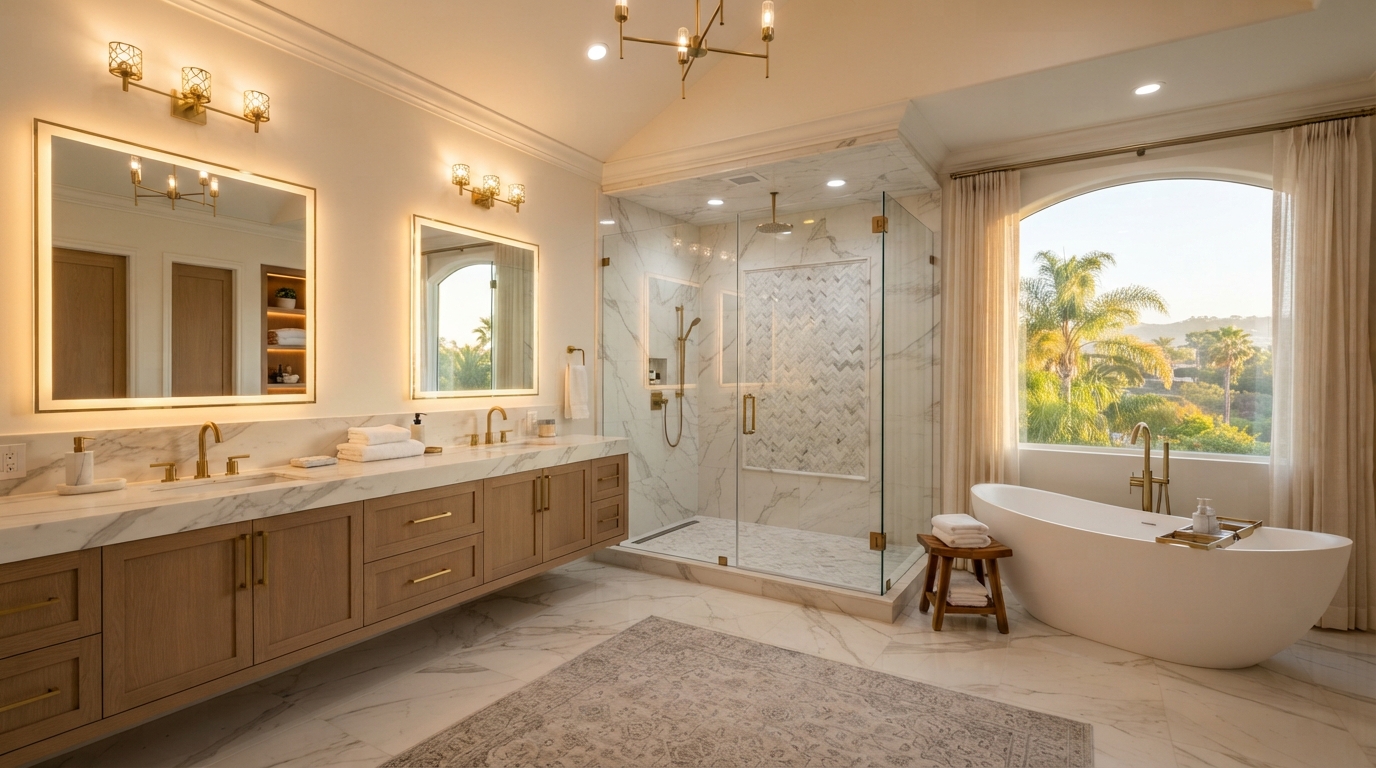
A thoughtfully designed primary bathroom combines luxury, function, and lasting value.
What Is a Primary Bathroom Remodel?
A primary bathroom remodel is typically a renovation of the main bathroom attached to or associated with the home's primary bedroom. It may include some or all of the following:
A cosmetic renovation may involve mostly surface-level improvements. A full primary bathroom remodel can involve rebuilding much of the space from the inside out. That distinction is extremely important when comparing prices.
Why Primary Bathroom Remodels Cost More Than Basic Bathroom Renovations
Primary bathrooms tend to be larger and more feature-rich than guest bathrooms. A typical primary bathroom may have:
There's also often a greater emphasis on design. Homeowners aren't simply trying to make the bathroom functional—they want it to feel like a private retreat. That can introduce additional design and construction requirements.
What Determines the Cost of a Primary Bathroom Remodel?
There are several major cost drivers.
1. Size of the Bathroom
Larger bathrooms generally require more flooring, tile, lighting, cabinetry, countertop, labor, and finishing materials. However, square footage isn't the only factor. A smaller bathroom with complicated custom construction can cost more than a larger bathroom with a simple layout.
2. Whether You Keep the Existing Layout
If the existing toilet, shower, tub, vanity, drain, and water lines remain in approximately the same locations, the project may require less plumbing modification. But moving these elements can dramatically improve the functionality of the bathroom.
For example, you might decide to remove a corner tub, expand the shower, create a larger double vanity, move the toilet, add a freestanding tub, or create a separate water closet. Those changes can add construction complexity. That doesn't mean layout changes are a bad investment—it simply means they should be considered before the project is priced and designed.
3. Tile Selection
Tile can have a major impact on the final price. You may choose porcelain, ceramic, marble, natural stone, large-format tile, mosaic, handmade tile, decorative tile, or custom patterns. But the material itself isn't the only consideration—installation complexity matters too.
A simple grid pattern is very different from herringbone, chevron, intricate mosaics, multiple tile sizes, custom borders, feature walls, or curved applications. Your tile budget should account for both material and installation complexity.
4. Vanity and Cabinetry
A primary bathroom often benefits from more storage than a guest bathroom. Options include:
- • Stock Vanity: Usually the simplest option.
- • Semi-Custom Vanity: More flexibility in size and finish.
- • Custom Cabinetry: Designed specifically for the space.
Custom cabinetry can provide better storage, specific dimensions, integrated organization, personalized finishes, and a higher-end appearance. But customization generally increases cost and may affect lead time.
5. Countertops
Common bathroom countertop materials include quartz, natural stone, marble, granite, porcelain, and other engineered surfaces. The countertop cost depends on material, size, thickness, edge detail, cutouts, number of sinks, fabrication, and installation. A double vanity will naturally require more countertop material and typically involves two sink cutouts.
6. Shower Design
The shower can become one of the most important cost centers in a primary bathroom. A basic shower and a custom luxury shower are completely different projects. A custom shower may include large-format tile, multiple showerheads, hand shower, body sprays, bench, niche, linear drain, frameless glass, curbless entry, accent tile, and multiple valves. Every additional feature requires planning and construction.
7. Shower Glass
A frameless glass shower enclosure can dramatically change the appearance of a bathroom, creating a cleaner, more open visual effect. But custom glass requires accurate measurements and fabrication. The cost can vary based on glass thickness, size, number of panels, door configuration, hardware, shape, and installation complexity.
8. Bathtub
Some homeowners are removing large unused tubs. Others are intentionally adding a beautiful freestanding tub. Neither choice is automatically right—it depends on available space, lifestyle, design goals, resale considerations, plumbing, and personal preference. A freestanding tub can become a visual centerpiece, but it also requires space and appropriate plumbing.
9. Plumbing
Plumbing costs can increase when fixtures are relocated, drain lines are changed, new shower valves are added, multiple shower fixtures are installed, a tub is added, plumbing conditions are poor, or existing work needs correction. Keeping plumbing locations relatively consistent can sometimes simplify construction, but don't sacrifice a better floor plan solely to avoid plumbing work.
10. Electrical and Lighting
Modern primary bathrooms often use several types of lighting:
Electrical work may also include new outlets, GFCI protection, exhaust fans, heated flooring, and smart features. A professional electrical plan should be considered during the design stage rather than added as an afterthought.
11. Waterproofing
Waterproofing isn't where you should look for shortcuts. The shower and other wet areas need appropriate water-management systems beneath the visible finishes. The homeowner may never see this part of the bathroom, but it can be one of the most important parts of the project. The tile is the visible finish—the waterproofing system is part of what protects the structure behind it.
12. Permits and Inspections
Depending on the project scope and jurisdiction, permits and inspections may be required. This can apply to work involving plumbing, electrical, structural modifications, or other regulated construction. Because Orange County and Los Angeles contain multiple jurisdictions, requirements can vary depending on the property. A qualified contractor should identify the applicable requirements during the planning process.
Venguard's published process includes planning and permitting as part of the project workflow, rather than treating permitting as an afterthought.
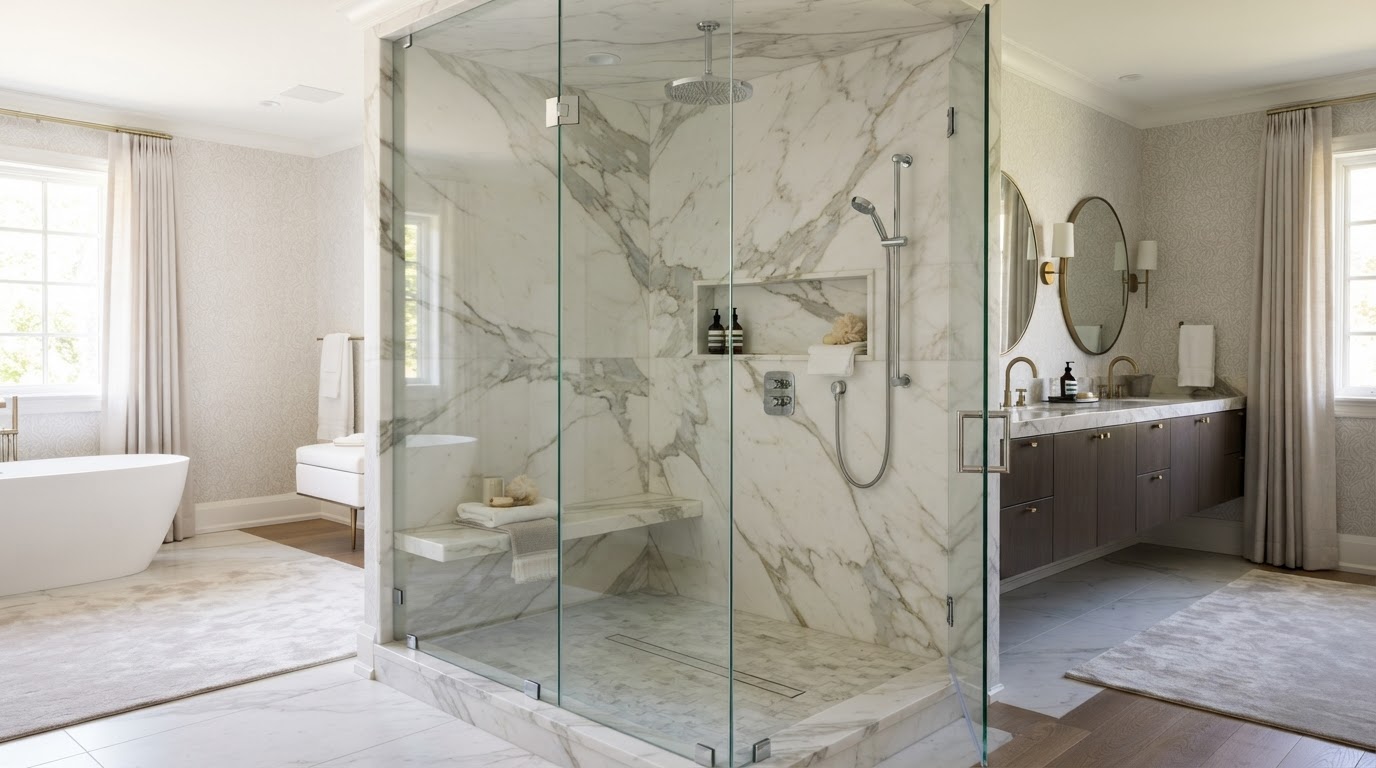
Custom walk-in showers are often the centerpiece of a primary bathroom renovation.
Primary Bathroom Remodel Cost by Project Type
Rather than focusing only on one number, it is more useful to think about bathroom remodeling in terms of scope.
Cosmetic Primary Bathroom Update
Paint, mirrors, lighting, hardware, vanity replacement, and minor fixture updates. This is generally the least complex category because the existing infrastructure remains largely intact.
Mid-Range Primary Bathroom Remodel
New vanity, countertop, flooring, shower tile, updated shower, plumbing fixtures, lighting, mirrors, painting, and some plumbing/electrical modifications. This is where many homeowners begin seeing the bathroom transformed rather than simply refreshed.
High-End Primary Bathroom Remodel
Custom layout, custom cabinetry, large walk-in shower, frameless glass, freestanding tub, premium stone, large-format tile, custom lighting, heated floors, specialty plumbing fixtures, built-in storage, and high-end finishes. At this level, the project becomes much more design-intensive.
Luxury Primary Bathroom Remodel
Spa-inspired shower, multiple shower systems, custom stonework, custom cabinetry, specialty lighting, heated flooring, premium plumbing fixtures, integrated technology, statement bathtub, architectural details, custom glass, and high-end natural materials. There is essentially no universal ceiling on the cost of a highly customized bathroom.
Where Does the Money Go in a Primary Bathroom Remodel?
Homeowners often focus on visible products, but labor and construction are significant parts of the investment. Your project may include costs associated with:
Design
Planning the layout, finishes, materials, and construction details.
Demolition
Removing existing fixtures, flooring, tile, cabinets, and finishes.
Plumbing
Installing or modifying water and drain lines.
Electrical
Lighting, outlets, fans, heated flooring, and other components.
Framing
Modifying walls and preparing the space.
Waterproofing
Preparing shower and wet areas.
Tile Installation
Installing and finishing floor and wall tile.
Cabinetry
Vanity and storage installation.
Countertops
Fabrication and installation.
Glass
Custom shower enclosure.
Painting
Final wall and ceiling finishes.
Project Management
Coordinating trades, materials, schedule, inspections, and communication.
This is why two bathrooms with identical-looking finishes can still have very different project costs.
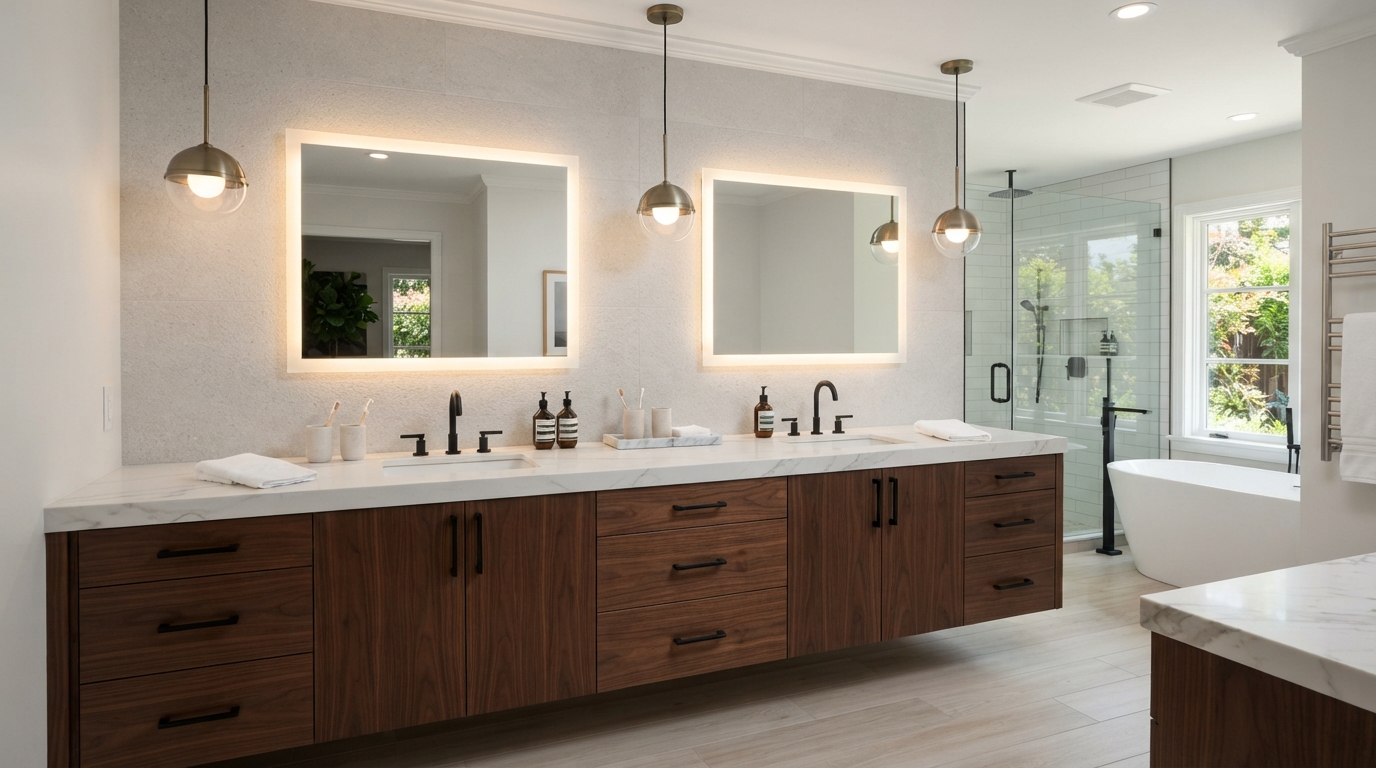
Custom vanities and quality countertops are among the most impactful investments in a primary bathroom.
Should You Remodel the Layout?
This is one of the biggest decisions you'll make. Ask yourself: does the current bathroom function well?
If the answer is yes, maintaining the existing layout may make sense. If the answer is no, this may be the perfect opportunity to rethink the space.
- • Instead of a large unused bathtub, you might create a larger walk-in shower.
- • Instead of one small vanity, you might install a double vanity.
- • Instead of poor storage, you could add custom cabinetry.
- • Instead of an awkward toilet location, you might redesign the room for better privacy.
The best bathroom design isn't necessarily the one with the most expensive materials. It's the one that makes the space work better for your life.
Is a Primary Bathroom Remodel Worth It?
For many homeowners, the answer can be yes—but "worth it" depends on what you're trying to accomplish. A remodel can improve daily comfort, functionality, storage, appearance, accessibility, energy/water efficiency, and overall enjoyment of the home. It can also make the property more attractive to future buyers.
But homeowners shouldn't assume that every dollar spent on remodeling will automatically return dollar-for-dollar at resale. The right investment depends on neighborhood, home value, project quality, design choices, market conditions, and buyer expectations. The best approach is usually to balance personal enjoyment with sensible investment.
What Features Add the Most Value to a Primary Bathroom?
Better Storage
A beautiful bathroom that doesn't have enough storage becomes frustrating quickly.
Larger or Better-Designed Shower
A well-designed shower can dramatically improve daily use.
Double Vanity
Especially valuable for couples sharing the space.
Quality Lighting
Good lighting improves both appearance and functionality.
Durable Materials
A remodel should be designed for years of use.
Timeless Design
Extremely trendy finishes can age faster than carefully selected timeless materials.
Better Layout
Sometimes the biggest improvement isn't a product—it's moving things around.
Common Mistakes Homeowners Make With Primary Bathroom Remodeling
Mistake #1: Starting With Materials Instead of Layout
Don't choose tile before deciding how the room should function. Start with: Function → Layout → Design → Materials.
Mistake #2: Underestimating Construction Costs
The visible products aren't the entire project. Labor, demolition, plumbing, electrical, waterproofing, installation, permits, and project management all matter.
Mistake #3: Changing the Design During Construction
Design changes after work begins can create additional costs and delays. Finalize as much as possible before demolition.
Mistake #4: Choosing the Lowest Bid
The cheapest proposal isn't necessarily the best value. Compare scope, materials, experience, schedule, project management, permitting, warranty, and communication.
Mistake #5: Ignoring Waterproofing
A beautiful shower with poor water management is not a successful remodel.
Mistake #6: Overbuilding for the Neighborhood
Luxury should still make sense for the property. The goal is to create a beautiful, functional bathroom that fits the home and the homeowner.
How to Create a Primary Bathroom Remodeling Budget
Before requesting estimates, divide your priorities into three categories:
Must-Haves
Things you absolutely want. Examples: walk-in shower, double vanity, better storage.
Nice-to-Haves
Features you would love but can eliminate if necessary. Examples: freestanding tub, heated floors, specialty lighting.
Luxury Upgrades
Features you would add if the budget allows. Examples: premium stone, custom cabinetry, high-end fixtures, smart bathroom technology.
How to Keep Your Primary Bathroom Remodel on Budget
Define the Scope Before Construction
Know what you're actually building.
Select Materials Early
Don't wait until construction is underway.
Avoid Constant Changes
Every change can affect labor, materials, and schedule.
Prioritize the Infrastructure
Spend appropriately on plumbing, electrical, waterproofing, substrate, and installation. These aren't the areas where you want shortcuts.
Spend Strategically on Finishes
Not every item needs to be the most expensive option.
Why Design-Build Can Make a Difference
Primary bathrooms involve many moving pieces. There may be a designer, contractor, plumber, electrician, tile installer, cabinet installer, countertop fabricator, glass company, and painter. Without coordination, homeowners can end up managing the project themselves.
Venguard's design-build process is structured around planning, design, construction coordination, project management, on-site oversight, and final walkthrough. The company's published process also includes a dedicated project manager, project-management tools, organized payment milestones, and ongoing communication.
For homeowners, that means the goal isn't simply to build an attractive bathroom—it's to create a more organized remodeling experience.
Primary Bathroom Remodeling in Orange County
Orange County homeowners have access to a wide range of housing styles, from older homes requiring infrastructure updates to newer properties where homeowners are primarily looking to upgrade finishes and functionality. Venguard currently identifies Orange County communities including Irvine, Newport Beach, Costa Mesa, Huntington Beach, Anaheim, Santa Ana, Laguna Beach, Mission Viejo, Tustin, and Lake Forest as part of its service area.
That means the remodeling approach should be based on the specific property rather than applying the same template to every home.
Primary Bathroom Remodeling in Los Angeles
Los Angeles presents an equally broad range of homes and renovation scenarios. Older properties may require more investigation into existing construction, while newer homes may focus more heavily on design upgrades and premium finishes. Because remodeling requirements vary by jurisdiction and project scope, homeowners should confirm permitting requirements and construction responsibilities during the planning stage. Venguard serves Los Angeles and surrounding Southern California communities.
Why Homeowners Should Get a Detailed Estimate
A bathroom remodeling estimate should tell you much more than "Bathroom Remodel — $XX,XXX." You should understand what you're actually paying for. A useful estimate should clarify scope of work, demolition, labor, materials, fixtures, cabinetry, tile, plumbing, electrical, permits, project management, change-order process, and payment milestones.
Venguard emphasizes transparent pricing and detailed project planning as part of its approach. Its website states that the company aims to provide clear pricing without hidden costs or last-minute changes.
Questions to Ask Before Hiring a Primary Bathroom Remodeling Contractor
Before signing anything, ask:
Venguard's portfolio currently showcases multiple bathroom projects, including walk-in showers, dual vanities, freestanding tub suites, marble bathrooms, and other bathroom configurations.
Frequently Asked Questions
How much does a primary bathroom remodel cost in Orange County?
The cost varies significantly depending on bathroom size, scope, materials, layout changes, plumbing, electrical work, cabinetry, tile, glass, permitting, and design complexity. A cosmetic renovation and a high-end custom primary bathroom should not be expected to cost the same.
How much does a primary bathroom remodel cost in Los Angeles?
There is no single price for every Los Angeles bathroom remodel. The final cost depends on the home's existing conditions, project scope, design, materials, labor, permitting requirements, and whether the layout is changed.
What is the difference between a primary bathroom and a guest bathroom remodel?
Primary bathrooms are often larger and may include double vanities, larger showers, tubs, custom storage, and more elaborate finishes. These additional features can make primary bathroom renovations more expensive.
Is a primary bathroom remodel worth it?
A remodel can be worthwhile if it improves the home's functionality, comfort, appearance, and long-term usability. Homeowners should balance personal enjoyment with the property's overall value and neighborhood.
Does moving plumbing increase the cost of a bathroom remodel?
It can. Relocating toilets, showers, tubs, sinks, or drains may require additional plumbing and construction work.
Is a walk-in shower more expensive than a standard shower?
It depends on the design. A basic walk-in shower may be relatively straightforward, while a custom walk-in shower with premium tile, multiple fixtures, niches, benches, waterproofing details, and frameless glass can significantly increase the project cost.
Is a freestanding tub worth adding to a primary bathroom?
It depends on how much you will use it and whether the bathroom has enough space. For homeowners who enjoy baths, it can become an important feature. For others, the space may be better used for a larger shower or additional storage.
How long does a primary bathroom remodel take?
The timeline depends on the scope, permitting, materials, layout changes, custom fabrication, and existing conditions. A straightforward update will generally require less construction than a fully customized primary bathroom renovation. For a detailed breakdown, read our guide on how long a bathroom remodel takes.
Do I need permits for a primary bathroom remodel?
Depending on the work and local jurisdiction, permits may be required for plumbing, electrical, structural modifications, or other regulated construction. Your remodeling contractor should identify applicable requirements during planning.
Should I remodel my bathroom before selling my home?
It depends on the condition of the existing bathroom, the local market, your home's overall position, and your budget. A strategic renovation may improve buyer appeal, but homeowners should avoid assuming that every renovation will return its full cost at resale.
Final Thoughts
A primary bathroom remodel is one of those projects where planning matters just as much as construction. The biggest mistake homeowners can make is focusing entirely on the visible finishes. The tile, vanity, fixtures, lighting, and glass are important—but underneath those finishes are plumbing, electrical, waterproofing, framing, installation, permitting, and project coordination.
A successful remodel brings all of those pieces together. The goal isn't simply to create a bathroom that looks beautiful in photographs. It's to create a bathroom that works better, feels better, lasts longer, fits your home, and most importantly, fits the way you actually live.
Ready to Plan Your Primary Bathroom Remodel?
Start with a conversation about your space, goals, priorities, and budget. Venguard Construction offers a complimentary consultation and currently serves homeowners throughout Orange County, Los Angeles County, and surrounding Southern California communities.
Get Your Free Bathroom Remodeling Consultation