A walk-in shower can completely change the look, function, and feel of a bathroom. For some homeowners, the project may simply mean replacing an old shower with a cleaner, more modern design. For others, it may involve removing an existing bathtub, rebuilding the shower from the studs, installing waterproofing, adding new plumbing, laying custom tile, installing a frameless glass enclosure, and creating a completely custom shower environment.
That difference in scope is why there is no single price for a walk-in shower remodel in Orange County or Los Angeles. Current 2026 Los Angeles cost data from Angi puts a typical custom walk-in shower at approximately $4,771 to $9,656, while its broader Los Angeles walk-in shower data reports total project costs ranging from roughly $6,816 to $13,632, with an average around $10,224. Prefabricated options can cost considerably less.
These figures are useful for understanding the market, but they are not a quote from Venguard Construction and should not be treated as a guaranteed price. Your actual cost will depend on your bathroom, the existing conditions, your desired layout, materials, fixtures, waterproofing requirements, glass enclosure, plumbing, electrical work, permitting, and the level of customization you choose.
If you're considering a walk-in shower remodel in Orange County or Los Angeles, this guide explains what you should realistically budget for, what drives the price, where homeowners commonly overspend, and how to compare remodeling proposals. For a broader overview, see our complete Bathroom Remodeling Guide or our Bathroom Remodel Cost Guide.
Table of Contents
- Quick Answer: What Does a Walk-In Shower Remodel Cost?
- Average Walk-In Shower Cost in Los Angeles (2026)
- 12 Biggest Factors That Affect Cost
- Walk-In Shower Cost by Material
- Walk-In Shower vs. Tub
- What Is a Curbless Walk-In Shower?
- How Much Does a Luxury Walk-In Shower Cost?
- How to Budget for a Walk-In Shower Remodel
- How Long Does a Walk-In Shower Remodel Take?
- Does a Walk-In Shower Remodel Require a Permit?
- Why Waterproofing Matters More Than the Tile
- Walk-In Shower Design Ideas for Orange County Homes
- Frequently Asked Questions
Quick Answer: What Does a Walk-In Shower Remodel Cost?
For planning purposes, homeowners should think in terms of project type rather than one universal price. A walk-in shower project generally falls into one of these categories:
1. Prefabricated Walk-In Shower
A manufactured shower system or insert designed for relatively straightforward installation. This is usually the most budget-conscious approach.
2. Standard Custom Walk-In Shower
A built-in shower with selected tile, fixtures, waterproofing, and glass. This provides considerably more design flexibility.
3. Tub-to-Shower Conversion
The existing bathtub is removed and replaced with a walk-in shower. This can be relatively straightforward when the existing plumbing works well, but the scope can increase when plumbing, flooring, walls, or framing need modification.
4. Luxury Custom Walk-In Shower
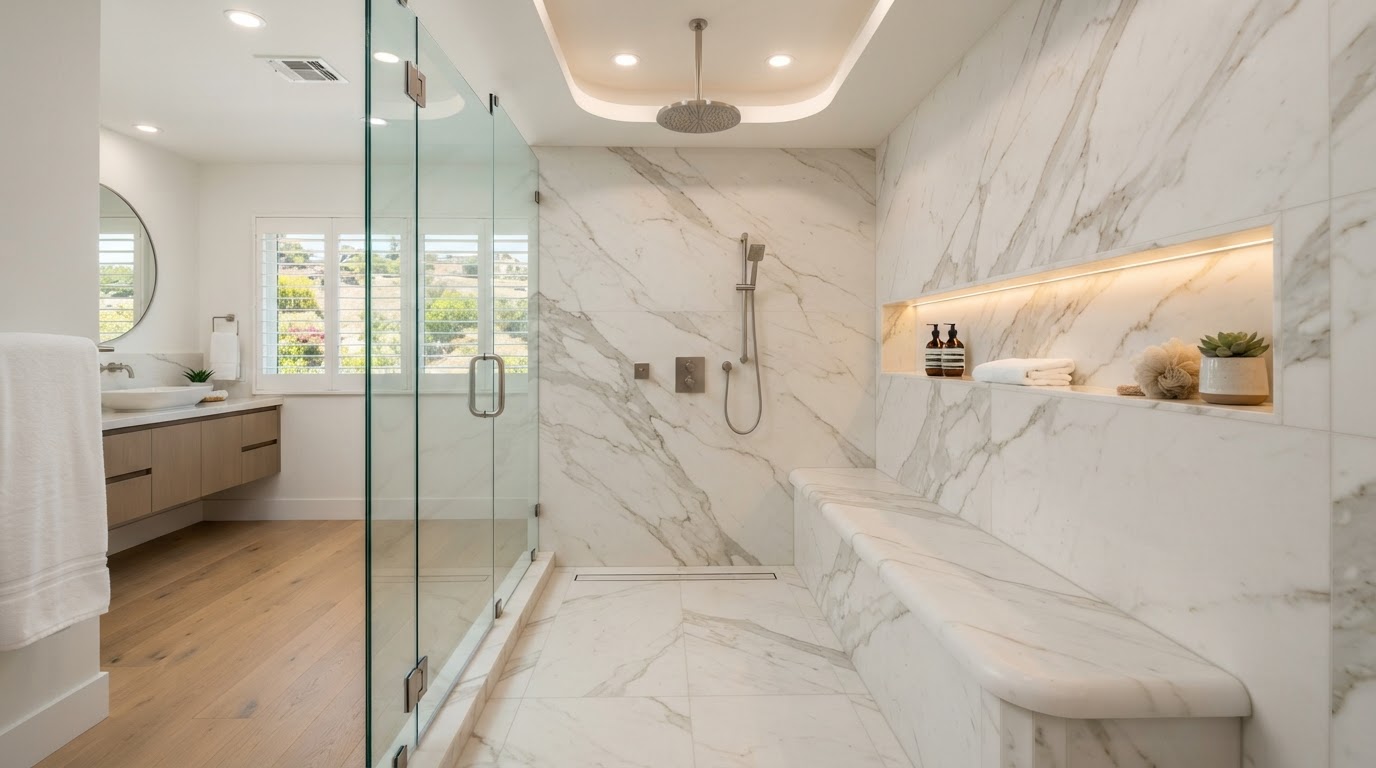
A highly customized shower may include large-format tile, marble or natural stone, frameless glass, multiple shower heads, hand showers, built-in niches, shower benches, custom drains, curbless entry, specialty lighting, and premium plumbing fixtures.
The most important point: the shower itself is only one component of the project. The final cost is determined by everything required to create the finished shower correctly.
What Is the Average Walk-In Shower Cost in Los Angeles in 2026?
Current 2026 Los Angeles data provides a useful benchmark. Angi reports that walk-in shower projects in Los Angeles can range from approximately $6,816 to $13,632, with an average around $10,224. It also reports custom walk-in shower costs in the range of approximately $4,771 to $9,656, depending on the type of cost being measured.
The difference between these figures illustrates an important point: "walk-in shower cost" can mean different things depending on what is included. A homeowner researching the price of the shower enclosure alone may see a very different number from someone pricing a complete demolition-and-rebuild project.
A full renovation could include demolition, disposal, plumbing, framing, waterproofing, shower pan, tile, grout, fixtures, glass, electrical work, painting, permits, and project management. Therefore, homeowners should always ask: "Does this price include the complete installation and everything required to deliver the finished shower?"
The 12 Biggest Factors That Affect Walk-In Shower Remodeling Cost
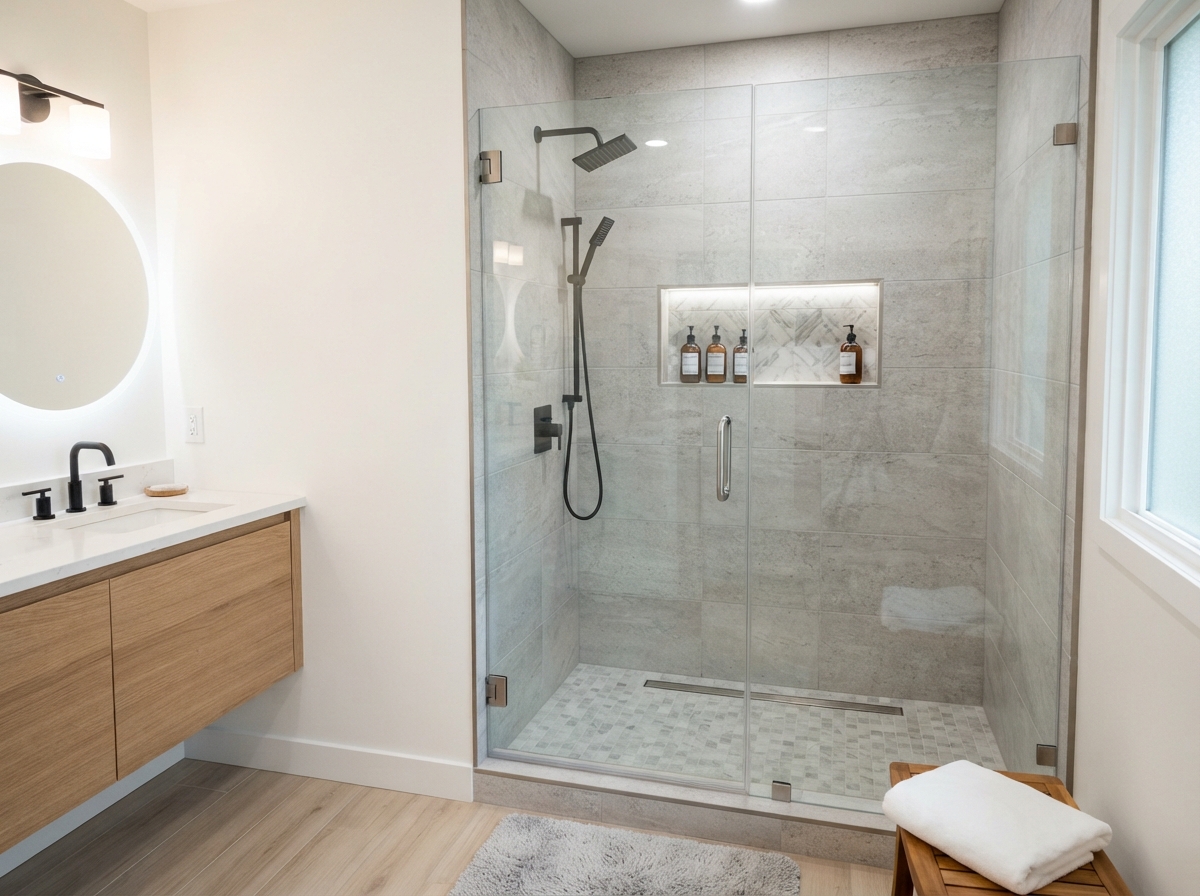
1. Shower Size
The larger the shower, the more material and labor it generally requires. But size isn't the only consideration. A small custom shower with intricate tile, premium stone, multiple fixtures, and frameless glass can cost more than a larger but simpler shower. Square footage matters, but complexity matters too.
2. Prefabricated vs. Custom
This is one of the biggest cost decisions. A prefabricated system may offer faster installation, lower material cost, fewer design decisions, and simpler installation. Current 2026 Los Angeles data from Angi places prefabricated walk-in shower costs around $795–$3,408 for the shower itself. A custom shower allows you to determine size, shape, tile, fixtures, niches, bench, drain, glass, entry, and layout. Current Angi data puts custom Los Angeles walk-in shower costs around $4,771–$9,656.
3. Tub-to-Shower Conversion
One of the most popular bathroom transformations is replacing a bathtub with a walk-in shower. This can improve accessibility, daily convenience, visual openness, shower size, and bathroom aesthetics. Current 2026 Los Angeles data from Angi reports tub-to-shower conversion costs ranging approximately from $1,800 to $10,000 for prefab stalls, with custom tiled conversions around $6,000–$18,000. The exact price depends heavily on what happens after the tub is removed.
4. Waterproofing
This is one of the most important parts of a shower remodel, and it is one of the areas homeowners should be least willing to compromise on. The finished tile may be beautiful, but tile itself is not the entire waterproofing system. A properly constructed shower needs appropriate protection around shower walls, floor, corners, seams, niches, penetrations, plumbing fixtures, transitions, and drain areas.
5. Tile
Tile is one of the most visible cost variables. Common choices include ceramic, porcelain, marble, natural stone, glass tile, large-format porcelain, and stone slabs. But material price is only part of the equation—installation complexity matters too.
6. Tile Pattern
A simple grid pattern is generally easier to install than an intricate pattern. Complex patterns may include herringbone, chevron, basket weave, mosaic, mixed-size layouts, and decorative borders. They can require more cutting, alignment, planning, and installation time. Venguard's portfolio currently includes a chevron marble shower, along with marble walk-in showers and other bathroom projects.
7. Glass Shower Enclosure
Frameless glass is one of the most popular features in modern bathroom remodeling. It can make a bathroom feel larger, cleaner, more open, and more contemporary. But frameless glass requires precise measurements and installation. Depending on the design, you may need fixed glass panels, hinged doors, sliding doors, custom hardware, specialty glass, or additional supports.
8. Shower Fixtures
The fixtures can range from basic to highly customized. Potential features include standard showerheads, rain showerheads, hand showers, dual shower heads, thermostatic valves, multiple body sprays, premium trim, and digital controls. The more fixtures you add, the more important plumbing planning becomes.
9. Built-In Niches
A shower niche can provide convenient storage without taking up floor space. But niches also require careful waterproofing and tile detailing. A poorly designed niche can become a weak point in a shower system, while a properly designed niche can become both a practical storage feature and a visual focal point.
10. Shower Bench
A built-in shower bench can improve comfort and accessibility. It can be useful for sitting while showering, shaving, placing toiletries, or accessibility needs. But it adds construction complexity and requires appropriate waterproofing.
11. Plumbing
Plumbing changes can significantly affect the budget. You may need plumbing work when moving the shower, changing the drain, adding multiple shower heads, installing a new valve, converting a tub, or changing fixture locations. If your existing plumbing configuration works well, keeping the basic layout may simplify the project.
12. Electrical Work
Modern showers and bathrooms increasingly include electrical features such as shower lighting, recessed ceiling lights, exhaust fans, heated floors, backlit mirrors, and specialty lighting. Electrical work should be coordinated with the rest of the remodel before walls and ceilings are closed.
Walk-In Shower Cost by Material
Material selection can have a major effect on the final budget. Here are the most common options:
| Material | Cost Level | Key Characteristics |
|---|---|---|
| Ceramic Tile | Budget-friendly | Many styles, colors, broad availability, flexible design |
| Porcelain Tile | Moderate | Durable, can imitate marble, concrete, wood, or stone |
| Marble | Premium | High-end appearance, natural variation, requires sealing |
| Large-Format Tile | Moderate to High | Fewer grout lines, contemporary look, requires careful substrate prep |
| Stone Slabs | Luxury | Extremely luxurious, substantial material and installation costs |
Walk-In Shower vs. Tub: Which Is Better?
This is not simply a design decision. It depends on how you use the bathroom.
Choose a Walk-In Shower If You Want:
- Easier daily access
- A modern appearance
- More open visual space
- A larger showering area
- Better accessibility
Keep a Tub If:
- You regularly use it
- You have young children
- The home has limited bathing options
- Resale considerations make having a tub important
What Is a Curbless Walk-In Shower?
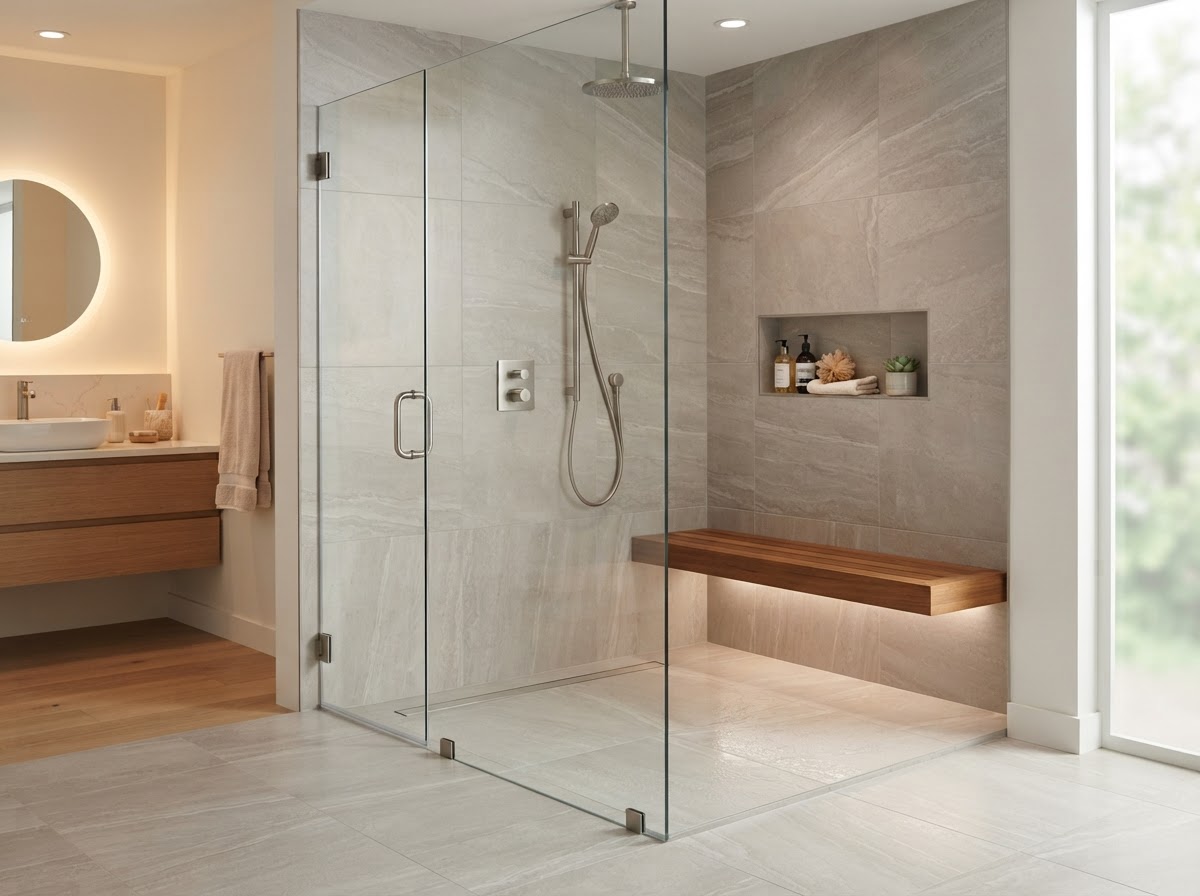
A curbless shower eliminates the traditional raised threshold. Instead, the bathroom floor transitions directly into the shower area. This creates a cleaner visual appearance, easier access, a more open bathroom, and potential accessibility benefits. But curbless showers can require more careful construction. The floor needs appropriate drainage and slope, and the waterproofing system must be planned correctly.
How Much Does a Luxury Walk-In Shower Cost?
There is no meaningful universal price for a luxury shower. Luxury projects can include marble, natural stone, large-format slabs, frameless glass, multiple shower fixtures, custom niches, built-in benches, curbless entry, specialty drainage, heated floors, architectural modifications, and premium hardware. At this level, the shower becomes a custom construction project rather than a product installation.
How to Budget for a Walk-In Shower Remodel
A good budgeting process starts with the desired outcome:
- Decide what you want to change: Do you want to remove the tub? Add frameless glass? Custom tile? A bench? A curbless entry?
- Separate must-haves from nice-to-haves: This makes it easier to make decisions if the estimate is higher than expected.
- Choose your material level: Budget (simple, durable), Mid-Range (higher-quality finishes), or Premium (luxury materials, custom details).
- Decide whether the layout changes: This can have a significant impact on cost.
- Have the existing bathroom evaluated: A professional needs to see the actual conditions.
- Get a detailed estimate: Your proposal should clearly identify scope, materials, labor, plumbing, electrical, glass, permits, demolition, disposal, timeline, payment schedule, and change-order process.
How Long Does a Walk-In Shower Remodel Take?
The timeline depends on shower size, demolition, plumbing, electrical, waterproofing, tile, glass, material availability, inspections, and unexpected conditions. A simple shower replacement can be substantially faster than a complete custom rebuild. A custom project involving demolition, plumbing changes, waterproofing, tile, glass, and inspections should be planned as a multi-stage construction project.
Homeowners should also remember that glass installation often occurs after tile and other finish work are completed because accurate field measurements are important. For more on construction timelines, see our Kitchen Remodel Timeline Guide which covers similar phased construction principles.
Does a Walk-In Shower Remodel Require a Permit?
Permit requirements depend on the work being performed and the local jurisdiction. For Los Angeles, current 2026 guidance from Angi states that permits are required for bathroom remodeling work such as installing a walk-in shower, with the Los Angeles Department of Building and Safety handling permitting within the city. Requirements can differ between jurisdictions in Los Angeles County and Orange County.
If your project involves plumbing changes, electrical work, structural changes, or layout modifications, ask the contractor which permits are required. Do not assume that every city follows exactly the same process. Learn more about our design-build process which includes planning and permitting.
Why Waterproofing Matters More Than the Tile
Homeowners often spend hours selecting tile color, tile size, marble pattern, and grout color. But the waterproofing system behind those finishes deserves just as much attention. A shower can look perfect on the day it is completed. If the underlying waterproofing is poorly executed, however, problems may develop later, including moisture intrusion, mold, damaged framing, damaged flooring, and costly repairs.
When comparing contractors, ask: "What is included in the shower waterproofing system?" The answer can tell you a lot about how seriously the contractor approaches the project.
Walk-In Shower Design Ideas for Orange County Homes
A walk-in shower doesn't have to look generic. Some design directions include:
Modern Minimalist
- Large-format porcelain
- Frameless glass
- Simple hardware
- Neutral colors
- Minimal grout lines
Warm Contemporary
- Wood-look vanity
- Warm stone
- Brushed hardware
- Soft lighting
Luxury Marble
- Marble walls & floor
- Frameless glass
- Premium fixtures
- Built-in niche
Spa-Inspired
- Rain shower & hand shower
- Bench seating
- Natural stone
- Soft, layered lighting
Accessibility features should be designed into the shower from the beginning rather than added as an afterthought. Features like curbless entry, wider openings, hand showers, built-in benches, and strategically positioned grab bars can all be integrated seamlessly. Explore our full house remodeling services for comprehensive renovation options.
Walk-In Shower Remodeling Across Southern California
Venguard Construction serves homeowners throughout Orange County and Los Angeles County, including Irvine, Newport Beach, Costa Mesa, Huntington Beach, Anaheim, Santa Ana, Laguna Beach, Mission Viejo, Tustin, Lake Forest, and Los Angeles. Local conditions, home age, and permitting processes can all affect your walk-in shower remodel cost.
10 Ways to Control Your Walk-In Shower Remodeling Budget
10 Things You Should Ask a Walk-In Shower Contractor
- Are you licensed and insured?
- Have you completed similar walk-in shower projects?
- Can I see examples of your bathroom work?
- What waterproofing system do you use?
- Is demolition included?
- Is glass included?
- Are plumbing changes included?
- Who handles permits?
- How are unexpected conditions handled?
- Who manages the project?
Frequently Asked Questions About Walk-In Shower Remodeling
How much does a walk-in shower remodel cost in Orange County?
There is no single Orange County price. A basic prefabricated shower can cost significantly less than a custom walk-in shower involving demolition, waterproofing, custom tile, plumbing changes, and frameless glass. The best way to determine the cost is to have the existing bathroom evaluated and develop a detailed scope.
How much does a walk-in shower cost in Los Angeles in 2026?
Current 2026 Los Angeles data from Angi reports walk-in shower costs ranging from approximately $6,816 to $13,632, with an average around $10,224. Custom or highly complex projects can cost more.
Is a walk-in shower cheaper than a bathtub?
Not necessarily. A basic prefabricated shower can be less expensive than some bathtub installations. However, a custom walk-in shower with tile, waterproofing, glass, plumbing changes, and premium fixtures can be significantly more expensive.
How much does it cost to convert a tub into a walk-in shower?
Current 2026 Los Angeles estimates vary widely. Angi reports tub-to-shower conversion projects around $1,800–$10,000 for prefab stalls, while custom tiled conversions can reach approximately $6,000–$18,000. The existing bathroom condition and plumbing can significantly change the final price.
Is a curbless shower more expensive?
It can be. A curbless shower may require additional floor preparation, drainage planning, waterproofing, and structural considerations. The actual cost depends on the existing floor structure and the desired design.
How much does a frameless glass shower cost?
The cost depends on the size, glass type, hardware, configuration, and installation requirements. Custom frameless glass should be measured for the completed shower conditions and should not be treated as a generic off-the-shelf product.
Is a walk-in shower worth it?
For many homeowners, yes. A walk-in shower can improve accessibility, function, appearance, and daily convenience. However, whether it is worth the investment depends on your bathroom, budget, lifestyle, and long-term plans.
Does removing a bathtub hurt home value?
Not automatically. The answer depends on the property and whether another bathtub remains available. If a home has multiple bathrooms and at least one bathtub remains, converting one tub into a well-designed walk-in shower may be perfectly reasonable.
How long does a walk-in shower remodel take?
The timeline depends on the scope. A simple replacement can be relatively quick, while a custom project involving demolition, plumbing, waterproofing, tile, inspections, and custom glass can take considerably longer. Ask for a project-specific schedule.
Do I need a permit to install a walk-in shower?
Permit requirements depend on the jurisdiction and scope. Los Angeles projects can require permits for bathroom remodeling work, including walk-in shower installation. Your contractor should determine which permits apply to your specific project.
What is the most important part of a walk-in shower remodel?
The waterproofing and underlying construction are among the most important components. The shower needs to be designed to properly manage water before the decorative finishes are installed. Beautiful tile cannot compensate for poor underlying construction.
Can I add a shower niche?
Yes. A niche can provide convenient storage for toiletries. However, it should be incorporated into the waterproofing and tile design from the beginning—not added as an afterthought.
Final Takeaway: Budget the Entire Shower, Not Just the Shower
When homeowners search "How much does a walk-in shower remodel cost?" they often expect one number. But the better question is: "What does my specific walk-in shower project require?" A shower with a prefabricated insert is a completely different project from a custom marble walk-in shower with frameless glass, multiple fixtures, a built-in niche, curbless entry, and relocated plumbing.
The cost can change dramatically depending on size, layout, materials, tile, glass, fixtures, plumbing, waterproofing, electrical, permits, existing conditions, and customization. That is why the smartest first step isn't choosing tile—it is defining the project. For more guidance, read our common remodeling mistakes to avoid before starting.
Planning a Walk-In Shower Remodel?
If you're considering replacing your bathtub, upgrading an outdated shower, or creating a completely custom walk-in shower, Venguard Construction can help you move from an idea to a clearly defined project.
Don't guess what your shower remodel will cost. Start with the actual space, actual scope, and actual goals. Schedule a complimentary consultation today.