Replacing a bathroom vanity sounds simple. Choose a cabinet. Add a countertop. Install a sink. Done.
But once you start shopping, you quickly discover that bathroom vanity pricing can range from a relatively affordable cabinet replacement to a significant custom remodeling investment.
Why? Because "bathroom vanity" can mean very different things. A homeowner might be purchasing a basic stock vanity, a preassembled vanity with countertop, a semi-custom cabinet, a custom-built vanity, a floating vanity, a large double vanity, a furniture-style vanity, or a custom cabinetry system with stone countertop.
And the cabinet itself is only one part of the final project. Depending on the scope, you may also need a countertop, sink, faucet, hardware, mirror, plumbing, electrical, demolition, flooring work, wall repairs, installation, painting, and disposal.
That's why the most useful question isn't simply "How much does a bathroom vanity cost?" It's "How much will my complete vanity project cost?" This guide breaks down the major cost factors so homeowners in Orange County and Los Angeles can create a more realistic budget before starting a bathroom remodel.
Bathroom Vanity Cost at a Glance
There is no single price that applies to every vanity project. A useful way to think about the market is by project level rather than one universal number. These categories are more useful than presenting one "average price" because the actual investment depends heavily on the materials, dimensions, construction, and installation requirements.
Basic Stock
Standard cabinet and basic countertop
Mid-Range
Better cabinet construction, countertop and sink
Semi-Custom
More sizes, finishes and configurations
Custom
Designed specifically for the bathroom
Luxury Custom
Premium cabinetry, stone, hardware and specialized features
Complete Remodel
Vanity as part of a full bathroom renovation
For Southern California homeowners, local labor, material selection, project complexity, and existing bathroom conditions can all affect the final price. Venguard's existing bathroom cost guide similarly emphasizes that remodeling costs are driven by scope, materials, labor, and existing conditions rather than simply square footage.
What Is Included in the Cost of a Bathroom Vanity?
This is where many homeowners get confused. When a retailer advertises a "$1,500 Bathroom Vanity," that doesn't necessarily mean your completed vanity installation will cost $1,500. The actual project may involve many components beyond the cabinet itself.
The total cost should therefore be evaluated based on the complete scope, not just the cabinet's sticker price.
What Determines Bathroom Vanity Cost?
Several factors can dramatically change the final price. Understanding these variables helps you create a realistic budget and compare proposals accurately.
1. Vanity Size
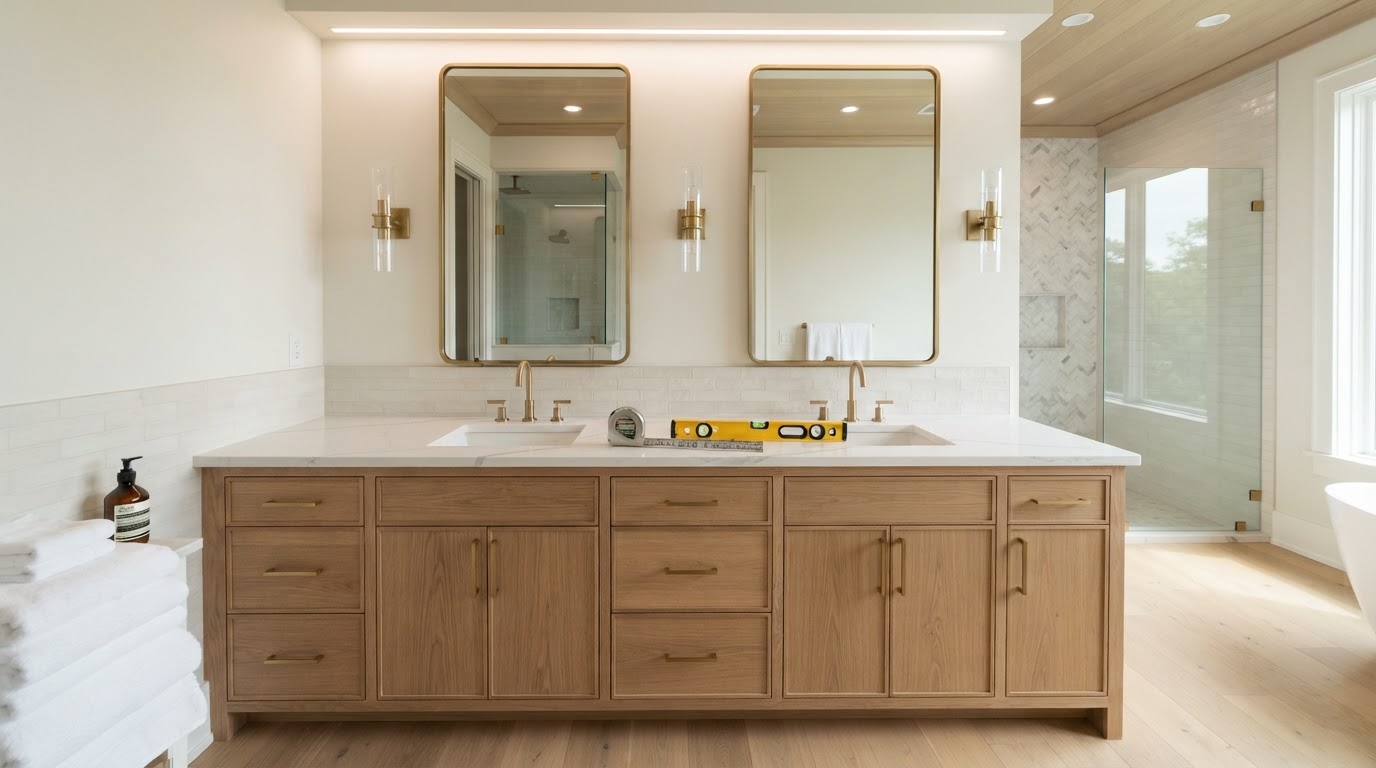
A 24-inch vanity and a 72-inch double vanity aren't going to have the same material requirements. Larger vanities generally require more cabinetry, more countertop material, larger or multiple sinks, more hardware, and more installation work.
2. Stock vs. Custom
This is one of the biggest pricing differences. A stock vanity is mass-produced in standard dimensions with broad availability but fewer size options. A semi-custom vanity offers more choices in size, finish, hardware, door styles, and drawer configurations. A custom vanity is designed specifically for your bathroom and is particularly useful when the room has unusual dimensions, limited wall space, architectural obstacles, or specialized storage requirements.
3. Single vs. Double Vanity
A double vanity typically costs more because it requires additional cabinet space, countertop, sink, faucet, and plumbing coordination. But the important question is whether you actually need two sinks. A larger single vanity can sometimes provide more usable countertop area than a double-sink configuration.
4. Floating vs. Freestanding
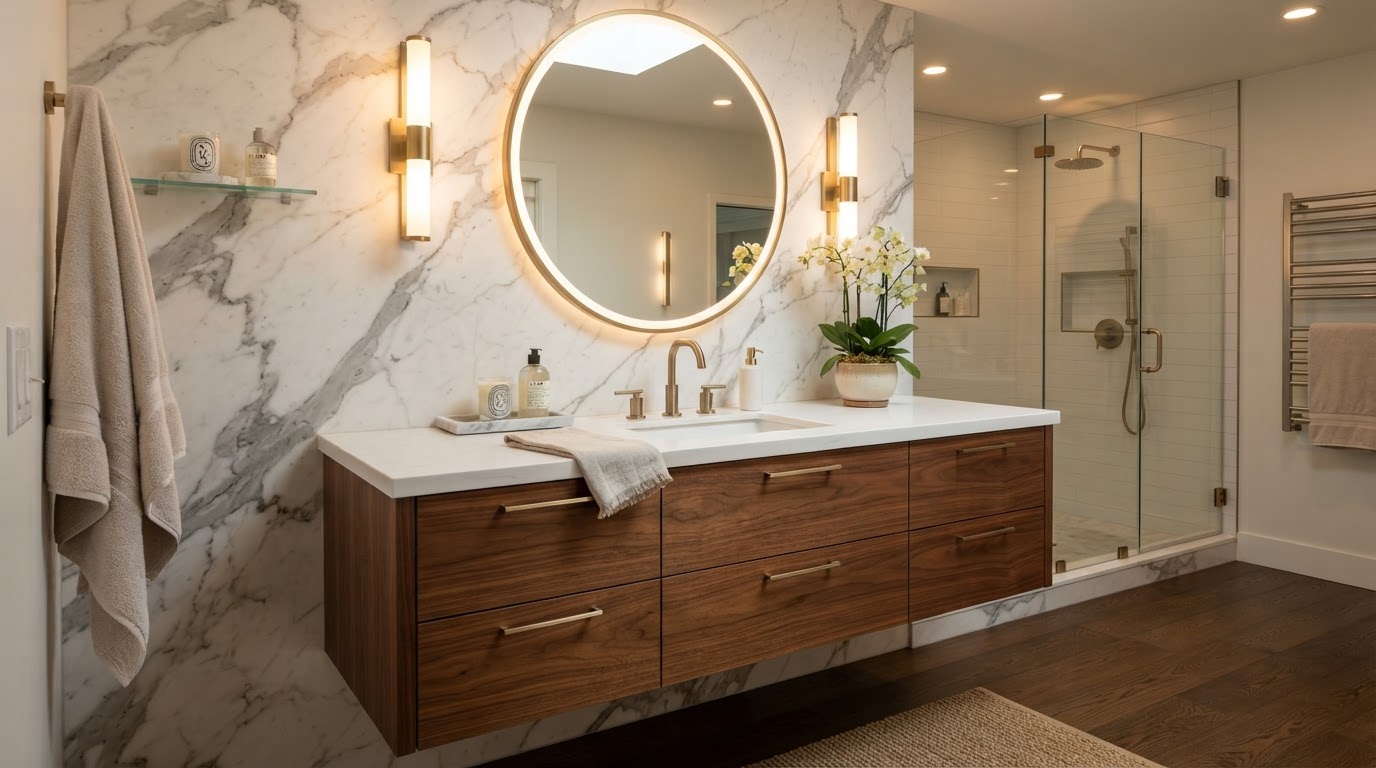
A floating vanity is mounted to the wall and can create a modern appearance with more visible floor area and easier cleaning. A freestanding vanity rests on the floor and can provide a traditional appearance with large storage capacity. Neither option is automatically better—the choice should fit the bathroom design.
5. Vanity Cabinet Material
Cabinet construction matters. Common materials include solid wood, plywood, MDF, and engineered wood. The right material depends on moisture exposure, cabinet construction, finish, budget, and desired durability. Don't judge cabinet quality solely by the exterior appearance—two vanities can look nearly identical while having very different construction quality.
6. Countertop Material
The countertop can significantly affect the overall price. Quartz is popular for its broad range of colors and patterns and relatively low routine maintenance. Natural stone provides unique natural character but may have additional care requirements. Porcelain can provide a contemporary stone-inspired appearance.
7. Sink Configuration
An undermount sink generally creates a clean countertop appearance. A vessel sink can become a visual focal point. An integrated sink can provide a streamlined appearance where the sink and countertop are designed as one unit. Each configuration influences both cost and the finished look.
8. Faucet Selection
The faucet itself can range from relatively simple to highly specialized. Consider finish, configuration, mounting type, number of handles, spout height, reach, and compatibility with the sink. A beautiful faucet that doesn't match the sink configuration isn't a good purchase.
9. Hardware
Cabinet hardware seems minor, but it can change the character of the vanity. Options include knobs, pulls, integrated pulls, edge pulls, and minimalist hardware. Popular finishes include chrome, brushed nickel, matte black, brass, and gold. Hardware should coordinate with the rest of the bathroom rather than being selected independently.
Bathroom Vanity Installation Cost
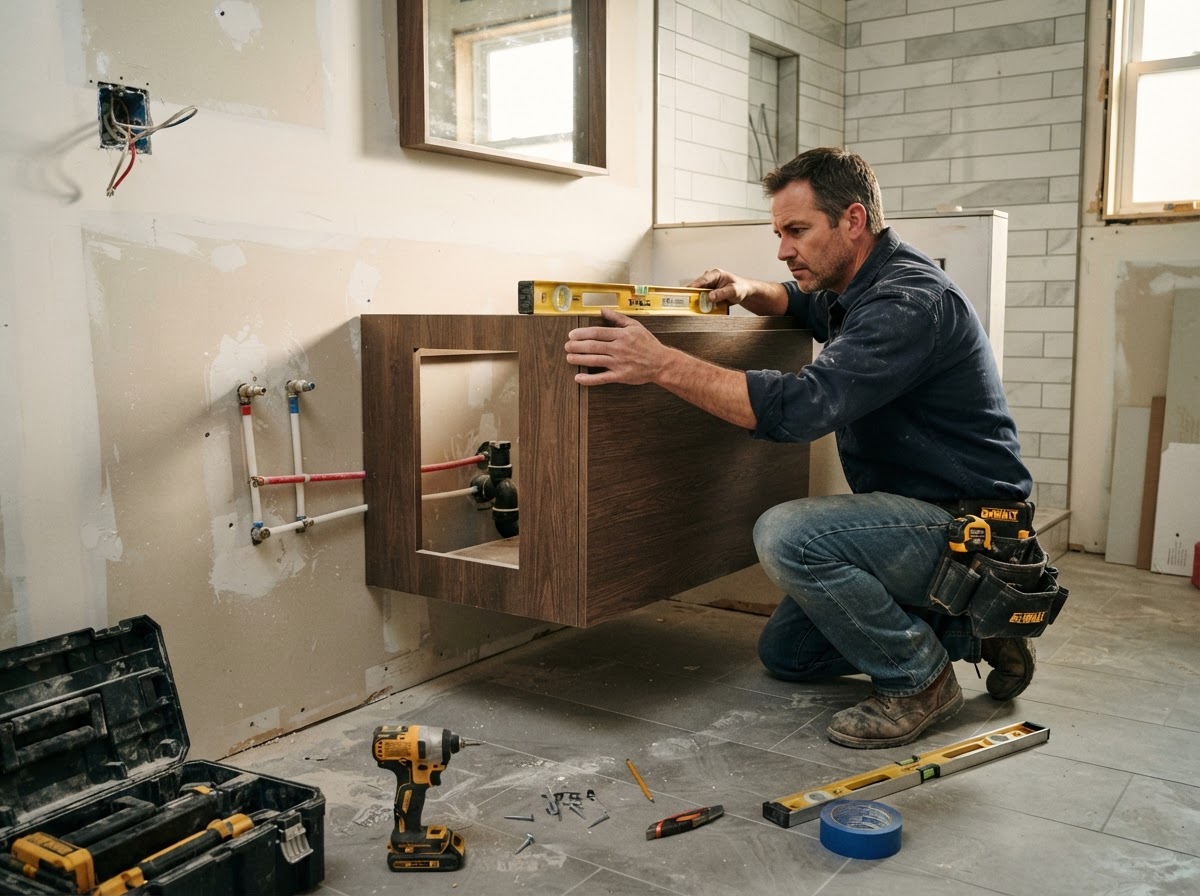
Installation is another area where homeowners sometimes underestimate the budget. Installation can involve removing the existing vanity, preparing the wall and floor, positioning and securing the cabinet, installing the countertop, sink, faucet, and hardware, connecting plumbing, sealing appropriate surfaces, and final testing.
Straightforward Replacement
If the new vanity remains in the same location, uses the same sink configuration, and has compatible plumbing connections, the plumbing work may be relatively straightforward.
More Involved Installation
Plumbing becomes more involved when the sink moves, a second sink is added, the vanity moves to another wall, drainage needs modification, or supply lines need relocation.
This is one reason vanity replacement can become part of a larger bathroom remodeling project. Venguard's bathroom planning guide specifically recommends determining the floor plan and plumbing relationships before finalizing major design decisions.
Bathroom Vanity Cost vs. Full Bathroom Remodel
Vanity-Focused Project
Suppose you're replacing the vanity, countertop, sink, faucet, and mirror. That's primarily a vanity-focused project.
Appropriate when the existing shower, flooring, walls, lighting, and plumbing are in good condition.
Broader Bathroom Renovation
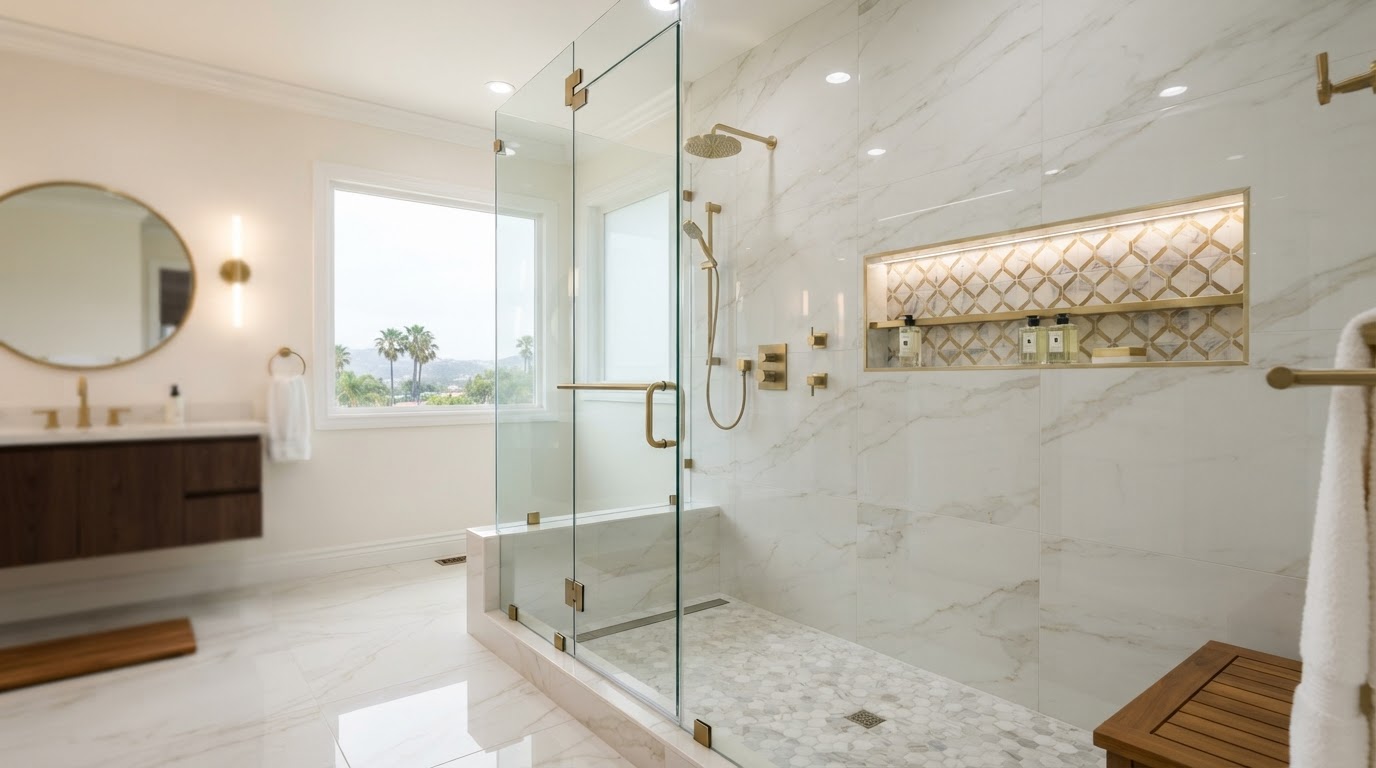
But if you're also replacing the shower, flooring, lighting, toilet, tile, plumbing, electrical, and paint, you're moving into a broader bathroom renovation.
A complete remodel can involve plumbing, electrical, waterproofing, flooring, cabinetry, fixtures, permits, and multiple construction trades.
When Should You Replace the Entire Vanity?
Replacement may make sense when the existing vanity is damaged, swollen from moisture, structurally weak, poorly sized, lacking storage, outdated, difficult to clean, or poorly positioned. If the cabinet is structurally sound and fits your design, however, replacing the countertop, hardware, or fixtures may sometimes provide a meaningful update without replacing everything.
When Does a Custom Vanity Make Financial Sense?
Custom doesn't automatically mean "better." It makes the most sense when customization solves a real problem. For example, if the bathroom has an awkward 67-inch wall, a stock 60-inch vanity leaves unused space—while a custom vanity built specifically for the available wall uses every inch. Now the extra investment provides a functional benefit. Custom cabinetry can also make sense when you need specialized storage, unusual dimensions, integrated linen storage, specific drawer sizes, unique sink configuration, or high-end architectural detailing.
Bathroom Vanity Cost for Small & Primary Bathrooms
Small Bathroom
Small bathrooms don't necessarily need expensive vanities. The key is choosing the right configuration. A 24–30 inch vanity is useful when floor space is limited, while a 30–36 inch vanity provides a better balance of storage and counter space.
A floating vanity can reduce visual heaviness, and a wall-mounted medicine cabinet can provide additional storage without increasing the vanity footprint.
Primary Bathroom
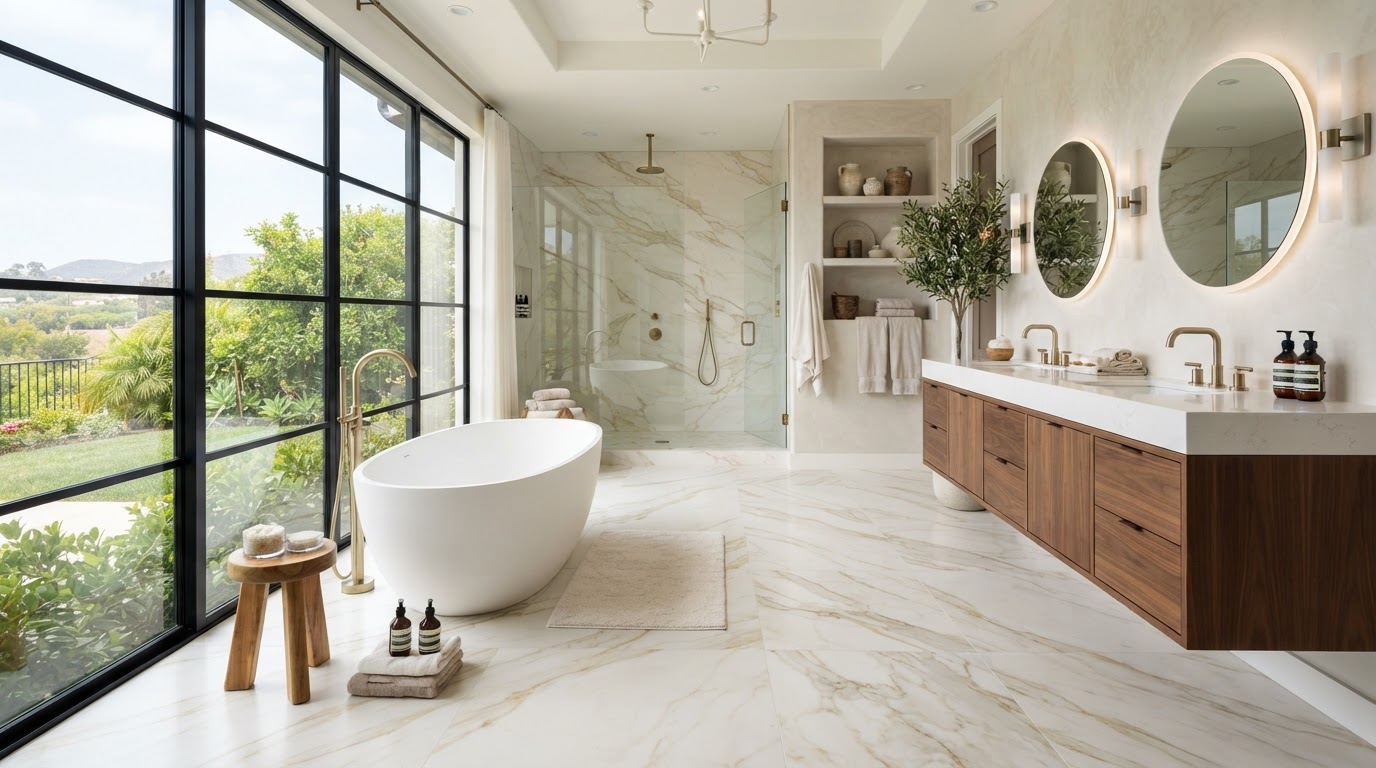
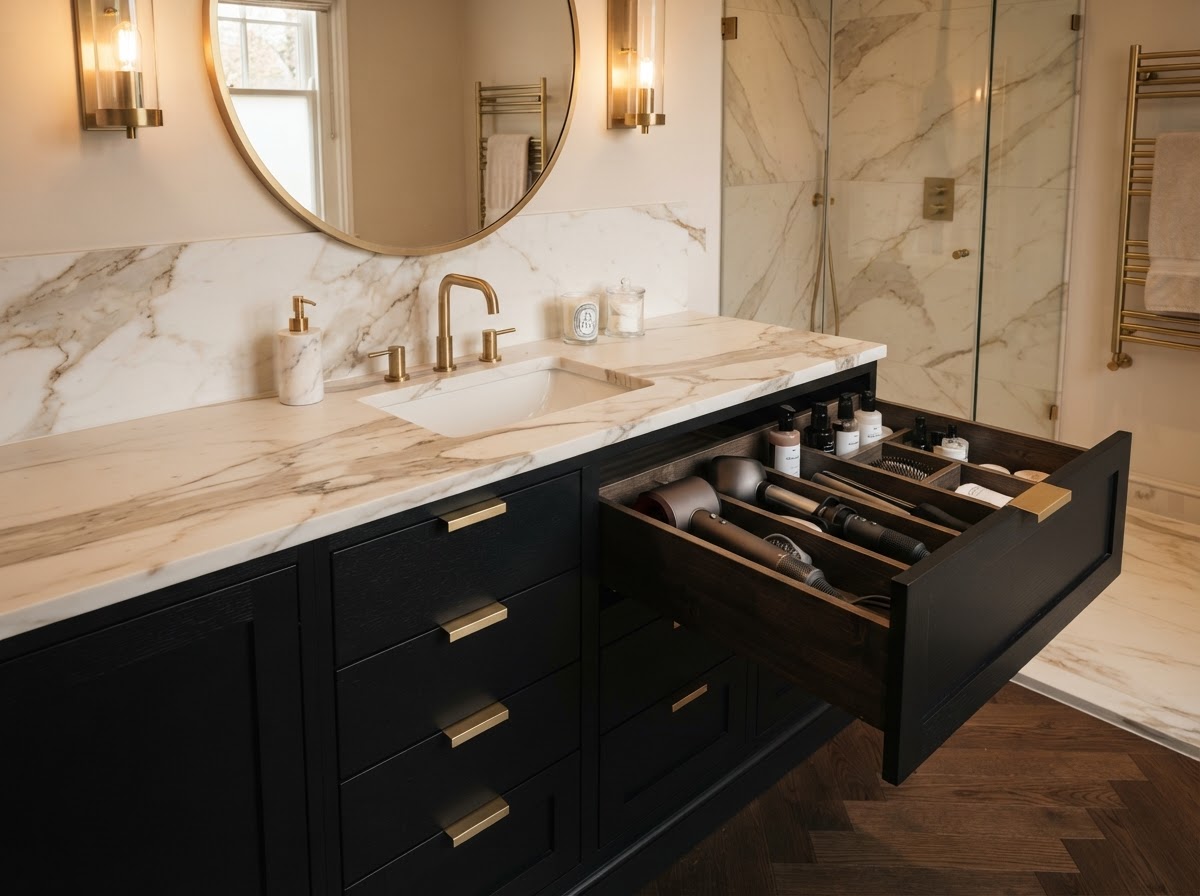
Primary bathrooms typically allow more flexibility. A homeowner may choose a 60-inch vanity, a 72-inch vanity, a custom double vanity, separate vanity zones, custom storage, a premium countertop, or integrated lighting.
At this level, the vanity becomes part of the architectural design rather than simply a storage cabinet.
How Much Should You Spend on the Vanity?
There's no universal percentage that every homeowner should follow. Instead, allocate your budget based on priorities.
Spend more on cabinetry, countertop, and hardware
Allocate more toward shower construction, tile, and glass
Spend more on storage and layout
The goal is not to make every component expensive. It's to make the important components excellent.
How to Save Money
- ✓Keep the existing vanity location to avoid moving plumbing
- ✓Choose standard dimensions for more readily available options
- ✓Use a quality stock vanity when customization isn't required
- ✓Use premium hardware strategically to elevate a simpler cabinet
- ✓Choose one statement material rather than premium everything
Where NOT to Cut Costs
- ✗Plumbing workmanship
- ✗Waterproofing
- ✗Electrical work
- ✗Structural support
- ✗Proper installation
- ✗Professional fabrication
- ✗Moisture-resistant construction
A beautiful vanity installed incorrectly is still a bad renovation.
Bathroom Vanity Cost in Orange County
Orange County homeowners should expect project pricing to vary significantly depending on the home, neighborhood, scope, and selected materials. A straightforward vanity replacement can be very different from incorporating a custom vanity into a high-end primary bathroom remodel. For an accurate estimate, the vanity should be evaluated alongside the bathroom's layout, plumbing, electrical, flooring, walls, shower, lighting, and storage.
Bathroom Vanity Cost in Los Angeles
Los Angeles bathrooms can present very different remodeling conditions depending on the property's age, construction, and existing layout. A vanity replacement may reveal old plumbing, moisture damage, wall damage, flooring issues, or previous remodeling work. That's why a professional assessment is preferable to assuming the project will be a simple cabinet swap.
What Should a Bathroom Vanity Estimate Include?
Before approving a proposal, make sure you understand whether it includes each of the following. The more clearly these items are defined, the easier it is to compare proposals.
Why the Cheapest Vanity Estimate May Not Be the Cheapest Project
Imagine three contractors provide Proposal A at $4,000, Proposal B at $5,500, and Proposal C at $7,000. At first glance, A appears to be the obvious choice. But what if A excludes the countertop, plumbing, disposal, wall repair, and premium hardware—while C includes everything?
The correct comparison isn't which number is lowest. It's which proposal provides the clearest and most appropriate scope. Venguard's existing bathroom cost guide makes this same broader point: homeowners should compare what is actually included rather than selecting a contractor solely on the lowest initial number.
Bathroom Vanity ROI and Home Value
A bathroom vanity isn't usually purchased purely for resale—you're living with it every day. However, a well-designed bathroom can contribute to a home's overall appeal. Features that can help create a polished impression include quality cabinetry, good lighting, clean countertop design, adequate storage, modern fixtures, and cohesive materials. The most valuable improvements are usually the ones that improve both function and appearance.
10 Questions to Ask Before Buying a Bathroom Vanity
- 1.Does the vanity actually fit the wall?
- 2.Will drawers and doors open properly?
- 3.Is there enough clearance around the toilet?
- 4.Does the sink configuration match the plumbing?
- 5.Is the countertop included?
- 6.Is the sink included?
- 7.Is installation included?
- 8.What happens if the wall or floor isn't level?
- 9.How much usable storage does the vanity actually provide?
- 10.Does the vanity work with the mirror and lighting plan?
Bathroom Vanity Buying Checklist
Measure
- • Wall width
- • Available depth
- • Vanity height
- • Door clearance
- • Toilet clearance
Determine
- • One sink or two
- • Floating or freestanding
- • Stock, semi-custom or custom
- • Drawer vs cabinet storage
Select & Coordinate
- • Cabinet finish
- • Countertop & sink
- • Faucet & hardware
- • Mirror, lighting & plumbing
- • Overall bathroom design
Frequently Asked Questions
How much does a bathroom vanity cost in 2026?
The cost varies significantly depending on size, construction, materials, countertop, sink, hardware and installation. Stock vanities generally cost less than semi-custom or fully custom cabinetry.
Is a custom bathroom vanity worth it?
It can be worthwhile when standard cabinetry cannot efficiently use the available space or when specialized storage and design requirements justify the additional investment.
How much does it cost to install a bathroom vanity?
Installation depends on the cabinet, countertop, sink, plumbing and existing conditions. A straightforward replacement is different from an installation that requires plumbing or electrical modifications.
Is a 60-inch vanity better than a 48-inch vanity?
Not necessarily. The correct size depends on the bathroom layout, available space, storage requirements and whether you want one or two sinks.
How much does a double bathroom vanity cost?
A double vanity typically costs more than a comparable single vanity because it generally requires more cabinetry, countertop, sink fixtures and plumbing coordination.
Are floating vanities more expensive?
They can be, depending on the cabinet construction and installation requirements. Wall support and plumbing must be properly coordinated.
Should I buy the vanity before remodeling starts?
It depends on the project. For a complete remodel, the vanity should generally be selected and coordinated during the design phase so plumbing, electrical, flooring and lighting can be planned around it.
Can I replace a bathroom vanity without remodeling the whole bathroom?
Yes. If the existing shower, flooring, walls, lighting and plumbing are in good condition, a vanity-focused renovation may be appropriate.
What is the most important part of a bathroom vanity?
There isn't one answer. Good cabinetry, appropriate sizing, functional storage, proper installation and coordination with plumbing and lighting are all important.
Final Thoughts
The biggest mistake homeowners make when budgeting for a bathroom vanity is focusing on the cabinet's retail price. The cabinet is only one piece of the project. A successful vanity installation brings together cabinetry, countertop, sink, faucet, storage, plumbing, lighting, mirror, installation, and overall bathroom design.
The best vanity isn't necessarily the most expensive one. It's the one that fits your space, supports your daily routine, provides the storage you actually need, and complements the rest of the bathroom. And when you're remodeling in Orange County or Los Angeles, the smartest approach is to evaluate the vanity as part of the entire bathroom system, rather than treating it as an isolated purchase.
Related Guides
Ready to Plan Your Bathroom Remodel?
Venguard Construction's process starts with understanding the homeowner's space and goals before moving into design, material selection, planning, permitting, and construction. If you're considering a new vanity as part of a larger bathroom renovation, you can discuss the project directly with the Venguard team.
Schedule a Complimentary Bathroom Remodeling Consultation