One of the first questions homeowners ask after deciding to remodel their bathroom is: "How long is this actually going to take?"
It's an important question. A bathroom remodel doesn't just involve choosing new tile and replacing a vanity. Depending on the scope, the project can involve design, material selection, demolition, plumbing, electrical work, waterproofing, tile installation, cabinetry, glass, inspections, and multiple construction trades. And if this is your only bathroom, the timeline becomes even more important.
So how long does a bathroom remodel take in Orange County or Los Angeles? A realistic bathroom remodeling timeline can range from several weeks for a relatively straightforward renovation to several months for a larger, highly customized project. The exact timeline depends on the size of the bathroom, the scope of work, whether the layout changes, permitting, material availability, custom fabrication, and the condition of the existing space.
There is no responsible way to give every homeowner the exact same timeline. A cosmetic bathroom update is completely different from a full primary bathroom renovation involving structural changes, relocated plumbing, custom cabinetry, extensive tile, and a custom shower. This guide explains what actually happens during a bathroom remodel, how long each stage can take, what causes delays, and how homeowners in Orange County and Los Angeles can prepare for a smoother renovation. For a broader overview, see our complete Bathroom Remodeling Guide or our Bathroom Remodel Cost Guide.
Table of Contents
- Bathroom Remodel Timeline at a Glance
- What Determines How Long a Bathroom Remodel Takes?
- The Bathroom Remodeling Process: Step by Step
- How Long Does a Small Bathroom Remodel Take?
- How Long Does a Primary Bathroom Remodel Take?
- How Long Does a Tub-to-Shower Conversion Take?
- How Long Does a Walk-In Shower Remodel Take?
- What Causes Bathroom Remodeling Delays?
- How Homeowners Can Prevent Delays
- Can You Stay in Your Home During a Bathroom Remodel?
- Bathroom Remodeling Timeline in Orange County
- Bathroom Remodeling Timeline in Los Angeles
- How Venguard's Design-Build Process Helps With Scheduling
- Frequently Asked Questions
Bathroom Remodel Timeline at a Glance
A typical bathroom renovation can be broken into several major stages:
| Stage | What Happens |
|---|---|
| Initial consultation | Discuss goals, budget, and project scope |
| Site evaluation | Measurements and existing-condition assessment |
| Design | Layout, finishes, fixtures, and selections |
| Estimating | Scope and detailed project pricing |
| Permitting | Required plans, applications, and approvals |
| Material ordering | Tile, cabinets, fixtures, glass, etc. |
| Demolition | Removal of existing bathroom finishes |
| Rough plumbing/electrical | Behind-the-wall construction |
| Framing/substrate | Walls, floors, and preparation |
| Waterproofing | Shower and wet-area protection |
| Tile installation | Walls, floors, shower |
| Cabinetry/vanity | Installation of finished storage |
| Fixtures | Plumbing and electrical fixtures |
| Glass | Shower enclosure installation |
| Painting/finish work | Final cosmetic work |
| Final inspection | Applicable inspections |
| Final walkthrough | Punch list and completion |
The important thing to understand is that not all of these stages happen one after another with no overlap. A professional remodeling team coordinates many of these activities around one another.
What Determines How Long a Bathroom Remodel Takes?
Before discussing specific timelines, it's important to understand the variables.
1. Size of the Bathroom
A small guest bathroom may require significantly less work than a large primary bathroom. But size isn't everything. A small bathroom with custom marble, complex tile patterns, relocated plumbing, and specialty fixtures can take longer than a larger bathroom with a straightforward design.
2. Scope of the Remodel
This is probably the biggest factor. There is a major difference between a cosmetic bathroom update (paint, vanity replacement, mirror, lighting, hardware, minor finish updates) and a full bathroom remodel (demolition, new shower, new tub, new flooring, new vanity, plumbing changes, electrical work, new lighting, waterproofing, tile, glass, painting). The second project requires substantially more coordination.
3. Are You Changing the Layout?
Keeping the existing layout can simplify a renovation. Moving the toilet, shower, tub, vanity, drain, or water lines can introduce additional plumbing and construction work. This doesn't mean you should never change the layout—sometimes changing the layout is exactly what makes a bathroom dramatically better. But it should be considered during planning because it can affect both budget and schedule.
4. Permits and Inspections
Permit requirements depend on the specific work and local jurisdiction. Bathroom renovations involving plumbing, electrical, structural modifications, or other regulated construction may require permits and inspections. Permit timing can vary between cities, which is especially important in Southern California because Orange County and Los Angeles include numerous separate jurisdictions. Your contractor should identify the applicable requirements during the planning stage.
5. Material Availability
This is one of the most underestimated factors. Your bathroom remodel may depend on tile, vanity, countertop, plumbing fixtures, shower glass, lighting, mirrors, hardware, cabinets, and specialty materials. If one critical item isn't available when needed, it can affect subsequent work. This is why material selection should happen before construction reaches the point where those materials are needed.
6. Custom vs. Stock Materials
Custom products can create a more personalized bathroom, but customization can also add lead time. Examples include custom cabinetry, custom glass, fabricated countertops, specialty stone, custom mirrors, and made-to-order fixtures. A good remodeling schedule accounts for these items ahead of time.
7. Hidden Conditions
Once demolition begins, you finally see what's behind the finished surfaces. The contractor may discover water damage, mold, damaged framing, outdated plumbing, improper previous work, subfloor damage, or electrical problems. These conditions aren't necessarily the contractor's fault—they simply weren't visible before demolition. A responsible contractor should explain how unforeseen conditions will be documented and handled.
The Bathroom Remodeling Process: Step by Step
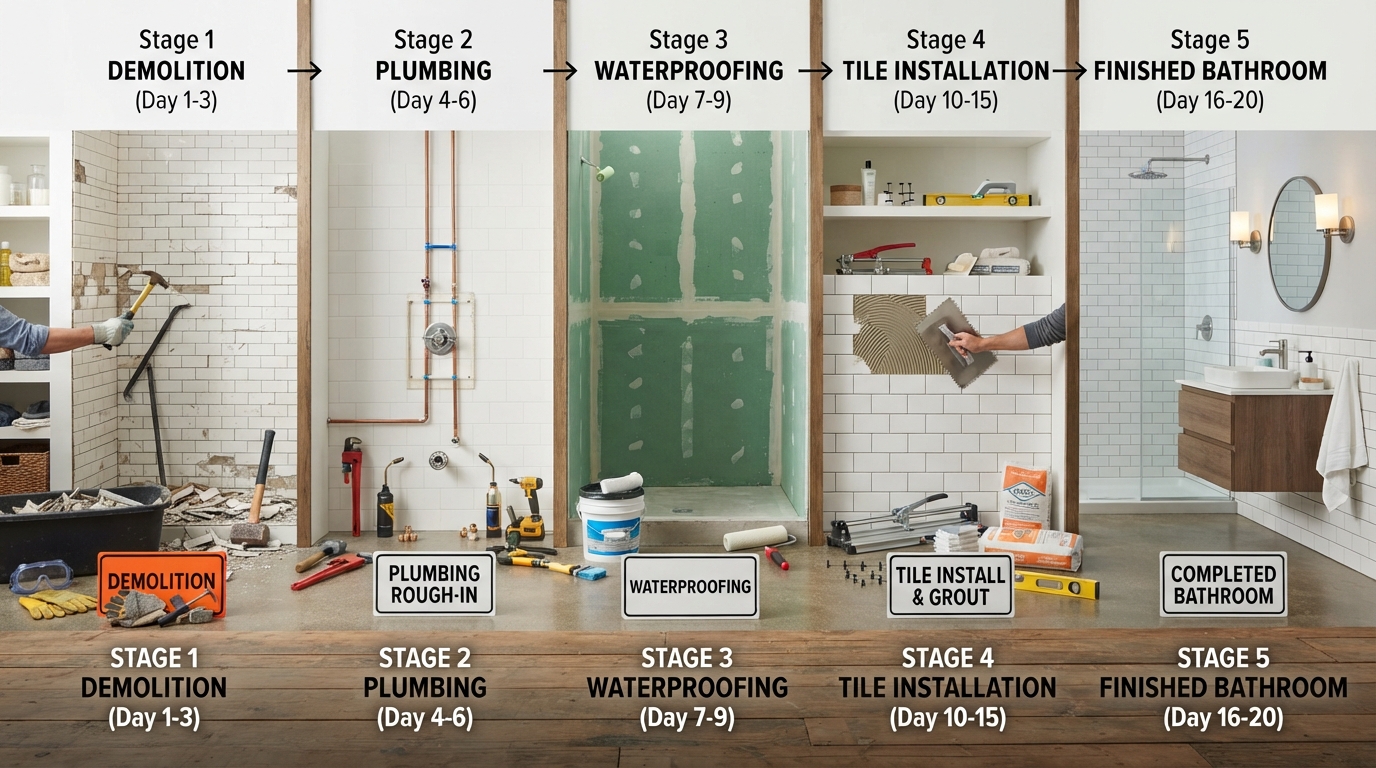
Let's look at what actually happens during a typical bathroom renovation.
Phase 1: Initial Consultation
The project begins with a conversation. This is where you explain what you don't like about the current bathroom, what you want to change, your design preferences, your priorities, your approximate budget, and your desired timeline. This is also when you should determine whether the contractor is the right fit. Don't underestimate this stage—a well-planned project generally starts with a clear understanding of what the homeowner actually wants.
Phase 2: Site Walkthrough and Measurements
The contractor evaluates the existing bathroom. This may include measuring the space, reviewing the existing layout, evaluating plumbing, reviewing electrical, looking at walls and floors, identifying potential construction concerns, and discussing layout options. This stage is important because the contractor is moving from your idea to the actual physical conditions of your home.
Phase 3: Design
Once the scope is understood, design decisions begin. This can include floor plan, shower layout, vanity, tile, countertop, fixtures, lighting, mirrors, hardware, paint, and storage. The design stage is where many homeowners discover that there are far more decisions involved than they expected. That's why it's better to make important selections early.
Phase 4: Material Selection
You may need to select tile (shower wall, shower floor, bathroom floor, accent tile), plumbing fixtures (faucet, showerhead, tub filler, toilet, valves), vanity (size, style, color, hardware), lighting (vanity, ceiling, shower), glass (frameless, semi-frameless, framed, door configuration), and accessories (towel bars, hooks, toilet paper holder, niches, mirrors). The earlier these decisions are made, the easier it is to build a realistic construction schedule.
Phase 5: Detailed Estimate and Contract
Before construction begins, the project should have a clearly defined scope. Your documentation should clarify scope, materials, labor, responsibilities, payment schedule, change orders, permits, timeline, and warranty. This isn't just administrative paperwork—it reduces confusion during construction.
Phase 6: Permitting
If your project requires permits, the necessary applications and approvals should be addressed before the applicable construction work begins. Permit timelines vary. That's why homeowners shouldn't schedule a bathroom remodel based solely on the number of construction days. The pre-construction timeline matters too.
Phase 7: Ordering Materials
At this point, the project team needs to ensure that major materials are available when required. The tile installer can't finish the shower if the tile hasn't arrived. The glass company can't install the enclosure before the shower opening is ready. The vanity can't be installed if it hasn't arrived. A strong project schedule accounts for these dependencies.
Phase 8: Demolition
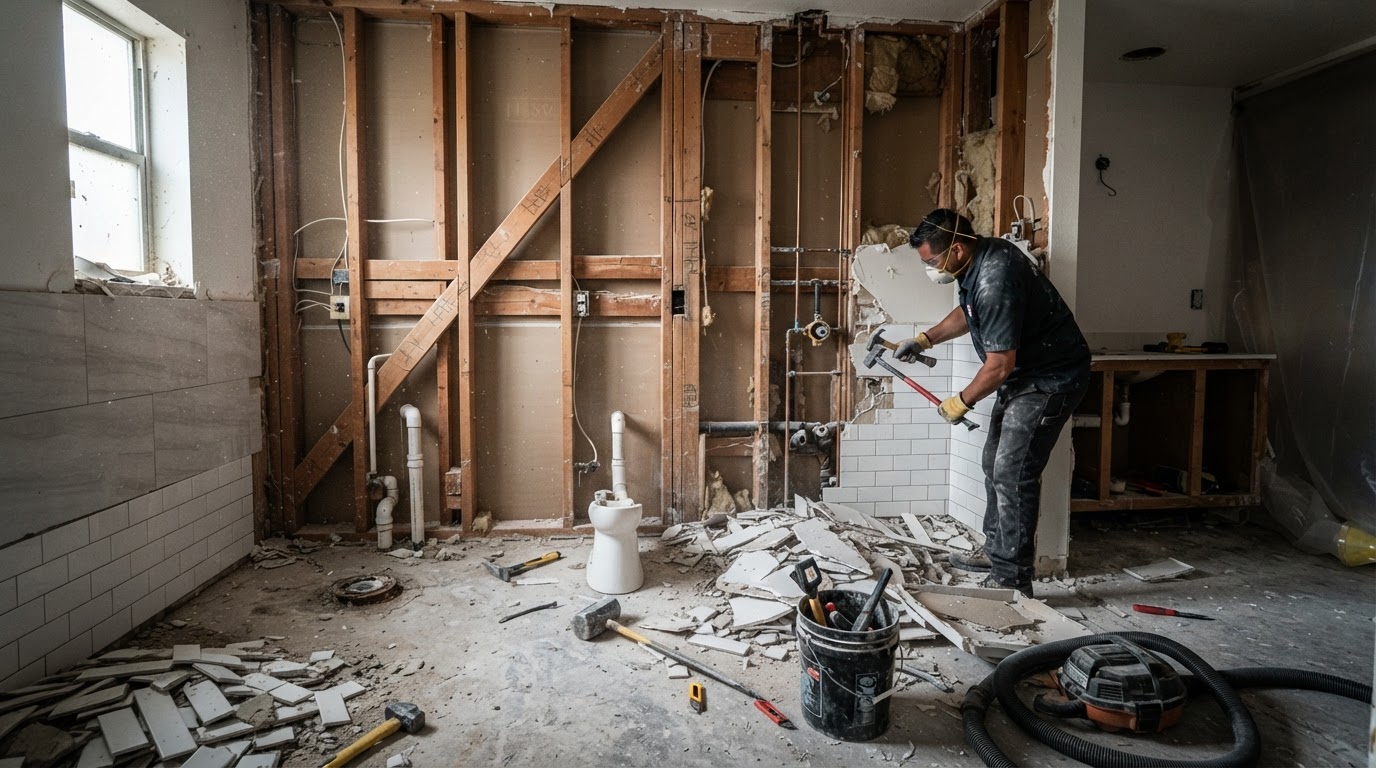
Now the existing bathroom comes out. This may include removing the vanity, toilet, tub, shower, tile, flooring, cabinets, mirrors, and fixtures. Demolition can sometimes reveal hidden problems. For example, a homeowner may think they're replacing a shower, but after demolition, the contractor may discover damaged framing caused by a previous leak. That issue must be addressed before the new shower is constructed.
Phase 9: Rough Plumbing
If plumbing is being changed, this is when new or relocated plumbing lines are installed. This can include shower valve, shower drain, sink plumbing, tub plumbing, toilet, and additional shower fixtures. Keeping the existing plumbing layout can reduce complexity, but changing the layout may be worthwhile if the current bathroom doesn't function well.
Phase 10: Electrical
Electrical work may include new vanity lighting, ceiling lights, exhaust fan, outlets, heated flooring, and specialty lighting. This work generally needs to happen before walls and finishes are closed.
Phase 11: Framing and Surface Preparation
Before tile goes in, the underlying surfaces need to be properly prepared. This can involve framing, substrate, wall preparation, floor preparation, shower pan, and drainage. This stage isn't glamorous, but it's critical. The quality of the finished bathroom depends heavily on the quality of the work underneath it.
Phase 12: Waterproofing
For shower areas, waterproofing is one of the most important construction stages. The shower needs to be designed to properly manage water around walls, floor, corners, niches, fixtures, drain, and transitions. The decorative tile is what you see. The waterproofing is what protects the construction underneath.
Phase 13: Tile Installation
Now the bathroom starts looking like the design you imagined. Tile may be installed on shower walls, shower floor, bathroom floor, backsplash, and accent walls. Tile installation time depends on bathroom size, tile size, tile pattern, number of cuts, niches, borders, material, and layout complexity. A simple tile layout is generally faster than a highly detailed custom pattern.
Phase 14: Vanity and Cabinet Installation
Once the surrounding work is ready, the vanity can be installed. This can include vanity cabinet, countertop, sink, hardware, and storage accessories. Custom cabinetry may require additional lead time compared with readily available products.
Phase 15: Plumbing Fixtures
Now the finished plumbing fixtures are installed: faucet, shower trim, showerhead, tub filler, toilet, and shut-off valves. This is where the bathroom begins transitioning from construction site to finished room.
Phase 16: Shower Glass
Custom shower glass is generally installed after the shower opening is ready. This is important because glass needs accurate measurements. A frameless enclosure may include fixed panel, door, hinges, handles, clips, and seals. The exact configuration depends on the design.
Phase 17: Painting and Finish Work
The final cosmetic details are completed. This may include painting, trim, hardware, mirrors, accessories, caulking, and touch-ups. Small details make a significant difference in the finished appearance.
Phase 18: Final Inspection and Walkthrough
The final stage is ensuring that everything has been completed correctly. The homeowner and project team should review fixtures, doors, cabinets, tile, paint, lighting, hardware, plumbing, and final finishes. Any remaining punch-list items should be documented and addressed.
How Long Does a Small Bathroom Remodel Take?
A small bathroom does not automatically mean a short project. A small bathroom may have limited workspace, more difficult access, compact plumbing, more detailed tile work, and custom storage requirements. A relatively straightforward small bathroom remodel can be completed faster than a major primary bathroom renovation, but homeowners should still plan for multiple construction stages.
How Long Does a Primary Bathroom Remodel Take?
Primary bathrooms often take longer because they tend to include more features: larger shower, freestanding tub, double vanity, more tile, custom cabinetry, multiple plumbing fixtures, more lighting, larger flooring area, and custom glass. A primary bathroom remodel should therefore be planned based on scope rather than square footage alone.
How Long Does a Tub-to-Shower Conversion Take?
A straightforward tub-to-shower conversion can be faster than a complete bathroom remodel. But the timeline can increase when you add plumbing relocation, custom tile, frameless glass, bench, niche, curbless entry, new flooring, or electrical work. The condition behind the existing tub also matters.
How Long Does a Walk-In Shower Remodel Take?
A custom walk-in shower involves multiple stages: demolition, plumbing, framing/substrate, waterproofing, tile, grout, glass, fixtures, and finishing. That's why a custom shower should not be treated like simply installing a new shower fixture. For homeowners interested in the financial side, see our guide on walk-in shower remodel costs.
What Causes Bathroom Remodeling Delays?
Some delays are predictable. Others aren't. Here are the most common causes:
- Late Material Selections: If you haven't selected your fixtures or tile, the project can't be fully scheduled.
- Backordered Products: A vanity or specialty fixture may take longer than expected.
- Permit Delays: Jurisdictional review times can vary.
- Hidden Water Damage: Demolition may reveal repairs that weren't visible before construction.
- Plumbing Problems: Old or damaged plumbing can require additional work.
- Design Changes During Construction: Changing the layout after construction begins can affect both schedule and cost.
- Custom Fabrication: Custom glass, stone, cabinetry, or mirrors can require additional lead time.
- Inspection Requirements: Required inspections can affect sequencing.
- Trade Coordination: Plumbers, electricians, tile installers, painters, and glass installers need to work in the correct sequence.
- Change Orders: Every major change can affect the schedule.
How Homeowners Can Prevent Delays
You can't eliminate every potential problem, but you can reduce avoidable delays:
- Make Design Decisions Early: Don't wait until construction begins to choose tile.
- Order Long-Lead Materials Early: Identify anything custom or made-to-order.
- Avoid Mid-Project Changes: Changing the shower layout after waterproofing has begun is very different from changing it during design.
- Choose a Contractor With Project Management: Someone should be responsible for coordinating the trades.
- Keep Communication Organized: Have a clear process for questions, decisions, approvals, and change orders.
Can You Stay in Your Home During a Bathroom Remodel?
Usually, homeowners can remain in the home during a bathroom renovation. But there are practical considerations:
- If It's Your Only Bathroom: You may need temporary arrangements.
- If You Have Multiple Bathrooms: The disruption is generally easier to manage.
- If the Bathroom Is Near a Bedroom: Noise can become an issue.
- If Demolition Is Extensive: Dust and construction traffic can affect surrounding rooms.
Ask your contractor: What hours will work occur? How will dust be controlled? How will the work area be protected? How will debris be removed? How will access to the home be managed?
Bathroom Remodeling Timeline in Orange County
Orange County homeowners should understand that project schedules can vary by city. Local permitting requirements and inspection processes can affect individual project schedules. The key is to establish the permit strategy and construction scope before demolition begins. Venguard Construction serves communities throughout Orange County, including Irvine, Newport Beach, Costa Mesa, Huntington Beach, Anaheim, Santa Ana, Laguna Beach, Mission Viejo, Tustin, and Lake Forest.
Bathroom Remodeling Timeline in Los Angeles
Los Angeles is similarly diverse. The applicable requirements can depend on the specific jurisdiction and project. For that reason, a bathroom renovation timeline should be created around the actual property rather than a generic internet estimate. If you're remodeling in Los Angeles, ask your contractor: Which jurisdiction handles the permits? What permits are required? Who submits them? Who schedules inspections? When can construction begin? What work is dependent on inspection approval? These questions can prevent unpleasant surprises later.
How Venguard's Design-Build Process Helps With Scheduling
One of the biggest challenges in remodeling is coordination. A bathroom renovation may involve a designer, general contractor, plumber, electrician, tile installer, cabinet installer, countertop fabricator, glass installer, and painter. If these parties aren't properly coordinated, delays can compound. Venguard Construction describes its design-build process as a streamlined workflow from initial consultation through construction and final walkthrough. The process includes site discovery, detailed estimating, design, material selection, project coordination, dedicated project management, on-site oversight, and final walkthrough.
This matters because the schedule isn't just about how fast someone can work. It's about whether every part of the project is ready when the next trade needs it. Learn more about our full house remodeling services or explore our complete service offerings.
Why the Cheapest Contractor May Not Have the Fastest Timeline: A low bid can sometimes look attractive, but if the contractor hasn't properly planned materials, permits, subcontractors, design, scope, and inspections, the project may experience delays. A well-organized contractor can often provide a much clearer picture of what needs to happen before construction starts.
Questions to Ask Your Bathroom Remodeling Contractor About Timeline
Before signing a contract, ask:
- When does the project officially begin?
- Is the design already finalized?
- Have permits been submitted?
- Which materials have the longest lead times?
- When will demolition happen?
- When will plumbing happen?
- When will waterproofing be completed?
- When will tile installation begin?
- When will the glass be measured?
- Who is managing the schedule?
- How are delays communicated?
- What happens if hidden damage is discovered?
- How are change orders handled?
- Who schedules inspections?
- What happens during the final walkthrough?
These questions can tell you much more about a contractor's professionalism than simply asking: "How fast can you finish?"
What You Should Never Do to Speed Up a Bathroom Remodel
Some homeowners try to shorten a renovation by cutting steps. That's usually a mistake. Don't sacrifice:
- Waterproofing
- Proper plumbing
- Electrical safety
- Required inspections
- Proper substrate preparation
- Correct tile installation
- Adequate curing time
A bathroom remodel should be completed correctly—not simply quickly.
Frequently Asked Questions
How long does a bathroom remodel take in Orange County?
The timeline depends on the scope, size, design complexity, permitting, material availability, and existing conditions. A straightforward renovation may take considerably less time than a full custom bathroom remodel involving plumbing changes, extensive tile, custom cabinetry, and glass.
How long does a bathroom remodel take in Los Angeles?
There is no single timeline for every Los Angeles bathroom renovation. Project duration depends on the scope of construction, jurisdiction, permitting, materials, inspections, and complexity.
How long does a small bathroom remodel take?
A small bathroom can be completed faster than a large renovation, but the actual timeline depends on the work involved. A small bathroom with custom tile and plumbing changes may take longer than a larger cosmetic update.
How long does a master bathroom remodel take?
Primary bathroom remodels often take longer because they typically involve larger showers, multiple fixtures, more tile, double vanities, custom cabinetry, and more extensive design work.
How long does a tub-to-shower conversion take?
A straightforward conversion can be relatively quick, but custom tile, plumbing relocation, waterproofing, glass, niches, benches, or curbless construction can increase the timeline.
What is the longest part of a bathroom remodel?
There isn't one universally longest stage. Design, permitting, material lead times, tile installation, custom fabrication, and unexpected construction conditions can all affect the overall schedule.
What causes the most bathroom remodeling delays?
Common causes include late material selections, backordered products, permit delays, hidden damage, plumbing issues, design changes, custom fabrication, inspections, and poor trade coordination.
Can I live in my home during a bathroom remodel?
In many cases, yes. However, the experience depends on whether you have another bathroom available, the extent of demolition, construction access, dust control, and the location of the bathroom.
Does changing the bathroom layout increase the timeline?
It can. Moving plumbing, electrical components, walls, or fixtures generally requires more planning and construction than replacing finishes in the existing layout.
Does a bathroom remodel require a permit in California?
Permit requirements depend on the scope of work and local jurisdiction. Plumbing, electrical, structural, and other regulated work can require permits and inspections. Your contractor should determine the applicable requirements for your project.
Final Thoughts: A Good Bathroom Remodel Is Planned Before It Is Built
The easiest way to misunderstand a bathroom remodeling timeline is to think only about the days when workers are physically inside your bathroom. The actual project starts much earlier. It starts with planning, site evaluation, design, material selection, estimating, permitting, construction, and final walkthrough. The more decisions that are made before construction begins, the easier it is to build a realistic schedule.
And when unexpected conditions appear—as they sometimes do during remodeling—a professional process gives everyone a way to address them without losing control of the entire project. If you're planning a bathroom remodel in Orange County or Los Angeles, don't ask only: "How fast can you finish?" Ask: "How are you going to plan and manage the entire project?" That's the question that can make the difference between a renovation that feels organized and one that becomes a constant source of stress.
Ready to Plan Your Bathroom Remodel?
If you're considering a bathroom renovation in Orange County or Los Angeles, Venguard Construction can help you define the project before construction begins. Our process includes consultation, site walkthrough, measurements and discovery, detailed estimating, design, material selection, construction coordination, project management, final walkthrough, and warranty/support.