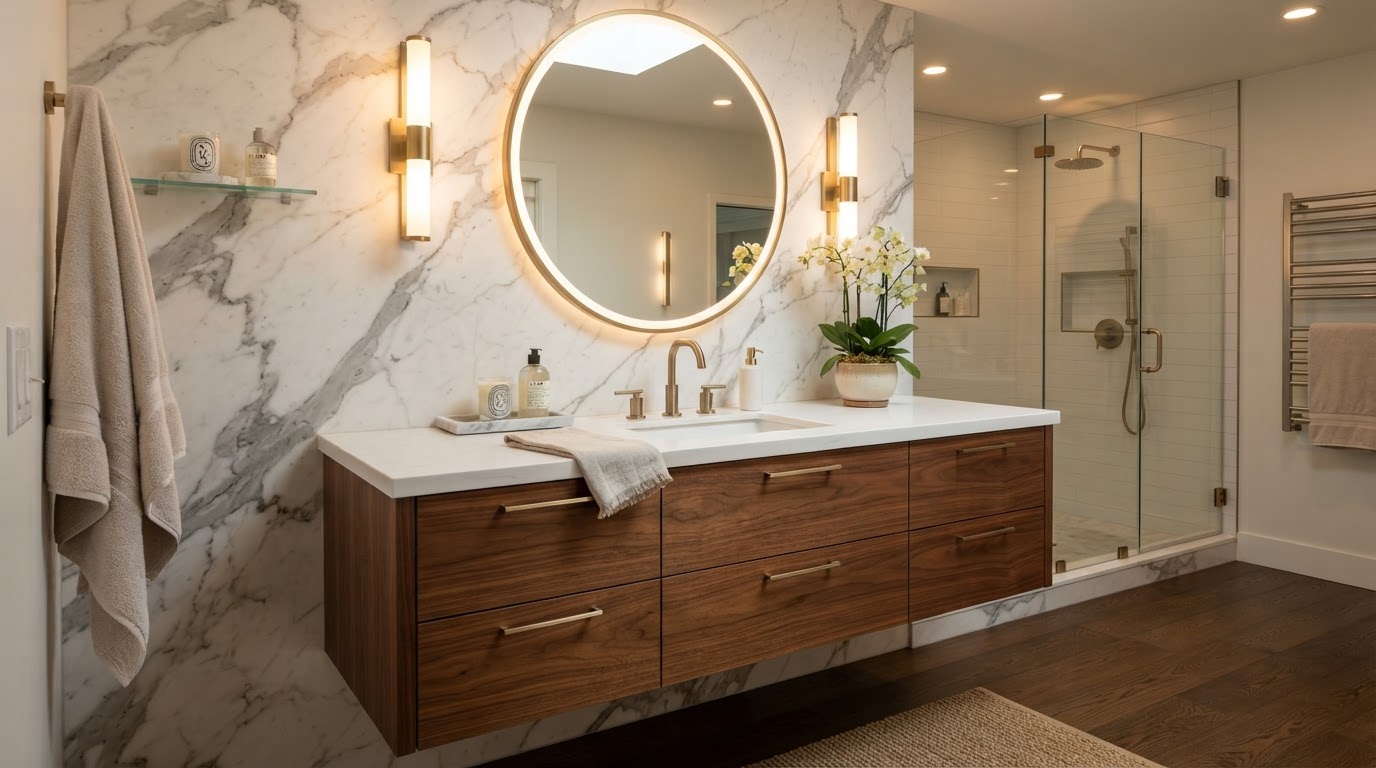
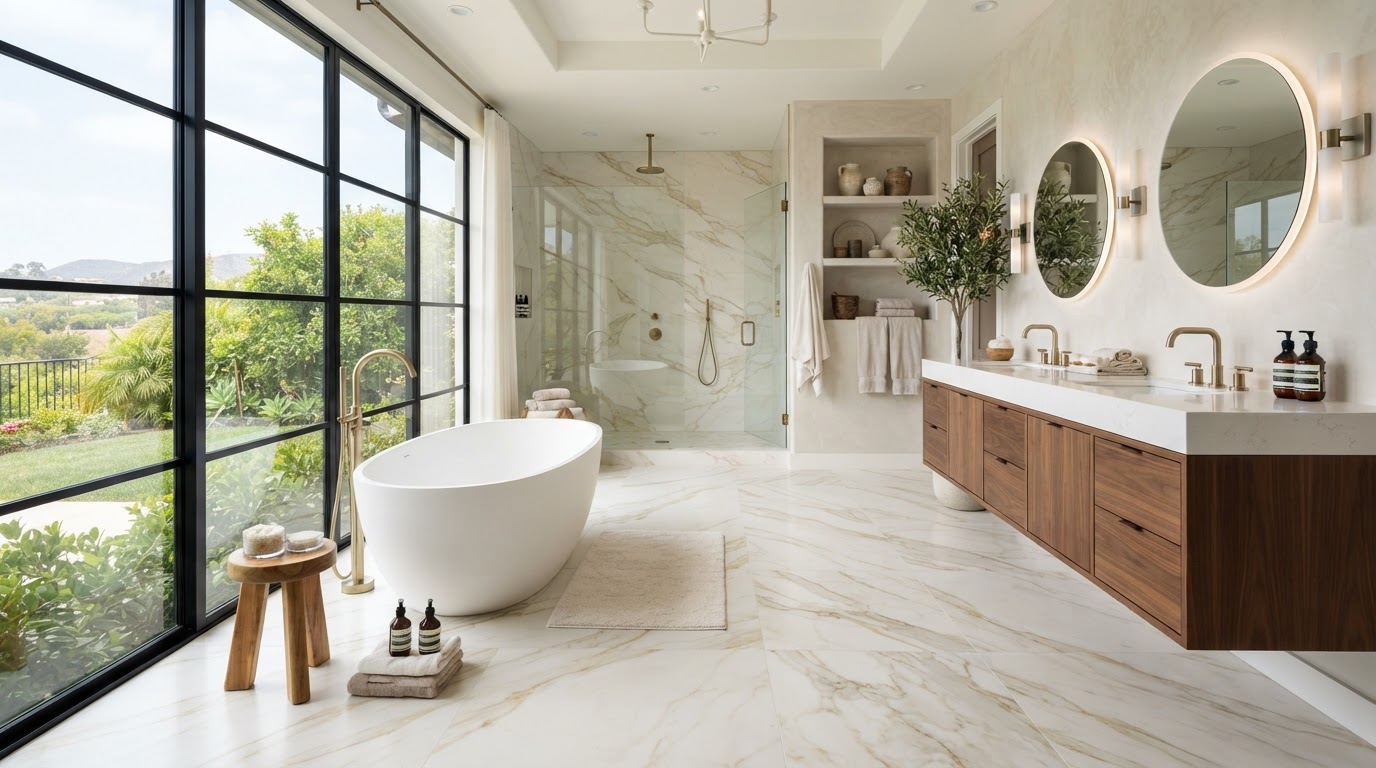
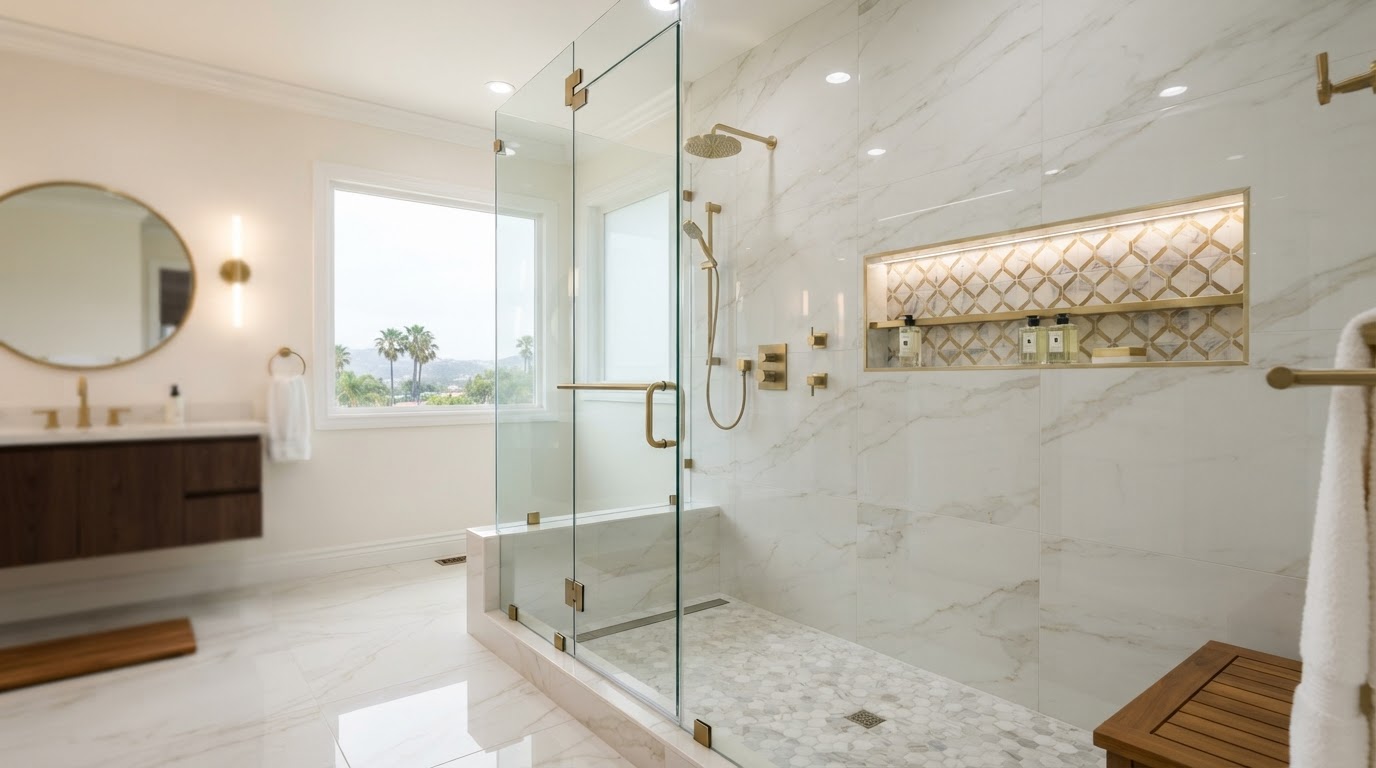
When homeowners plan a bathroom remodel, they often focus on the visible parts of the shower. They choose the tile. They select the fixtures. They compare glass doors. They decide between a niche and a shower shelf. But one of the most important parts of the shower is something you may never see after construction is complete: the shower pan.
A properly designed and installed shower pan helps direct water toward the drain while forming an important part of the shower's water-management system. When a shower pan is poorly installed, damaged, improperly sloped, or inadequately waterproofed, the consequences can extend far beyond the shower. Water can migrate into surrounding materials and potentially contribute to subfloor damage, framing damage, mold growth, staining, loose tile, damaged grout, musty odors, and costly repairs.
For homeowners planning a bathroom remodel in Orange County, Los Angeles, or surrounding Southern California communities, understanding the different types of shower pans can help you make better decisions before construction begins. This guide explains what a shower pan is, how it works, the major types available, typical cost considerations, waterproofing, installation methods, common problems, and what to ask your remodeling contractor.
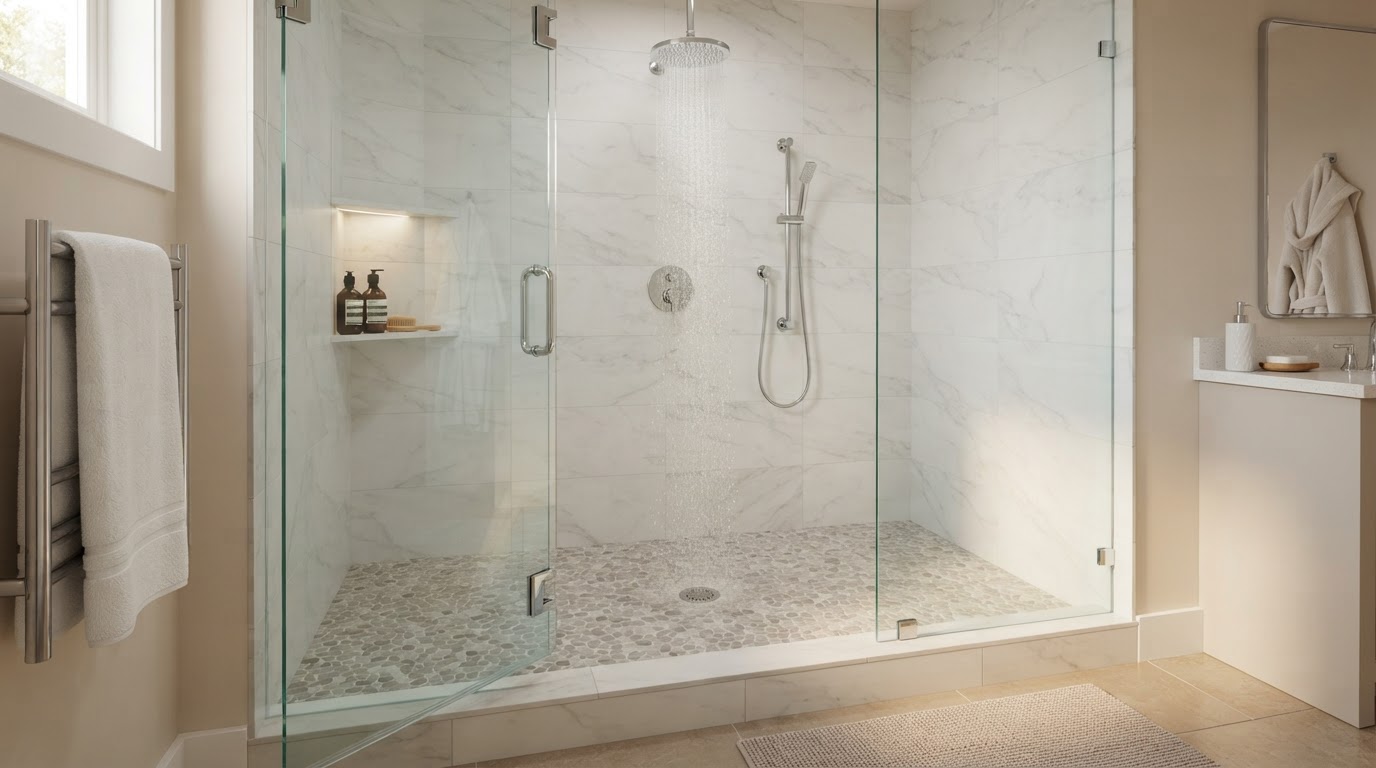
What Is a Shower Pan?
A shower pan is the base or floor assembly of a shower designed to collect and direct water toward the drain. It sits underneath the finished shower floor. Depending on the construction method, the shower pan may be prefabricated (acrylic, fiberglass, solid-surface, or tile-ready), mortar-built, custom-built, or part of an integrated waterproofing system.
The finished tile is not the shower pan itself. Instead, tile is typically installed over an appropriate substrate or shower-floor system. The shower pan's primary job is to help create a properly sloped, water-managed shower floor.
What Does a Shower Pan Do?
A shower pan performs several important functions.
1. Directs Water Toward the Drain
The shower floor needs to slope toward the drain. This allows water to leave the shower rather than accumulating in low areas.
2. Helps Manage Water
A properly designed shower-floor assembly helps prevent water from reaching areas that aren't intended to become wet.
3. Supports the Finished Shower Floor
Depending on the system, the pan or shower base provides the surface or foundation for the finished tile or shower floor.
4. Integrates With Waterproofing
The shower pan needs to work together with the waterproofing system—particularly around drain connections, corners, walls, curbs, shower entries, niches, and benches.
Is a Shower Pan Waterproof?
This depends on what type of shower system you're talking about. A prefabricated shower base may itself be waterproof. A traditional mortar shower floor, however, is not simply "a waterproof slab." The complete shower assembly may rely on a dedicated waterproofing membrane or liner system beneath or integrated with the mortar bed. This distinction is important: tile and grout are not the waterproofing system. A professionally constructed shower should have a properly designed water-management assembly behind and beneath the finished surfaces.
Shower Pan vs. Shower Base
The terms shower pan and shower base are often used interchangeably. However, in remodeling conversations, they can refer to slightly different products or construction methods.
Shower Base
A shower base often refers to a prefabricated product manufactured as a finished shower floor.
Shower Pan
A shower pan can refer either to that type of product or to the complete sloped shower-floor assembly beneath the finished tile.
When getting estimates, ask the contractor exactly what they mean: "Is this a prefabricated shower base, a custom mortar shower pan, or a tile-ready shower system?" That simple question can reveal major differences in construction.
Types of Shower Pans
There are several major shower-pan options. The best choice depends on budget, shower size, bathroom layout, design, tile, drain location, floor structure, accessibility, and construction method. Let's examine the most common options.
1. Acrylic Shower Pans
Advantages: Generally affordable, relatively quick to install, easy to clean, available in many standard sizes, no tile grout on the floor, and a consistent factory-manufactured surface.
Disadvantages: Limited customization, standard sizes may not fit unusual layouts, appearance may not match a luxury tiled shower, and scratches or damage may occur depending on product and use.
Acrylic can be a practical choice for homeowners prioritizing simplicity and cost control.
2. Fiberglass Shower Pans
Advantages: Affordable, lightweight, widely available, simple to maintain, and quick installation.
Disadvantages: Can feel less substantial than higher-end materials, may scratch or wear over time, limited customization, and typically offers fewer luxury design options.
Fiberglass can work well for budget-conscious bathroom remodels, but homeowners looking for a premium custom shower may prefer other solutions.
3. Solid-Surface Shower Bases
Advantages: Durable, low-maintenance, modern appearance, no traditional grout lines on the base, and can resemble natural stone.
Disadvantages: More expensive than basic fiberglass, custom sizes can increase costs, and heavy materials may require additional handling.
Solid-surface bases are a good middle ground between a basic prefab shower and a fully custom tiled shower.
4. Tile-Ready Shower Pans
Advantages: Designed specifically for tiled showers, consistent slope, compatible with waterproofing systems, available for curbless configurations, and can accommodate linear drains with flexible tile design.
Disadvantages: Product cost can be higher than basic shower bases, installation must follow manufacturer requirements, and custom configurations can add cost.
These systems are particularly useful for contemporary bathroom remodels because they can simplify some aspects of shower construction.
5. Mortar Shower Pans
Advantages: Highly customizable, can accommodate unusual shower sizes, flexible drain placement, works with many tile configurations, and can be adapted to custom bathroom layouts.
Disadvantages: More labor-intensive, requires skilled installation, multiple construction stages may be involved, and waterproofing details are critical.
A mortar shower pan can be an excellent solution when a standard prefab base doesn't fit the design.
6. Custom Shower Pans
Advantages: Built specifically around the shower dimensions and design for oversized showers, unusual layouts, curbless showers, accessible showers, multiple-drain configurations, and high-end custom bathrooms.
Disadvantages: Provides flexibility but usually requires more planning and labor.
Custom construction provides flexibility but usually requires more planning and labor.
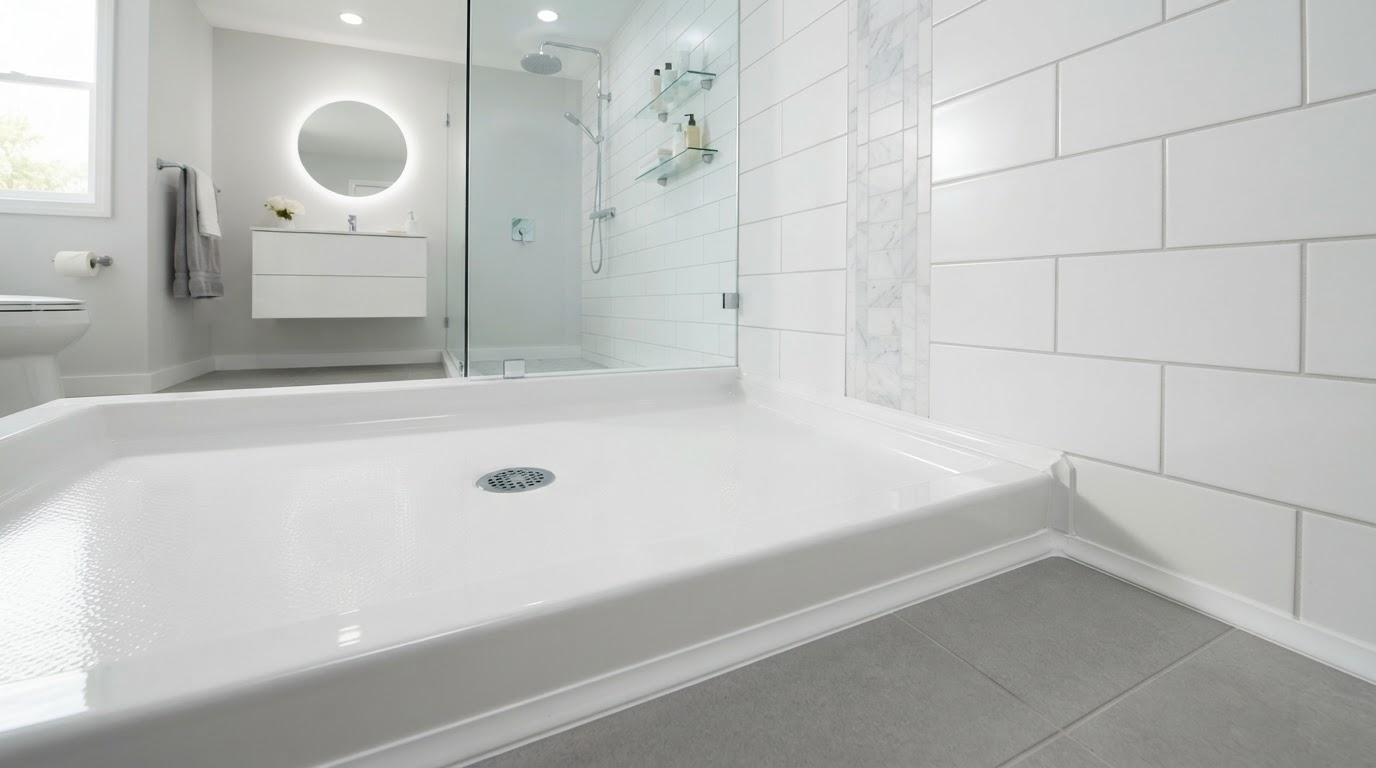
Which Shower Pan Is Best?
There isn't one universally "best" shower pan. The right option depends on the project.
Shower Pan Cost: How Much Should You Budget?
Shower pan prices vary considerably. A basic prefabricated base may cost substantially less than a custom shower-floor system. The total project cost can include the shower pan or base, drain, waterproofing, demolition, floor preparation, plumbing, labor, tile, glass, framing, permitting, disposal, and repairs to a damaged substrate.
This is why the cost of the pan itself should not be confused with the cost of the entire shower remodel. A homeowner might find an inexpensive shower base online for a few hundred dollars—that doesn't mean the completed shower will cost only a few hundred dollars. Installation can involve significant labor and supporting construction.
What Affects Shower Pan Installation Cost?
Why Is Shower Pan Slope Important?
A shower pan should be designed to direct water toward the drain. If the floor is improperly sloped, several problems can occur: standing water, mineral deposits, grout problems, unpleasant odors, and water migration into areas outside the intended wet zone. The exact slope requirements depend on the shower system and applicable codes or standards. Your contractor should verify the required slope for the specific installation.
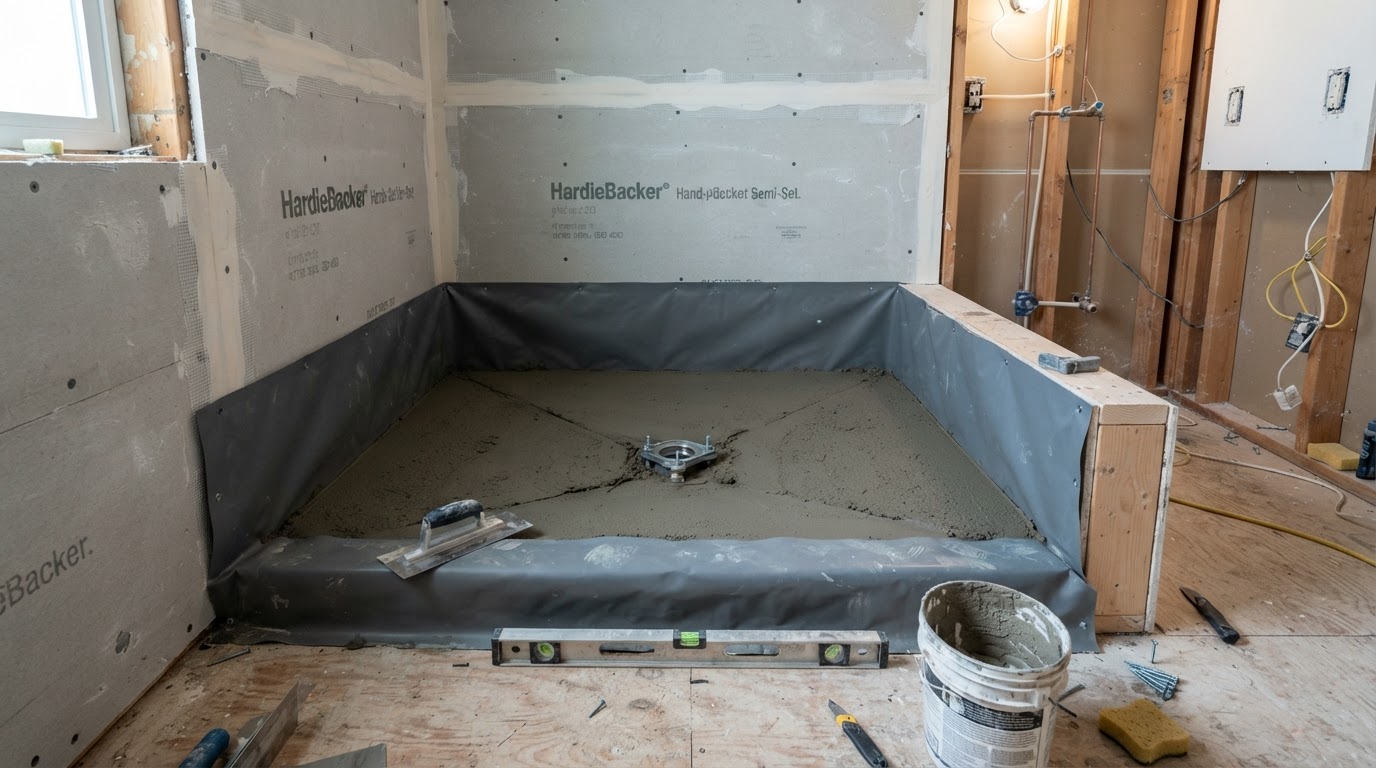
Shower Pan Waterproofing
Waterproofing is one of the most important parts of shower construction. A shower can look beautiful when completed while still having a poorly constructed waterproofing system underneath. That is why homeowners should ask: "What waterproofing system are you using?" —not simply "Are you waterproofing the shower?" A professional should be able to explain the system.
Common Shower Waterproofing Methods
Depending on the construction system, waterproofing may involve sheet membranes, liquid-applied membranes, shower liners, waterproof shower boards, integrated shower systems, or manufacturer-specific waterproofing assemblies. Each system has installation requirements. The critical factor is that the system is installed correctly and continuously.
Why Tile and Grout Aren't Enough
One of the biggest homeowner misconceptions is that the tile and grout will keep the water out. Tile and grout provide the finished surface—they are not a substitute for a properly designed waterproofing system. Water can migrate through grout joints and other pathways. The waterproofing layer underneath the finished surface is what provides the primary protection for the underlying structure.
Liner vs. Surface Waterproofing
Two broad approaches are commonly encountered. Traditional liner-based construction installs a waterproof liner within the shower assembly that works with the sloped floor construction. Surface-applied waterproofing installs a membrane closer to the finished surface, which can help manage moisture within the assembly and is common in many modern shower systems. The right system depends on the design, installer, manufacturer requirements, and applicable standards.
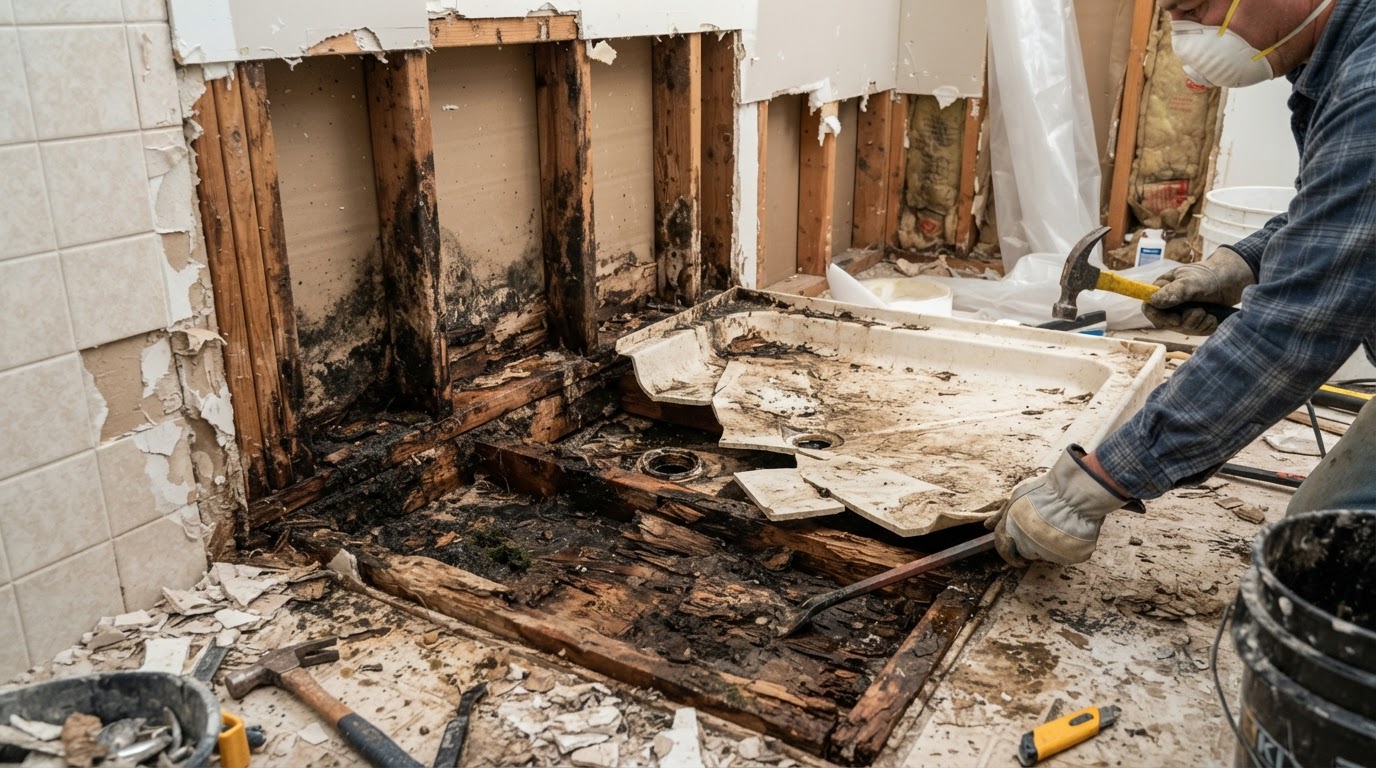
What Happens If a Shower Pan Leaks?
A shower-pan failure can be difficult to detect immediately. Water may initially enter areas beneath the shower without obvious visible signs. Over time, homeowners may notice musty odors, soft flooring, stained walls, peeling paint, damaged baseboards, loose tile, persistent moisture, or ceiling stains below the bathroom. If the bathroom is located above another floor, water damage may eventually become visible on the ceiling below. The longer the problem continues, the greater the potential repair scope.
Signs Your Shower Pan May Be Failing
Here are warning signs worth investigating.
Does a Shower Pan Need to Be Replaced During a Bathroom Remodel?
Not necessarily. If the existing shower pan is in good condition and compatible with the new design, replacement may not always be required. However, a complete shower renovation often provides an opportunity to inspect the underlying assembly. Replacement may become appropriate when the pan is damaged, leaking, or the shower layout is changing, the drain is moving, the shower is being converted to curbless, waterproofing needs to be rebuilt, the existing system is incompatible with the new tile, or hidden water damage is discovered. A contractor should evaluate the existing system before deciding.
Can You Tile Over an Existing Shower Pan?
Sometimes—but not always. It depends on the type and condition of the existing shower base and the manufacturer's requirements. For example, a prefabricated finished shower base isn't necessarily intended to receive tile. A tile-ready system is specifically designed for that purpose. If you're changing the shower finish, don't assume that the existing pan can simply be tiled over.
Can You Replace Only the Shower Pan?
In some situations, yes. But the feasibility depends on existing tile, waterproofing, drain connection, wall construction, pan type, shower dimensions, and the condition of surrounding materials. If the shower has a failed waterproofing system, replacing only the visible pan may not solve the underlying problem. A proper evaluation is important.
Shower Pan vs. Tub-to-Shower Conversion
When converting a bathtub into a walk-in shower, the shower pan becomes a major design consideration. The existing tub footprint may be approximately 60 inches long, but the new shower may require a new drain location, shower floor, waterproofing, wall surfaces, fixtures, glass enclosure, and shower niche. A tub-to-shower conversion is therefore more than removing the tub and installing a shower base—the entire wet-area system needs to be redesigned.
Shower Pan and Curbless Showers
Curbless showers require especially careful floor planning. The shower floor needs enough vertical space for proper slope, drainage, waterproofing, tile, and structural requirements. The shower entry must then transition appropriately to the bathroom floor. This is why a curbless shower should ideally be designed before demolition begins—the floor assembly can determine whether a true flush transition is feasible.
Linear Drain Shower Pans
Some shower-pan systems are designed specifically for linear drains. This can be an attractive solution for modern bathrooms. With a linear drain, the shower floor can often be designed with a simpler slope toward the long drain, which can make certain large-format tile layouts more practical. However, linear drains can cost more than conventional point drains and require careful installation.
Point Drain Shower Pans
A point drain is the traditional drain configuration found in many showers. The shower floor slopes toward a central or strategically positioned drain. Point drains are widely available, familiar to installers, compatible with many shower designs, and often less expensive than premium linear drain systems. Mosaic tile is often particularly practical with point-drain configurations because smaller pieces can follow changing floor planes.
Can a Shower Pan Be Custom Sized?
Yes. Custom shower-floor construction can accommodate unusual dimensions. This is useful for large bathrooms, angled walls, odd-shaped spaces, oversized showers, luxury remodels, and accessible shower layouts. However, custom sizing generally increases design and labor requirements.
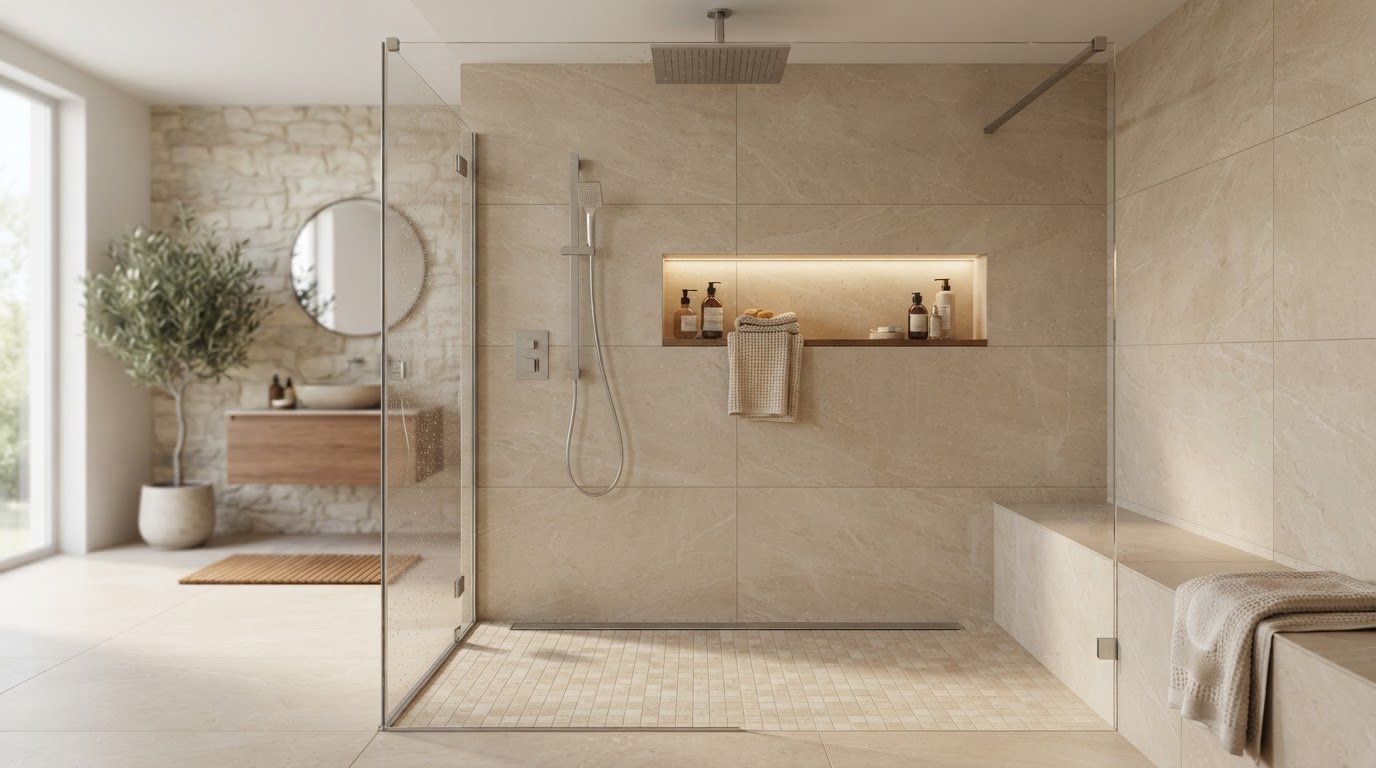
Shower Pan Materials: What Should You Choose?
The material should be selected based on the overall design. These are relative cost categories rather than fixed contractor pricing—local labor, materials, project complexity, and existing conditions can significantly change the final cost.
| Shower Pan Type | Best For | Customization | Typical Cost Level |
|---|---|---|---|
| Fiberglass | Budget remodels | Low | $ |
| Acrylic | Simple upgrades | Low–Medium | $–$$ |
| Solid Surface | Low-maintenance premium look | Medium | $$ |
| Tile-Ready System | Modern tiled showers | High | $$–$$$ |
| Mortar Pan | Custom showers | High | $$–$$$ |
| Custom Shower System | Luxury/complex layouts | Very High | $$$+ |
Shower Pan Maintenance Tips
Once your shower is completed, maintenance matters.
How to Clean a Tiled Shower Pan
The exact cleaning method depends on the tile and grout. Generally: remove loose debris, use an appropriate bathroom cleaner, avoid harsh chemicals that may damage the finish, follow the tile and grout manufacturer's recommendations, rinse thoroughly, allow the shower to dry, and maintain ventilation. Natural stone requires additional care because some cleaning products can damage stone surfaces. Always follow the material manufacturer's maintenance recommendations.
Common Shower Pan Installation Problems
How to Choose the Right Shower Pan
Ask yourself these questions.
Choose Prefabricated When:
- ✔Budget is important
- ✔Shower dimensions are standard
- ✔Speed matters
- ✔You prefer low-maintenance surfaces
- ✔You don't need extensive customization
Choose Custom When:
- ✔You want a fully tiled shower
- ✔The shower is unusually sized
- ✔You want a curbless design
- ✔You want a custom drain configuration
- ✔You want a luxury appearance
- ✔Accessibility is a major consideration
Neither option is automatically better. The right option is the one that fits your bathroom, budget, and long-term goals.
Shower Pan vs. Full Shower Replacement
If you're seeing signs of a failing shower pan, don't automatically assume replacing only the pan is the best solution. A shower is an integrated system. Replacing the floor while leaving damaged or outdated waterproofing behind the walls may simply move the problem elsewhere. For a significant failure, a complete shower rebuild may be more appropriate. This can include demolition, structural inspection, plumbing, waterproofing, shower pan, wall substrate, tile, grout, fixtures, and glass. A professional should determine the scope based on actual conditions.
Shower Pan Remodeling in Orange County & Los Angeles
Orange County bathrooms range from compact older bathrooms to large luxury primary suites. Communities such as Irvine, Newport Beach, Costa Mesa, Huntington Beach, Anaheim, Santa Ana, Tustin, Mission Viejo, Lake Forest, and Laguna Beach can have very different housing stock and construction conditions. A shower pan solution that works in a newer home may not be appropriate for an older property. During remodeling, the contractor should evaluate the existing floor, plumbing, shower dimensions, and waterproofing before determining the best construction method.
Los Angeles has an equally broad range of residential construction. Older homes may have undergone previous bathroom renovations, which means the existing shower assembly may contain multiple layers or older construction methods. Demolition can reveal damaged subfloor, improper previous repairs, old plumbing, multiple tile layers, structural modifications, water damage, and inadequate waterproofing. This is why a professional inspection of existing conditions is important before deciding whether to reuse or replace an existing shower pan.
Questions to Ask Your Bathroom Remodeling Contractor
Before approving your shower design, ask these questions. A reputable remodeling contractor should be able to explain the system rather than simply quote a price.
What type of shower pan are you recommending?
Why is that system appropriate for my bathroom?
Where will the drain be located?
How will the shower floor be sloped?
What waterproofing system will you use?
How is the waterproofing connected to the drain?
Can the shower be made curbless?
What will happen to the existing subfloor?
Does the existing plumbing need to move?
Can my chosen tile be used on the shower floor?
How will the shower entry be waterproofed?
What happens if water damage is discovered during demolition?
What parts of the shower assembly are covered by the warranty?
Are permits required for this project?
Who is responsible for coordinating plumbing, waterproofing, tile, and glass?
Shower Pan FAQ
What is a shower pan?
A shower pan is the sloped base or floor assembly of a shower designed to direct water toward the drain and work with the shower's water-management system.
Is a shower pan the same as a shower base?
The terms are often used interchangeably, although "shower base" commonly refers to a prefabricated finished product while "shower pan" can refer more broadly to the shower-floor assembly.
How much does a shower pan cost?
The cost varies based on the pan type, size, material, drain configuration, installation, waterproofing, plumbing, and overall shower-remodel scope.
Are acrylic shower pans good?
Acrylic can be a practical option for homeowners who want an affordable, relatively low-maintenance shower base with standard dimensions.
Are fiberglass shower pans good?
Fiberglass can be economical and easy to install, although it generally offers fewer customization options than a custom tiled shower.
Is a tiled shower floor better than a prefab shower base?
Not necessarily. A tiled floor provides more design flexibility, while a prefab base can simplify installation and maintenance.
Does a shower pan need waterproofing?
The shower needs an appropriate waterproofing and drainage system. The exact waterproofing method depends on the construction system.
Can you tile over a shower pan?
Only when the shower pan or shower-floor system is specifically designed to receive tile. A standard finished shower base is not automatically suitable for tiling.
How long does a shower pan last?
The lifespan varies according to material, installation quality, maintenance, use, and water exposure. Proper installation is critical to long-term performance.
Can a shower pan leak?
Yes. Leaks can result from damaged components, failed connections, inadequate waterproofing, movement, improper installation, or other problems in the shower assembly.
Can you replace a shower pan without replacing the walls?
Sometimes, but it depends on the shower's construction and waterproofing system. If the waterproofing behind the walls is compromised, a larger rebuild may be necessary.
Is a curbless shower more difficult to build?
It can be. A curbless shower requires careful coordination of floor height, slope, drainage, waterproofing, and the bathroom floor transition.
What is the best shower pan for a curbless shower?
There isn't one universal answer. A purpose-designed curbless shower system or properly engineered custom shower assembly may be appropriate depending on the structure and design.
What drain is best for a shower pan?
Both point drains and linear drains can work well. The best choice depends on the shower layout, floor slope, tile, appearance, and construction system.
Can a shower pan be installed over a concrete slab?
Yes, depending on the existing floor elevation, plumbing, drainage, and selected shower system.
Can a shower pan be installed over a wood floor?
Yes, but the floor structure and available depth need to be evaluated before construction.
Related Bathroom Remodeling Resources
Final Thoughts: The Shower Floor You Don't See Matters Most
A finished shower can look perfect from the outside. Beautiful tile. Elegant fixtures. Frameless glass. A stylish niche. But none of that matters if the underlying shower-floor system isn't properly designed and installed. The shower pan is one of the foundations of a successful shower remodel. Whether you choose acrylic, fiberglass, solid surface, tile-ready, mortar, or custom construction, the system needs to work with the drain, slope, waterproofing, tile, and overall bathroom design.
For homeowners in Orange County and Los Angeles, the best approach is to evaluate the existing bathroom before choosing a shower pan based solely on appearance or price. A good bathroom remodeling project isn't about choosing the cheapest component—it's about creating a complete system that works together. The tile is what you see. The shower pan is part of what protects everything underneath it. And that's why it deserves just as much attention during the planning stage.
Book Venguard Construction
If you're planning a shower pan replacement or a complete bathroom remodel, start with the system underneath the tile. Venguard Construction approaches bathroom remodeling as an integrated design-build process and offers a complimentary consultation with a stated response goal of within 24 hours.
Schedule a Complimentary Bathroom Remodeling Consultation