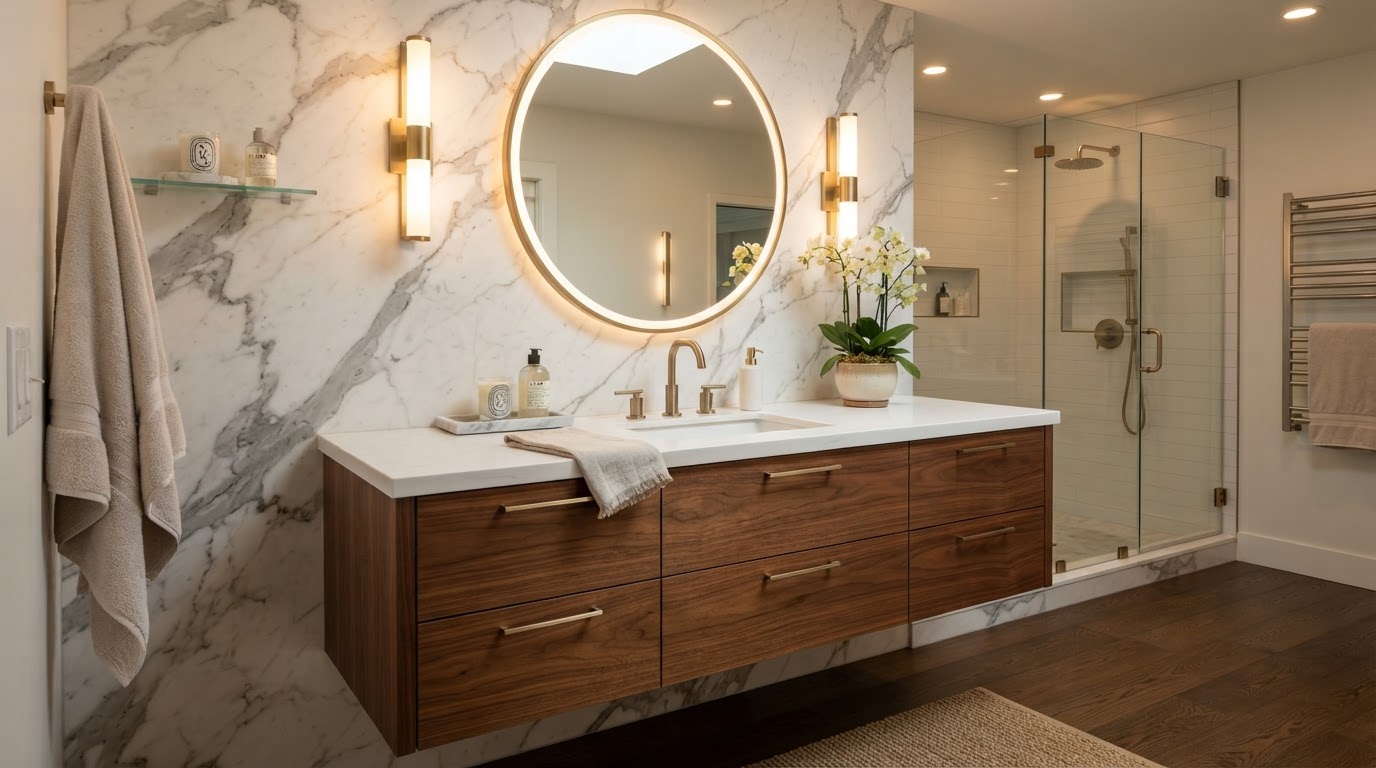
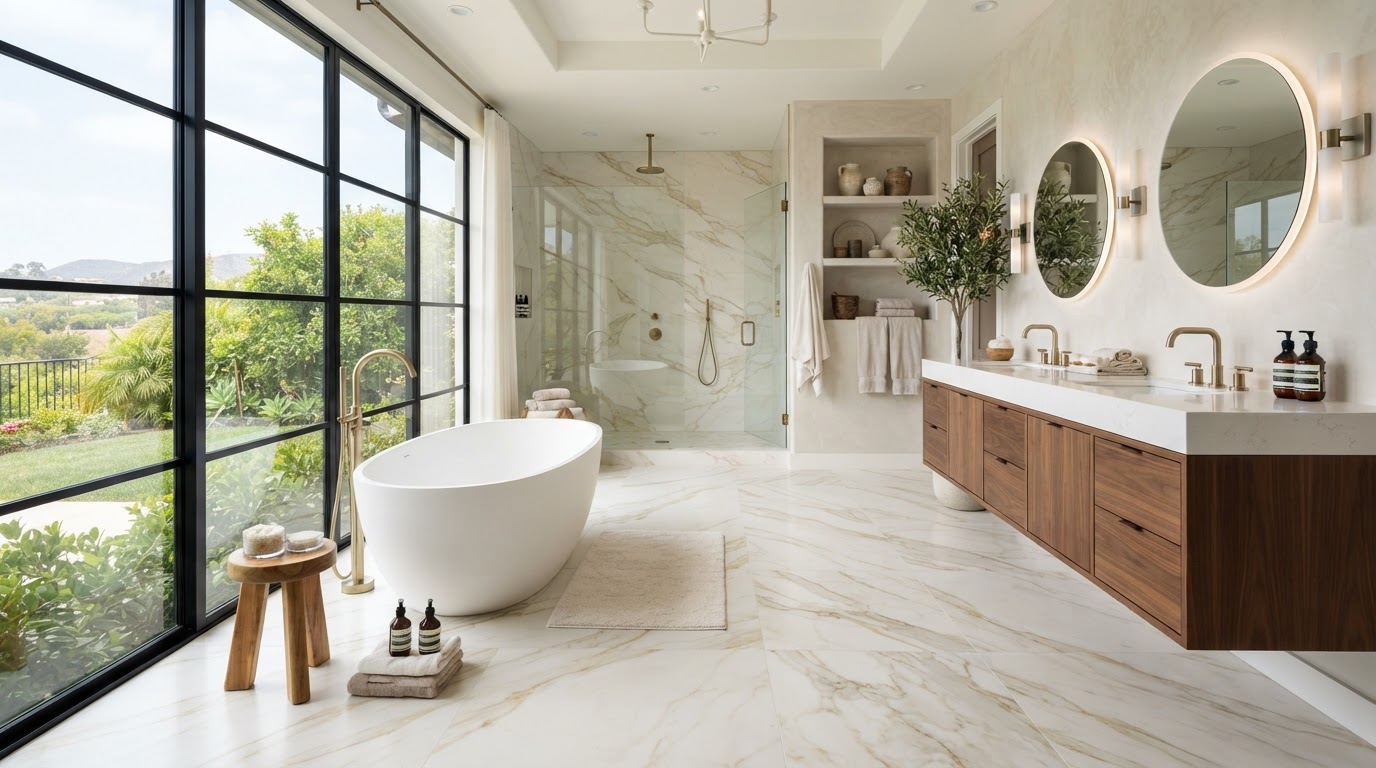
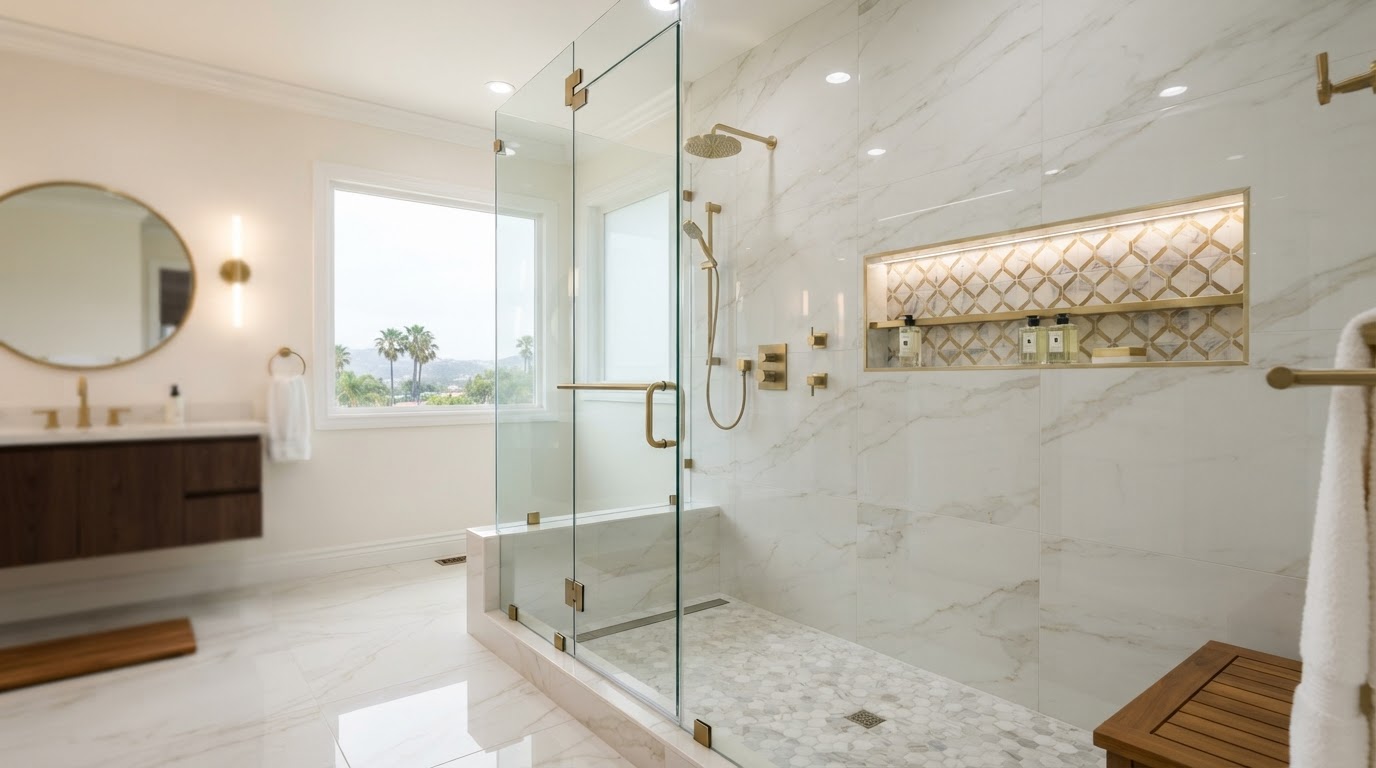
Bathroom flooring has to do much more than look good. Unlike flooring in bedrooms or living rooms, bathroom floors are regularly exposed to water, humidity, cleaning products, bare feet, spills and rapid changes in moisture. The right flooring needs to balance water resistance, durability, safety, maintenance, comfort and design.
And with so many options available today—from porcelain and ceramic tile to marble, travertine, slate, luxury vinyl and large-format surfaces—it can be difficult to know which material actually makes sense for your bathroom.
For many homeowners, the biggest question comes down to three popular choices: porcelain vs. ceramic vs. natural stone—which is best for a bathroom? The answer depends on how you use the space, your budget, the amount of maintenance you're comfortable with, the look you want and the specific installation conditions.
For homeowners planning a bathroom remodel in Orange County, Los Angeles and surrounding Southern California communities, this guide explains the differences between bathroom flooring materials, where each option works best, what to consider before buying, and how flooring fits into the larger remodeling process.
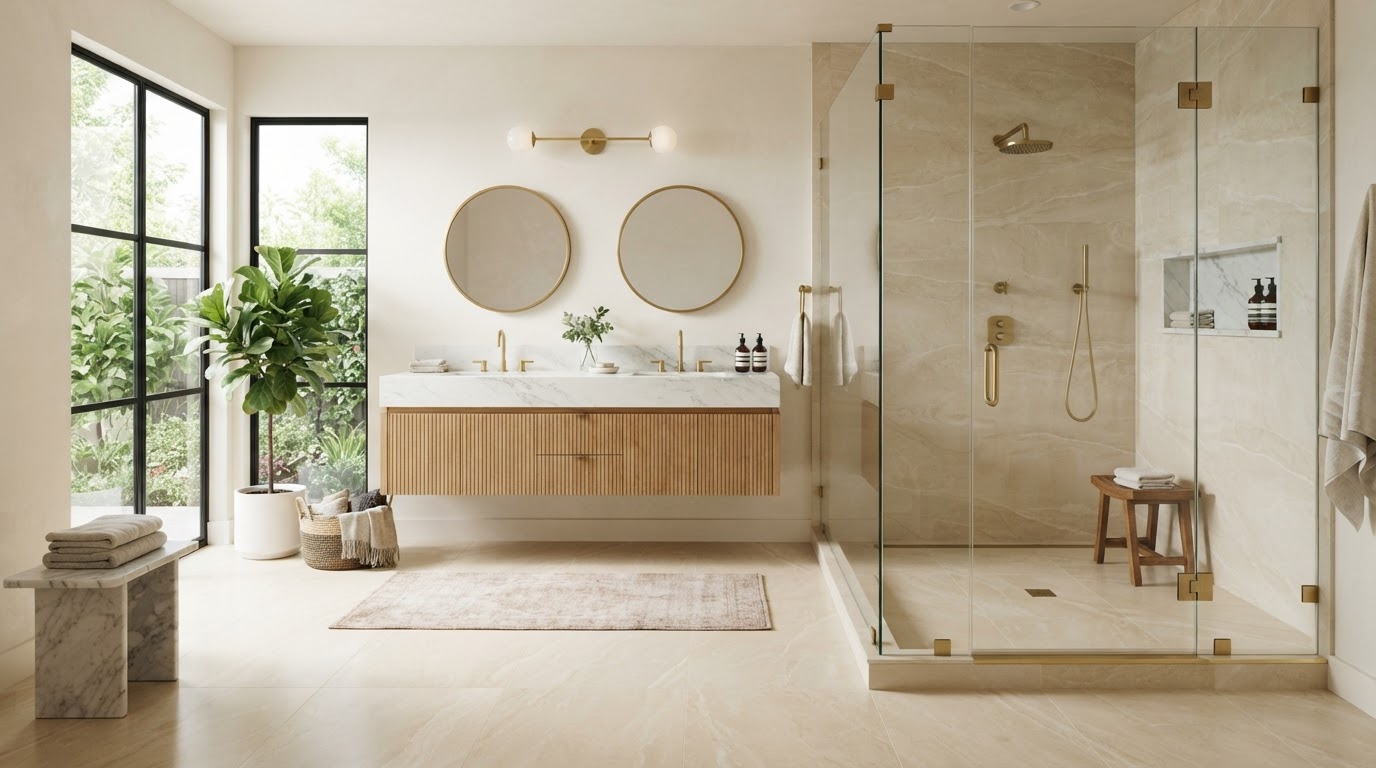
Quick Answer: What Is the Best Bathroom Flooring?
For most homeowners, porcelain tile is one of the strongest all-around choices for bathroom flooring because it combines durability, low water absorption, design flexibility and relatively low maintenance. But that doesn't automatically make it the best choice for every bathroom.
| Material | Water Resistance | Durability | Maintenance | Design Flexibility | Typical Position |
|---|---|---|---|---|---|
| Porcelain | Excellent | Excellent | Low | Excellent | Best all-around |
| Ceramic | Very good | Good–Excellent | Low | Excellent | Great value |
| Marble | Good with care | Good | High | Excellent | Luxury |
| Travertine | Good with sealing | Good | High | Excellent | Natural/warm |
| Slate | Good with care | Excellent | Moderate | High | Textured/natural |
| Limestone | Good with care | Moderate | High | Excellent | Soft luxury |
| LVP | Product-dependent | Good | Low | High | Comfortable/value |
| Cement/Encaustic | Good with care | Good | Moderate–High | Excellent | Decorative |
There is no universal "best" bathroom floor. The best flooring is the one that fits your moisture exposure, safety requirements, lifestyle, maintenance preferences, design goals and budget.
Why Bathroom Flooring Matters So Much
Flooring is one of the largest visual surfaces in a bathroom. It influences how large the room feels, how bright or dark it appears, how easy it is to clean, how comfortable it feels underfoot, how safe it is when wet, how much maintenance the room requires, how well the floor coordinates with the shower and vanity, and how long the finished bathroom can perform.
Flooring also interacts with nearly every other design decision. For example, a large-format marble-look porcelain floor may pair beautifully with a floating vanity, frameless glass shower and warm metal fixtures. A small-format textured tile may be more appropriate when creating a shower floor where additional grout joints can help accommodate slopes and provide visual texture.
This is why flooring should be selected as part of the overall bathroom design—not as an isolated material decision.
What Makes a Good Bathroom Floor?
Before comparing materials, consider what the flooring actually needs to accomplish. A good bathroom floor should generally provide:
Moisture Resistance
Bathrooms are wet environments. The flooring material should be appropriate for the level of moisture exposure it will experience. A water-resistant material does not automatically make the entire floor waterproof—the finished flooring is only one part of the system.
Slip Resistance
Bathroom floors can become slippery when wet. Review the manufacturer's technical information and select products appropriate for the intended application. Don't ask only 'Is this tile pretty?' Ask 'Is this tile appropriate for this specific floor?'
Durability
Bathroom floors experience daily foot traffic, furniture, dropped objects, cleaning and moisture. A durable material can reduce the likelihood of premature wear and replacement.
Easy Maintenance
Think about how much time you actually want to spend maintaining your bathroom. Some materials require little more than routine cleaning; others may require periodic sealing, specialized cleaners and more attention to grout.
Good Design Compatibility
Your flooring should work with the rest of the bathroom—vanity color, countertop, shower tile, wall color, fixtures, lighting, hardware, cabinetry, mirror and glass enclosure. The goal is visual continuity.
Proper Installation
Even an excellent material can produce a poor result if installed incorrectly. Substrate preparation, waterproofing, layout, transitions and grout all matter as much as the tile itself.
Porcelain Bathroom Flooring
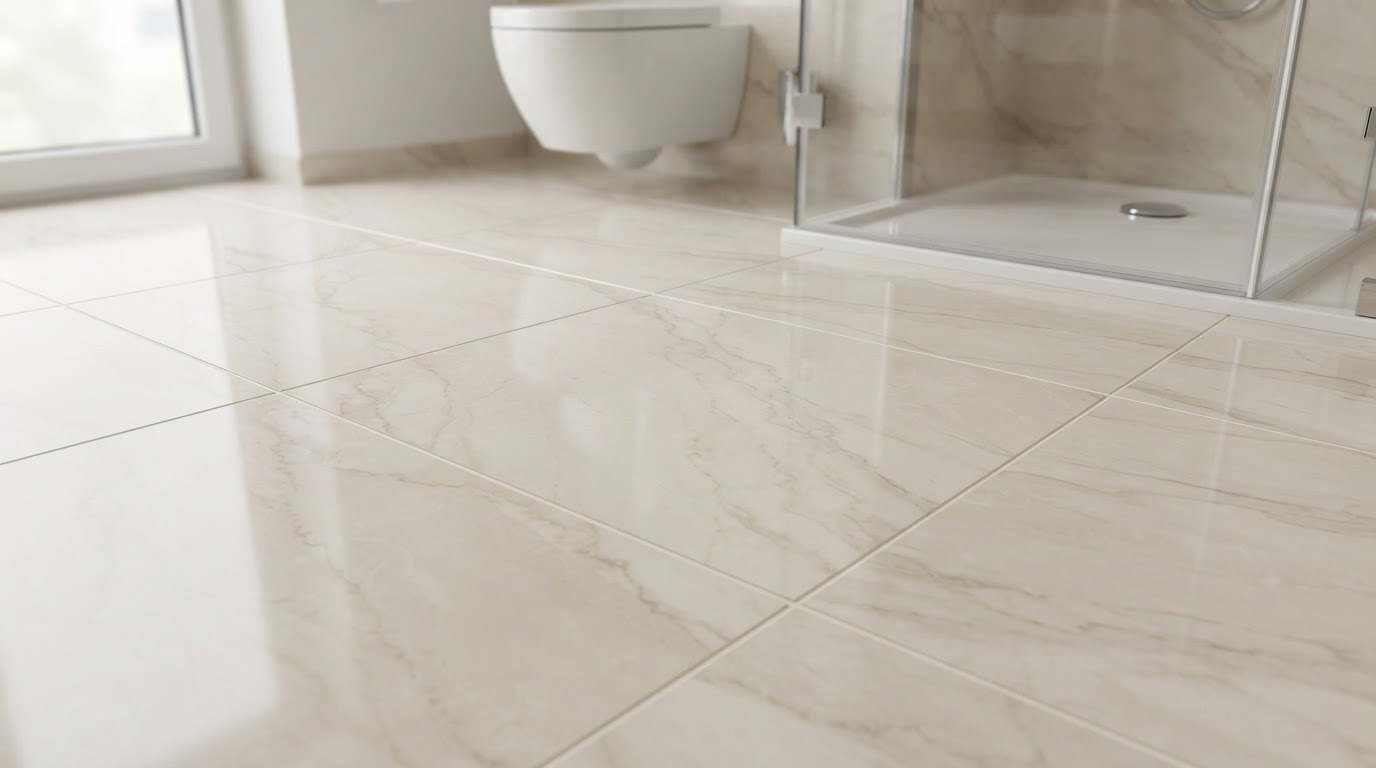
Porcelain is one of the most versatile materials available for bathroom floors. It is manufactured from refined clay and fired at high temperatures, creating a dense tile with very low water absorption. Industry guidance commonly distinguishes porcelain from other ceramic tile at a water absorption rate of 0.5% or less. That density makes porcelain particularly suitable for moisture-prone applications.
Porcelain can also replicate the appearance of marble, limestone, travertine, slate, concrete, terrazzo, hardwood and natural stone. This gives homeowners the visual flexibility of premium materials without necessarily taking on all of the maintenance associated with natural stone.
Advantages of Porcelain
- Excellent moisture resistance from very low water absorption
- High durability for everyday residential foot traffic
- Low maintenance — generally no routine sealing required
- Huge design selection in virtually every color, texture, size and pattern
- Excellent large-format options for a contemporary, low-grout appearance
Potential Disadvantages
- Harder to cut and requires experienced installation
- Relatively cold underfoot without radiant heating
- Can chip if mishandled
- Costs more than basic ceramic
- Large-format products require careful substrate preparation
Best for: Primary bathrooms, guest bathrooms, high-use bathrooms, modern and luxury bathrooms, large-format designs, marble-look and wood-look bathrooms, and homeowners who want low maintenance.
Ceramic Bathroom Flooring
Yes, ceramic tile is a long-standing bathroom flooring option and remains attractive because of its combination of affordability, design variety and practical performance. Ceramic and porcelain belong to the same broad tile family, but porcelain is generally denser and has lower water absorption. Ceramic can still be an excellent choice for many bathroom floors, especially when the selected product is specifically rated for flooring and the intended wet environment.
Advantages of Ceramic Tile
- Wide range of colors and patterns
- Generally affordable
- Easy to clean
- Available in many sizes
- Easy to coordinate with other bathroom surfaces
- Suitable for many residential bathroom floors
Potential Disadvantages
- Compared with porcelain, some products may be softer
- More porous than porcelain
- Less suitable for demanding applications
- More vulnerable to damage depending on the product
Best for: Guest bathrooms, powder rooms, secondary bathrooms, budget-conscious remodels, traditional designs, patterned floors, and homeowners who want a broad design selection.
Porcelain vs. Ceramic: What's the Difference?
The biggest difference is density and water absorption. A common mistake is assuming porcelain is automatically the right choice simply because it is more durable. A high-quality ceramic floor tile can perform very well in the right bathroom. The better question is: which product is appropriate for the specific application?
| Feature | Porcelain | Ceramic |
|---|---|---|
| Composition | Refined clay | Clay-based |
| Density | Higher | Generally lower |
| Water absorption | Very low | Generally higher |
| Durability | Excellent | Good–Excellent |
| Maintenance | Low | Low |
| Design options | Excellent | Excellent |
| Installation | More demanding | Generally easier |
| Cost | Often higher | Often lower |
| Floor suitability | Excellent | Very good when rated |
Natural Stone Bathroom Flooring
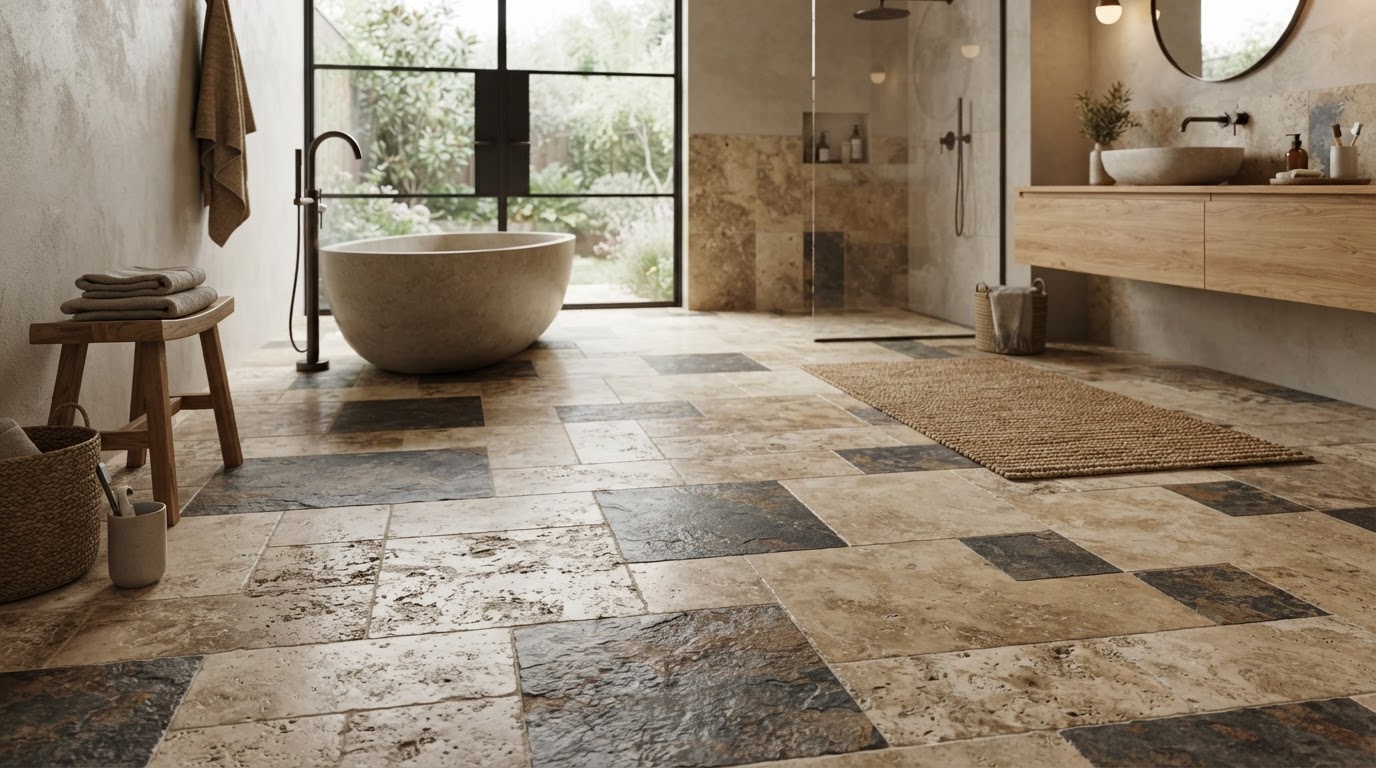
Natural stone is different from porcelain and ceramic because every piece can have natural variations in color, veining, texture, pattern and mineral composition. For homeowners who want a bathroom that feels luxurious, organic and distinctive, natural stone can be an exceptional design choice. However, natural stone generally requires more maintenance planning than porcelain.
Marble
One of the most recognizable luxury materials. Its natural veining creates a sophisticated, high-end appearance that works particularly well in primary bathrooms. Not maintenance-free—may need sealing, careful cleaning, and protection against staining or etching from acidic substances.
Best for: When design is a high priority and maintenance is acceptable.
Travertine
A warmer, more organic appearance than many modern porcelain products. Works well in Mediterranean, transitional, organic and spa-inspired bathrooms. Porous and typically requires appropriate care and sealing; its natural texture can influence comfort and slip resistance.
Best for: Warm, organic and Mediterranean designs.
Slate
A distinctly natural appearance with textured surfaces and earthy tones. Works well for organic, rustic, contemporary-natural and mountain-inspired designs. Durable, but its surface texture can make cleaning more involved than smooth porcelain.
Best for: Organic, rustic and spa-inspired designs.
Limestone
A soft, understated appearance with neutral colors that pair beautifully with warm white walls, oak cabinetry, brass fixtures and soft lighting. Relatively porous and can require more maintenance than porcelain—select with a clear understanding of sealing and cleaning requirements.
Best for: Soft, understated luxury bathrooms.
Other Bathroom Flooring Options
Luxury Vinyl Plank & Tile
Luxury vinyl products offer a softer, warmer feel underfoot than tile and are available in designs that imitate wood, stone, concrete and marble. Some products are specifically marketed as waterproof, while others have different moisture limitations—follow the manufacturer's installation requirements rather than assuming every vinyl product suits every bathroom application.
Cement & Encaustic Tile
Cement and encaustic tiles can create dramatic bathroom floors. They are particularly useful when homeowners want geometric patterns, vintage-inspired designs, Mediterranean aesthetics, bold decorative floors or custom-looking spaces.
However, they can require more maintenance than conventional porcelain, and the floor may need sealing depending on the specific product.
Large-Format Bathroom Floor Tile
Large-format tile has become increasingly popular in contemporary bathroom design. A large floor tile can create a cleaner visual appearance because it reduces the number of grout joints. For example, 12 × 24-inch tile creates a very different visual effect from 2 × 2-inch mosaic tile. Neither is automatically better—the right size depends on the room, layout, drainage, design and installation requirements.
Benefits
- • Fewer grout lines
- • Clean modern appearance
- • Strong visual continuity
- • Can make a bathroom feel more open
- • Works well with contemporary designs
Considerations
- • Requires a properly prepared, flatter substrate
- • Careful layout planning
- • Appropriate installation techniques
- • Proper handling and attention to lippage
- • Uneven floors make imperfections more noticeable
Small & Primary Bathroom Flooring Ideas
Small Bathroom
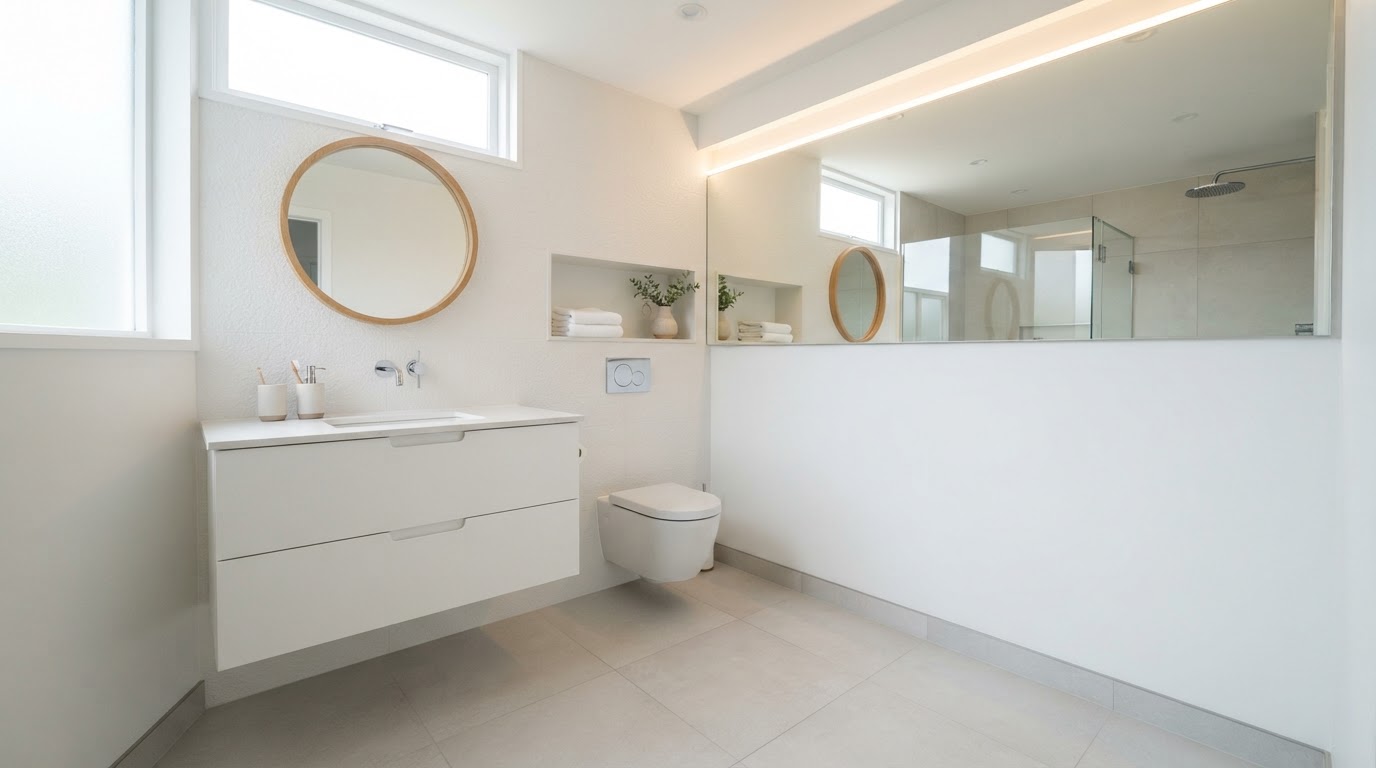
- • Use larger tile carefully to reduce grout interruptions
- • Use consistent colors across floor and walls for continuity
- • Consider light neutral colors to reflect light
- • Use a floating vanity to expose more floor area
- • Coordinate with the shower for a cohesive design
- • Don't automatically avoid pattern—balance it with simpler walls
Primary Bathroom
Primary bathrooms often provide more design flexibility because they typically have larger floor areas. Popular choices include marble-look porcelain, natural stone, large-format porcelain, wood-look porcelain, warm limestone-look tile, textured stone-look tile and heated tile flooring.
The flooring becomes part of the overall design language—paired with a custom vanity, statement lighting, frameless shower glass and layered lighting.
Shower Floors, Matching & Grout
Should Bathroom & Shower Floors Match?
They can, but they don't have to. Matching creates a seamless appearance. However, shower floors have unique requirements—because a shower floor must slope toward the drain, smaller tile formats are often easier to work with. Mosaics are common because their smaller pieces follow slope changes more easily while creating numerous grout joints.
The shower floor should be considered separately from the main bathroom floor.
Floor Tile & Grout
- Light grout: Clean, brightens the room, but shows dirt more easily.
- Dark grout: Hides discoloration, creates contrast, but can feel visually heavier.
- Matching grout: Minimizes visual interruptions.
- Contrasting grout: Emphasizes the tile pattern.
Does Tile Make a Bathroom Waterproof?
No. This is one of the most important concepts homeowners should understand. Tile is not the waterproofing system. A tile floor can look completely sealed while water still reaches the underlying structure if the assembly beneath it has not been properly designed and installed. A bathroom remodeling project may involve waterproof membranes, proper substrate preparation, sealed transitions, drainage, correct floor slope, appropriate flashing, properly treated penetrations, compatible setting materials, and correct grout and sealant. This is particularly important in showers and other areas with significant water exposure.
Heated Bathroom Floors: Are They Worth It?
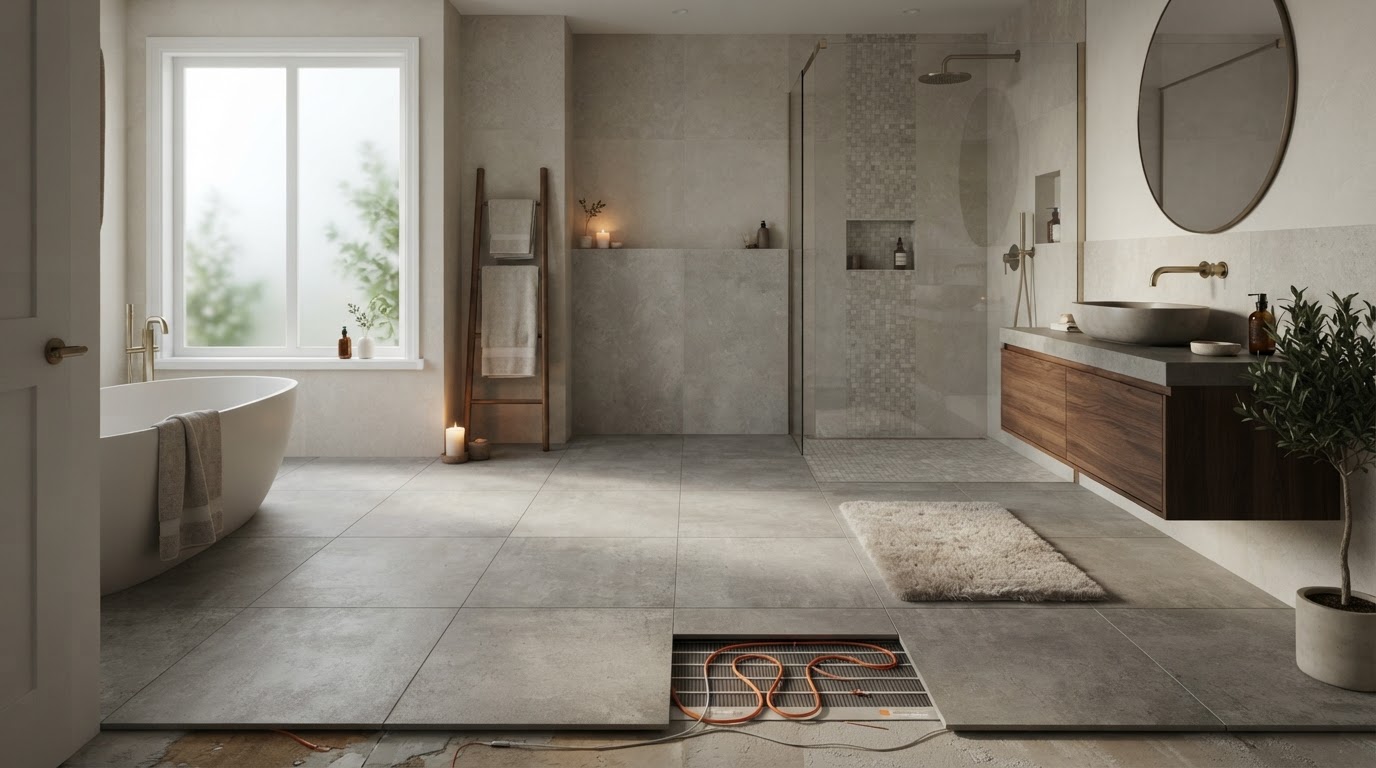
For homeowners who dislike stepping onto cold tile in the morning, radiant floor heating can be an attractive upgrade. Electric radiant systems are commonly installed beneath compatible flooring systems. Benefits can include more comfortable mornings, even warmth, a luxury feel and better comfort during cooler weather.
Heated flooring needs to be planned before the finished floor is installed. The design should account for floor assembly, electrical requirements, thermostat location, finished floor height, manufacturer requirements, waterproofing and floor layout. It is much easier to coordinate heated flooring during the design phase than after the bathroom has already been constructed.
Bathroom Flooring Costs in Los Angeles and Orange County
Bathroom flooring cost varies significantly. The final price can depend on bathroom size, flooring material, tile size, tile pattern, demolition, subfloor condition, waterproofing, floor preparation, installation complexity, accessibility, drainage requirements, custom patterns, existing plumbing and labor rates.
Average 2026 Los Angeles bathroom flooring installation, though individual projects vary substantially.
Typical 2026 Los Angeles new-floor installation, with labor commonly representing a significant portion.
Bathroom tile materials, with professional installation potentially adding $3–$15 / sq ft.
These figures should be treated as planning benchmarks rather than fixed quotes. A small bathroom with premium marble, intricate patterns, extensive preparation and custom installation can cost considerably more than a straightforward ceramic tile installation.
What Makes Bathroom Flooring More Expensive?
How much extra tile to buy: A common planning approach is to order approximately 10% extra material, although the appropriate amount depends on tile size, room shape, installation pattern and product availability. For complicated patterns, you may need more. Your installer can help determine the appropriate quantity.
Bathroom Flooring Mistakes to Avoid
How to Choose: Porcelain, Ceramic or Natural Stone
Choose Porcelain If You Want
- High durability
- Excellent moisture resistance
- Low maintenance
- Large-format options
- Stone-look and wood-look designs
- A versatile long-term material
Choose Ceramic If You Want
- Good performance
- Lower material cost
- Broad design selection
- Easy maintenance
- A traditional or decorative look
Choose Natural Stone If You Want
- Unique natural variation
- Luxury appearance
- Organic texture
- High-end design
- A material with natural character
Bathroom Flooring by Lifestyle
Bathroom Flooring Design Ideas for 2026
Bathroom flooring trends continue to move toward designs that feel warm, sophisticated and timeless rather than overly decorative. Some of the strongest directions include:
Bathroom Flooring and the Rest of Your Design
How to evaluate samples: Get a physical sample whenever possible and evaluate it under natural daylight, bathroom artificial lighting, morning light, evening light, wet conditions and different viewing angles. Look at multiple pieces together—one sample may not represent the full visual range of the finished floor.
Bathroom Flooring Checklist
Performance
- • Rated for bathroom flooring?
- • Appropriate for wet conditions?
- • Slip characteristics reviewed?
- • Surface appropriate for the application?
Maintenance
- • Does it require sealing?
- • Recommended cleaning products?
- • Is the grout easy to maintain?
- • How does it react to stains?
Design
- • Coordinates with the vanity?
- • Works with the shower tile?
- • Complements the countertop?
- • Works with the lighting?
- • Tile scale fits the room?
Installation
- • Subfloor properly prepared?
- • Specialized installation required?
- • Will floor height change?
- • How are transitions handled?
- • Is waterproofing required?
Budget
- • Material cost confirmed?
- • Installation cost confirmed?
- • How much demolition is required?
- • How much waste should be ordered?
- • Additional substrate preparation needed?
Local
- • Home age and existing conditions?
- • Permit requirements checked?
- • Material availability confirmed?
- • Professional site evaluation done?
Frequently Asked Questions About Bathroom Flooring
What is the best flooring for a bathroom?
For many homeowners, porcelain tile is one of the best overall choices because of its durability, low water absorption, design flexibility and relatively low maintenance. However, ceramic, natural stone and appropriately rated alternative flooring products can also work well depending on the bathroom and homeowner's priorities.
Is porcelain better than ceramic for a bathroom?
Not necessarily in every situation. Porcelain is denser and has lower water absorption, making it particularly well suited to moisture-prone applications. Ceramic can still be an excellent bathroom floor material when the specific product is rated for the intended use.
Is natural stone good for bathroom floors?
Yes. Marble, travertine, slate and other natural stones can create beautiful bathroom floors. However, natural stone often requires more maintenance than porcelain and may require sealing depending on the stone and application.
Is porcelain tile waterproof?
Porcelain has very low water absorption, but the finished bathroom floor should not be considered waterproof simply because porcelain tile is being used. The complete floor assembly and waterproofing strategy matter.
What bathroom flooring is easiest to maintain?
Porcelain is generally one of the easiest choices for homeowners who want low-maintenance bathroom flooring. Ceramic can also be relatively easy to maintain. Natural stone typically requires more care.
Is marble flooring difficult to maintain?
Marble requires more care than porcelain. Depending on the specific marble, homeowners may need to consider sealing, proper cleaning and protection against staining or etching.
What flooring is best for a small bathroom?
Large-format porcelain can create a clean, spacious appearance because it reduces grout lines. However, tile size should also work with the room's layout and installation requirements.
Should bathroom floor tile match shower tile?
It can, but it doesn't have to. Matching or coordinating materials can create a cohesive appearance. The most important consideration is that each material is appropriate for its specific application.
What is the best tile size for a bathroom floor?
There is no universal best size. Large-format tile can create a modern appearance with fewer grout lines, while smaller tile can work well for detailed designs and certain shower-floor applications. The appropriate size depends on the bathroom layout, drainage, design and installation conditions.
Are bathroom floors slippery?
They can be, particularly when wet. Slip characteristics should be considered when selecting bathroom flooring. Review the manufacturer's technical information and choose a product appropriate for the intended wet application.
Can you install heated floors under bathroom tile?
Yes, compatible radiant heating systems can be installed beneath many tile flooring systems. However, heated flooring should be planned before installation so the electrical, floor assembly and finished flooring can be properly coordinated.
How much does bathroom flooring cost in Los Angeles?
Current 2026 Los Angeles estimates put bathroom flooring installation at approximately $12.50 per square foot on average, although actual project costs vary substantially based on material, labor, preparation and complexity. A complete bathroom remodel will cost considerably more because it can include demolition, plumbing, electrical, waterproofing, cabinetry, countertops, fixtures, lighting and other work.
How long does bathroom flooring installation take?
A straightforward flooring replacement can be relatively quick, but the complete timeline depends on demolition, substrate preparation, waterproofing, tile size, pattern, curing requirements and the rest of the bathroom renovation. If the flooring is part of a complete bathroom remodel, it must also be coordinated with the broader construction schedule.
Final Verdict: Porcelain vs. Ceramic vs. Natural Stone
Porcelain — Best All-Around
Excellent durability, moisture resistance, design flexibility and relatively low maintenance.
Ceramic — Best Value Tile
A practical and attractive choice when the selected product is appropriate for the floor application.
Natural Stone — Best for Luxury
Beautiful and distinctive, but generally requires more maintenance and careful material selection.
LVP — Best for Comfort & Value
A practical alternative for a softer floor and wood- or stone-look appearance, provided the product suits the bathroom.
The Most Important Bathroom Flooring Decision
Don't start by asking "Which tile is trending?" Start by asking "What does this bathroom need from its floor?" If the priority is low maintenance and long-term durability, porcelain may be the strongest fit. If budget and design flexibility are important, ceramic may make more sense. If you want natural variation and luxury, natural stone may be worth the additional care.
And if you're planning a complete bathroom remodel, the flooring should be selected alongside the shower, vanity, lighting, plumbing and waterproofing—not after those decisions have already been made. A beautiful bathroom isn't simply a collection of expensive materials. It's a space where design, function and construction quality work together.
Related Guides
Planning a Bathroom Remodel in Orange County or Los Angeles?
If you're considering new bathroom flooring as part of a larger renovation, Venguard Construction can help coordinate the project from planning and material selection through construction and final walkthrough. Before choosing your flooring, start with the complete bathroom. The right floor is not just the one that looks beautiful on day one—it's the one that continues to perform beautifully for years.
Schedule a Complimentary Bathroom Remodeling Consultation