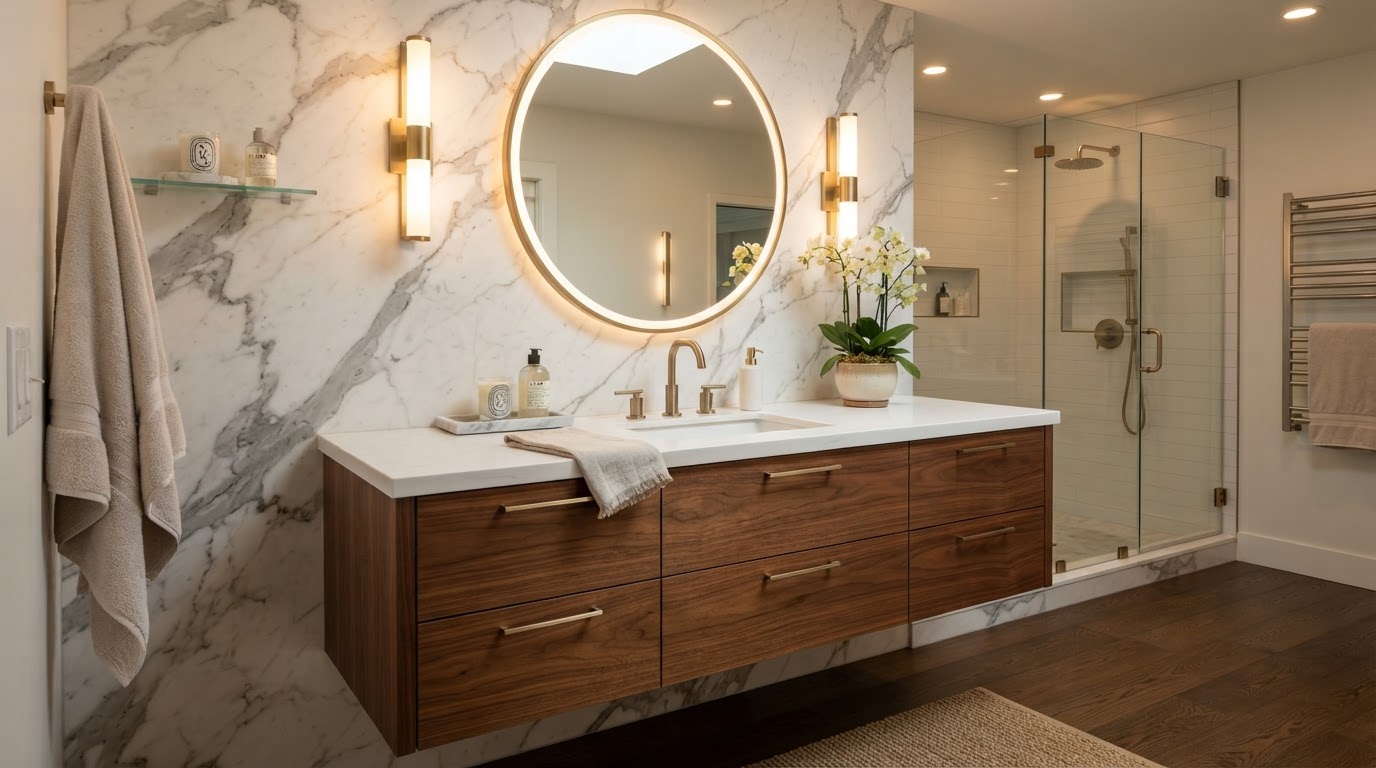
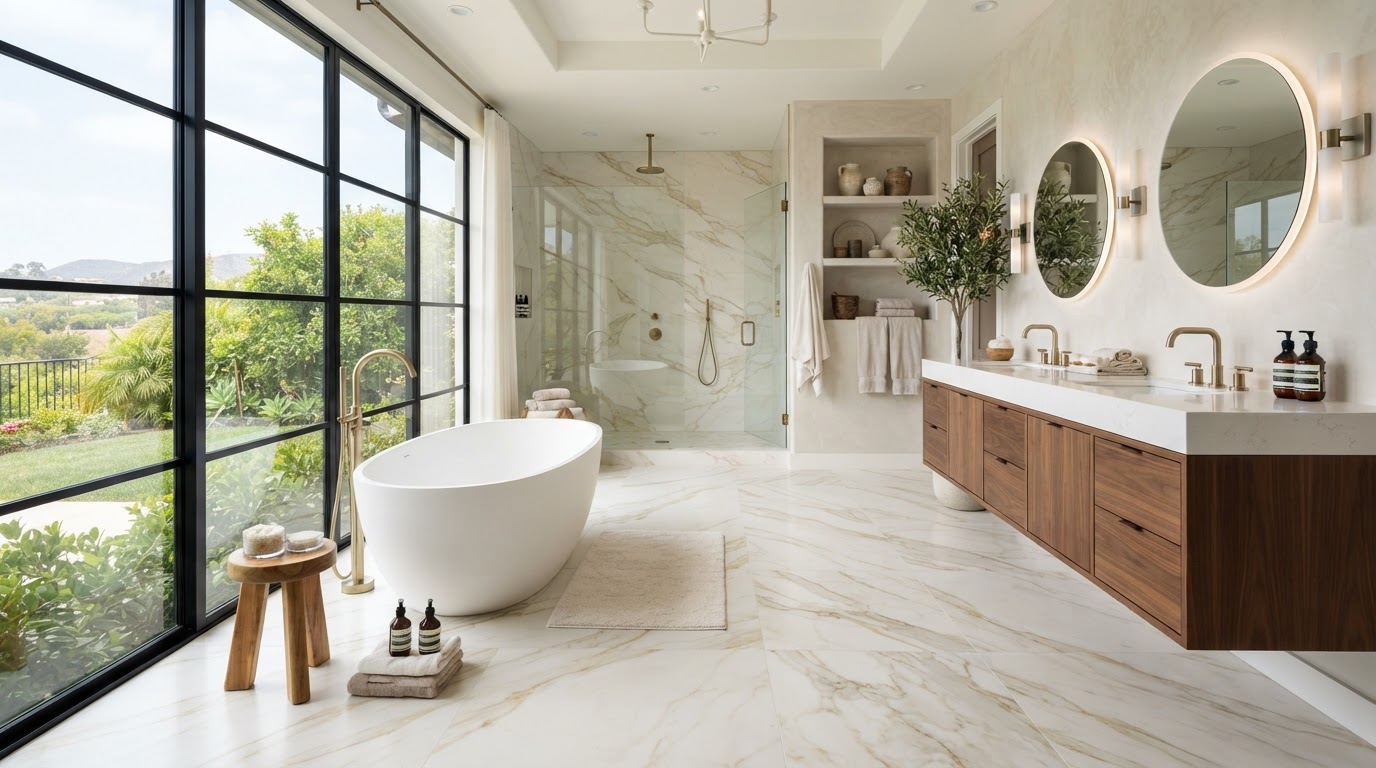
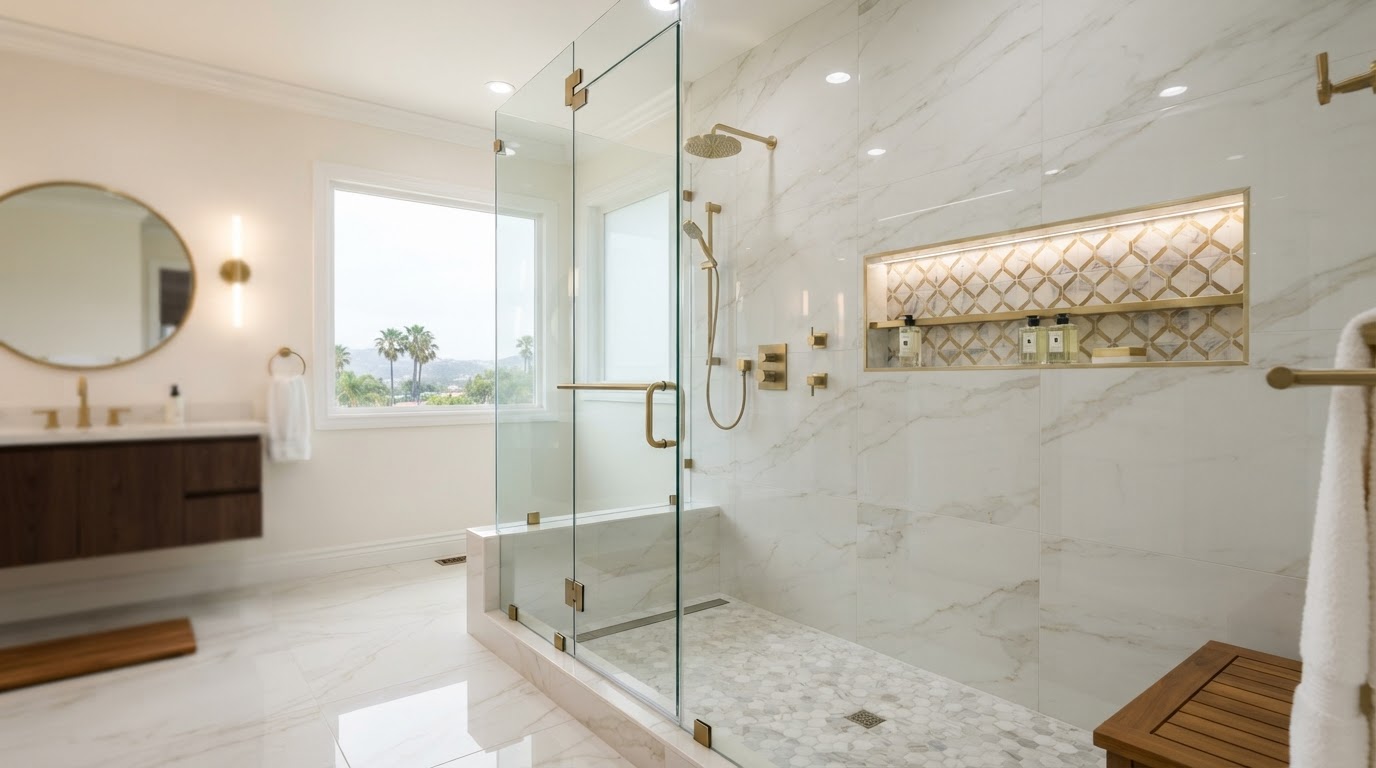
A shower can be one of the most functional parts of a bathroom—and one of the most overlooked during the planning stage. Many homeowners choose the tile, vanity, glass enclosure and shower finish first, then decide which shower fixtures to install later. That approach can create problems.
A modern shower system may include a rain shower head, handheld shower, body sprays, thermostatic or pressure-balancing controls, diverters and multiple water outlets. Each component affects plumbing, wall construction, water flow, fixture placement and the overall shower experience. If you're remodeling a bathroom in Orange County or Los Angeles, planning the shower system before the walls are closed is particularly important. Adding or relocating plumbing after tile and waterproofing are completed can be significantly more disruptive and expensive than planning the system during the design phase.
This guide explains the major shower system types, how rain showers compare with handheld showers and body jets, how to plan fixture placement, what to know about water pressure and flow, and how much a shower system can add to a 2026 bathroom remodeling budget.
What Is a Shower System?
A shower system is the combination of plumbing controls, shower outlets and accessories that deliver water within a shower. A basic system might include one showerhead, one control valve, a shower arm, a trim plate, and a drain. A more advanced system could include a rain shower head, handheld shower, body sprays or body jets, a thermostatic valve, volume control, diverter, multiple shower outlets, a slide bar, a shower niche, a shower bench, a ceiling-mounted shower arm, a wall-mounted shower arm, or digital shower controls.
The important distinction is that a sophisticated shower isn't simply a collection of attractive fixtures. It is a plumbing system. The number of outlets, their flow rates, whether they can operate simultaneously, the available water supply, valve configuration and wall access all need to be considered before installation. For example, Delta's technical information shows that a rain shower can be combined with a handheld shower and body sprays, but additional diverter components may be required to control the different functions. That is why fixture selection should happen early in the remodeling process.
The Three Main Shower Fixtures
Most modern shower systems are built around three primary fixture types: rain shower heads, handheld showers, and body sprays or body jets. You can use one of these by itself or combine two or three to create a more customized system.
Rain Shower Head
Distributes water over a larger area from above. Ceiling or wall mounted. Creates a clean, spa-inspired appearance with wide coverage.
Handheld Shower
Removable showerhead that directs water manually. Installed on a wall bracket or slide bar. Excellent for rinsing, cleaning, and accessibility.
Body Jets
Small wall-mounted outlets that spray horizontally toward the body. Arranged individually or in groups for broader water coverage.
1. Rain Shower Heads
A rain shower head is designed to distribute water over a larger area from above. Depending on the model, it can be ceiling mounted, wall mounted on an extended arm, fixed to a traditional shower arm, or integrated into a larger shower system. Rain shower heads are popular because they create a visually clean, spa-inspired appearance.
Advantages of a Rain Shower
A rain shower can provide wide water coverage, a relaxing shower experience, minimal visual clutter, a luxury or spa aesthetic, and strong compatibility with contemporary bathroom designs. Large-format rain shower heads can also become a design feature in a minimalist shower. However, the larger the shower head, the more important it becomes to verify the fixture's actual flow characteristics and the home's available water supply. For example, one current Delta 12-inch raincan model is listed at 1.75 gallons per minute at 80 psi, demonstrating that large-format rain shower heads do not necessarily require extremely high water consumption.
Ceiling-Mounted vs. Wall-Mounted
A ceiling-mounted rain shower has a very clean appearance and water falls more directly downward, but plumbing must reach the ceiling location and the ceiling may need to be opened. A wall-mounted rain shower attaches to an extended arm, is easier to retrofit, keeps plumbing in the wall, and offers more flexibility during remodeling. For many remodels, a wall-mounted rain shower can achieve a similar visual effect without requiring ceiling plumbing.
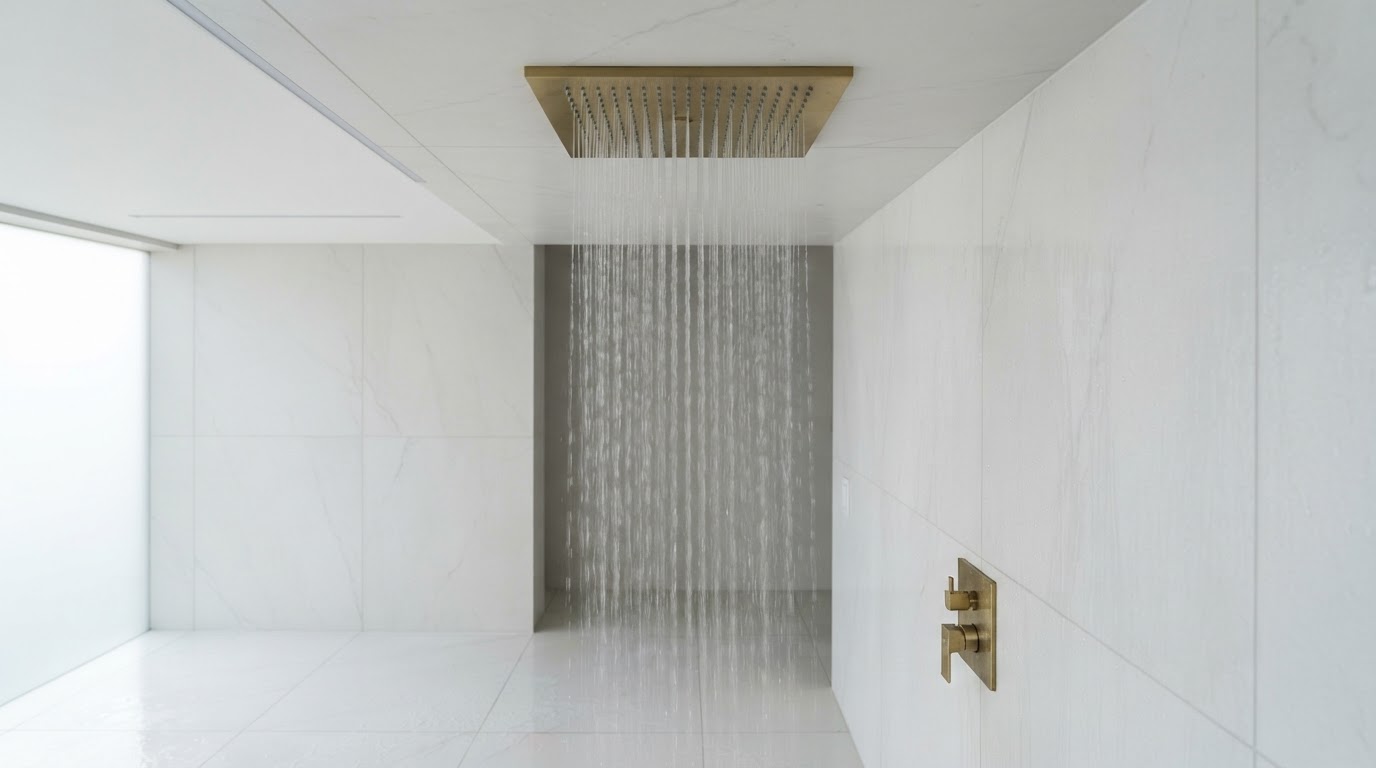
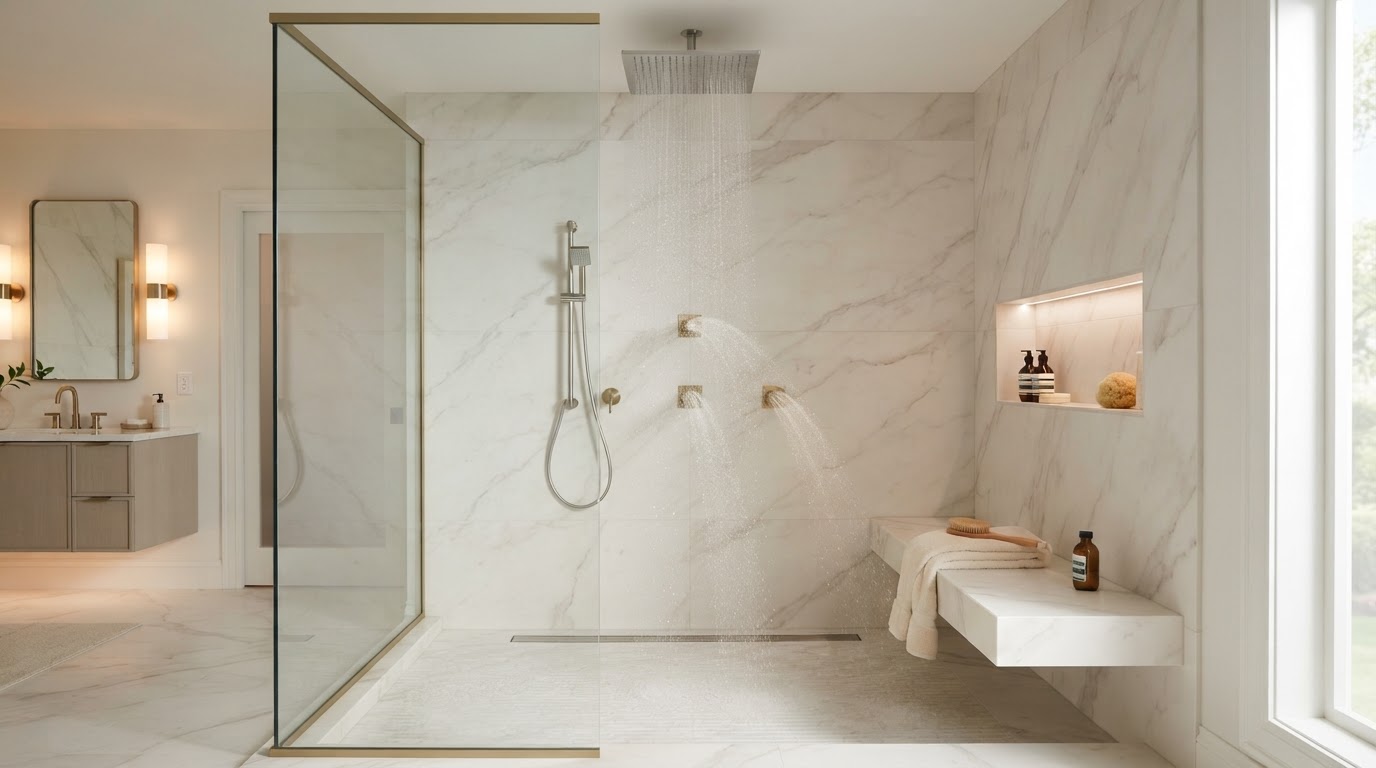
A ceiling-mounted rain shower head delivers a clean, spa-inspired overhead experience—but the plumbing needs to reach the ceiling.
2. Handheld Shower Heads
A handheld shower provides flexibility because the user can remove the showerhead from its holder and direct the water manually. It can be installed on a wall bracket, a slide bar, an adjustable rail, or as part of a combination shower system. Handheld showers are particularly useful for rinsing hair, cleaning the shower, bathing children, washing pets, mobility-related needs, and users who prefer adjustable water positioning. A slide bar can also allow the height of the handheld fixture to be adjusted, making the handheld shower one of the most versatile components in a bathroom remodel.
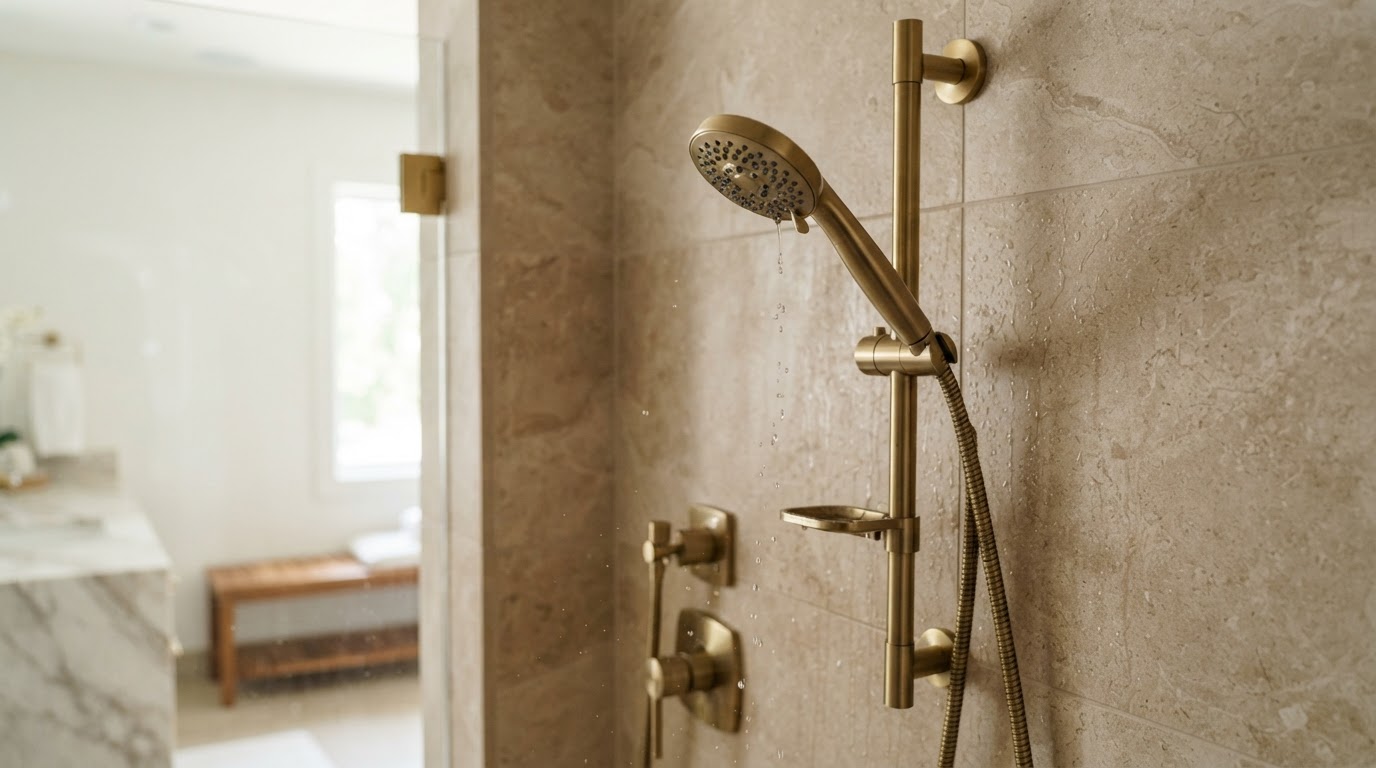
A handheld shower on a slide bar is one of the most versatile and accessible fixtures in a bathroom remodel.
3. Body Jets and Body Sprays
Body jets are small water outlets installed into the shower wall. Instead of directing water downward from above, they spray horizontally toward the body. They can be arranged individually or in groups. Common configurations include two opposing body sprays, three vertical sprays, four symmetrical sprays, multiple sprays on one wall, or body sprays combined with a rain shower and handheld. The goal is generally to create broader water coverage around the user.
However, body sprays require more planning than simply replacing an existing showerhead. Each additional outlet can affect plumbing, valve requirements, water flow, wall framing, waterproofing, installation cost, and maintenance. For example, Delta specifically identifies diverter components for systems combining a showerhead, handheld and body sprays.
Rain Shower vs. Handheld vs. Body Jets
There is no single configuration that works for every bathroom. A combination system can provide all three, but the plumbing and budget need to support the configuration.
| Feature | Rain Shower | Handheld | Body Jets |
|---|---|---|---|
| Main purpose | Overhead coverage | Flexible directional spray | Horizontal body coverage |
| Typical position | Ceiling or upper wall | Wall / slide bar | Shower wall |
| Best for | Spa-style experience | Flexibility | Multi-outlet luxury system |
| Installation complexity | Moderate | Low–moderate | High |
| Plumbing changes | Sometimes | Often minimal | Usually greater |
| Cleaning convenience | Moderate | Excellent | Moderate |
| Accessibility potential | Moderate | Excellent | Variable |
| Best for small showers | Yes | Yes | Usually less ideal |
| Best for luxury showers | Excellent | Excellent | Excellent |
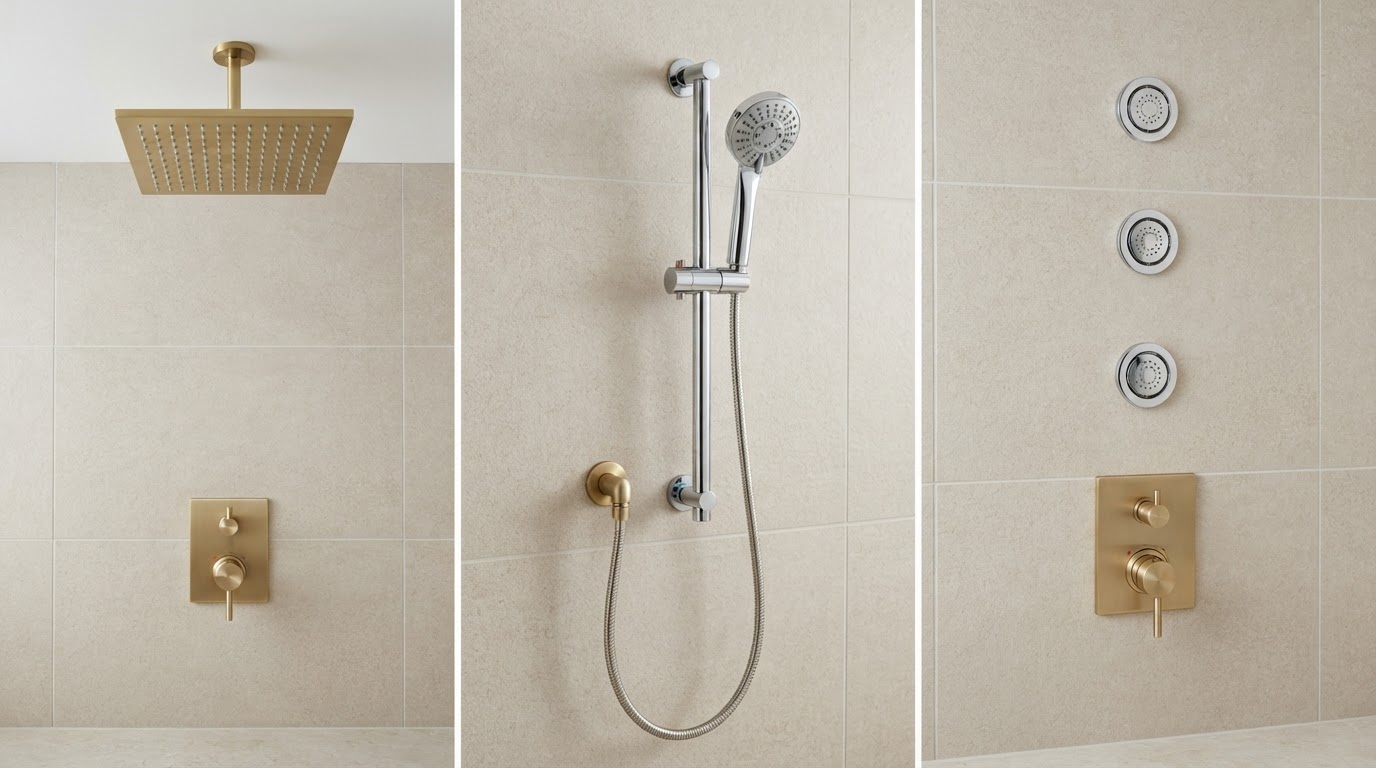
Rain shower, handheld, and body jets each serve a different purpose—and can be combined when the plumbing supports it.
Should You Get a Rain Shower or a Handheld?
For homeowners choosing only one upgraded fixture, this is one of the most common decisions. Choose a rain shower if you prioritize a spa-like experience, minimalist design, wide overhead coverage, a luxury aesthetic, or a clean, uncluttered shower wall. Choose a handheld if you prioritize flexibility, cleaning, adjustability, accessibility, or practical everyday use.
Consider both if you have enough space, your plumbing can support the configuration, you are already opening the walls, and you want both convenience and a luxury experience. For many remodels, the rain shower + handheld combination offers a practical balance between aesthetics and functionality.
What Is the Best Shower System for a Walk-In Shower?
Walk-in showers offer considerable flexibility because there is no bathtub occupying the space. A common configuration is a rain shower + handheld + thermostatic control. Another option is a rain shower + handheld + body sprays. For larger primary bathrooms, homeowners may choose a rain shower + handheld + body sprays + bench + multiple controls.
However, bigger is not automatically better. A shower with too many fixtures can increase installation complexity, plumbing requirements, cost, maintenance, water consumption, and potential repair points. The best system is usually the one that matches the size of the shower and how the homeowner actually uses it. If you're still deciding on the overall enclosure, see our shower door & glass guide.
Thermostatic vs. Pressure-Balancing Shower Valves
The valve behind the wall is one of the most important components in the shower system. Two common technologies are pressure-balancing valves and thermostatic valves.
Pressure-Balancing Valve
A pressure-balancing valve responds to changes in hot and cold water pressure. For example, if another fixture in the home uses cold water, the valve is designed to compensate for the pressure change and reduce sudden temperature fluctuations. This is a common solution for residential showers.
Thermostatic Valve
A thermostatic valve is designed to regulate water temperature more precisely. The user typically selects a desired temperature while separate controls can manage water volume or individual shower functions, depending on the system. This becomes particularly useful in multi-outlet showers—for example, one control for temperature, one for rain shower volume, one for the handheld, and one for body sprays.
What Is a Shower Diverter?
A diverter controls where the water goes. For example, a diverter might allow you to choose between the rain shower, the handheld, or the body sprays. Depending on the system, it may allow one outlet at a time, multiple outlets simultaneously, or different combinations. This distinction is important: a homeowner might purchase three beautiful fixtures assuming all three can operate simultaneously, only to discover that the plumbing or valve configuration was designed for one outlet at a time. Always confirm this before purchasing fixtures.
Can a Rain Shower, Handheld and Body Jets Run at the Same Time?
Sometimes—but not automatically. The answer depends on valve design, diverter configuration, fixture flow rates, available water pressure, supply piping, manufacturer requirements, and applicable plumbing regulations. Do not assume that adding more outlets means all of them will perform well simultaneously.
California and other jurisdictions also regulate shower fixture flow and water efficiency. California's water-efficiency standards have historically included limits on showerhead flow and requirements concerning multiple shower outlets, while current product specifications vary by fixture. For a real remodeling project, your contractor and plumber should verify the applicable current California code requirements and the specific manufacturer's installation requirements before finalizing the system.
Why Water Flow Matters in a Multi-Outlet Shower
One of the biggest mistakes homeowners make is focusing only on fixture appearance. Imagine a shower with one rain shower, one handheld, and four body jets. It looks impressive on paper. But if the plumbing system cannot provide the required flow and pressure, the actual shower experience may be disappointing. The result could be weak sprays, inconsistent performance or an inability to operate all fixtures as intended.
Individual products can have very different flow specifications. For example, Delta lists some raincan models at 1.75 GPM, while its product information also shows body-spray options at 1.8 and 2.0 GPM. That means the total potential demand needs to be evaluated rather than looking at each fixture separately.
Fixture Height and Placement
How High Should a Shower Head Be?
There is no single universal shower-head height. The correct placement depends on user height, shower size, fixture type, ceiling height, shower arm design, manufacturer instructions, glass enclosure, accessibility requirements, and overall shower layout. A rain shower may be positioned differently from a standard wall-mounted showerhead, and a handheld needs to be comfortably reached.
Where Should a Handheld Be Installed?
A handheld shower is generally placed where it is easy to reach, easy to remove, convenient for rinsing, away from unnecessary splash zones, and compatible with the shower door and niche. A slide bar gives additional flexibility. For aging-in-place bathrooms, the handheld provides greater control over where water is directed.
Where Should Body Jets Be Installed?
Body jets need more planning because their position determines where the water hits the body. A common approach arranges them vertically along the shower wall. The ideal arrangement depends on user height, number of users, shower dimensions, wall width, bench location, and shower door location.
Body Jets and Shower Benches
A shower bench can dramatically change the way the shower is used. Before installing body sprays, determine whether the homeowner will primarily shower standing, sitting, or both. A body spray positioned perfectly for a standing user may not be useful when seated. Likewise, a spray positioned directly opposite a bench may create unnecessary splash. This is one reason shower fixture layout should be designed together with the bench, niche, glass, door, drain, and showerhead rather than treating each component as a separate decision.
Shower System Layout Ideas
Layout 1: Simple and Practical
One showerhead + handheld. Best for guest bathrooms, smaller bathrooms, budget-conscious remodels, and practical everyday use.
Layout 2: Modern Spa
Rain shower + handheld. Best for primary bathrooms, walk-in showers, contemporary designs, and homeowners wanting a luxury feel without excessive plumbing.
Layout 3: Full Body Experience
Rain shower + handheld + body jets. Best for larger primary bathrooms, luxury remodels, and large walk-in showers. Requires more planning and potentially more complex plumbing.
Layout 4: Minimalist Luxury
Large ceiling rain shower + concealed handheld. Minimizes visible hardware while maintaining functionality. Works well with large-format porcelain, natural stone, frameless glass, linear drains, floating benches, and recessed niches.
Coordinate the Shower System With the Drain & Niche
Coordinate With the Shower Drain
The shower system determines where water is being delivered; the drain determines where that water needs to go. A high-output or multi-outlet shower system should be coordinated with the shower floor and drainage design. See Venguard's shower drain guide for drainage design.
Coordinate With the Shower Niche
Avoid placing body jets through a niche wall, controls where they conflict with the niche, or a handheld bracket where the niche door interferes. A good shower elevation drawing should show the rain shower, handheld, controls, body sprays, niche, bench, glass, and door before construction begins. See the shower niche design guide.
Shower System and Waterproofing
Adding more plumbing penetrations means more locations that need to be properly integrated into the waterproofing system. This is especially important with body sprays, shower valves, handheld connections, shower arms, niches, benches, and tub-to-shower conversions. The waterproofing system should be compatible with the selected plumbing penetrations and installed according to the manufacturer's system requirements. A beautiful shower system is not successful if water is allowed to migrate behind the finished surfaces. For a full breakdown, read our bathroom waterproofing guide.
Can You Add a Shower System to an Existing Shower?
Sometimes. The feasibility depends on existing plumbing, wall access, pipe sizes, valve configuration, water pressure, framing, ceiling access, location of the existing shower, and the desired number of outlets. Adding a handheld to an existing shower may be relatively straightforward compared with installing multiple body jets. A ceiling-mounted rain shower can also require substantially more work than replacing a standard wall-mounted showerhead. If the walls are already open for a full bathroom remodel, that is usually the best time to plan additional shower outlets.
How Much Does a Shower System Cost in 2026?
The cost depends heavily on whether you're simply replacing fixtures or building a completely new custom shower. As a broad 2026 national benchmark, Angi reports shower installation costs of approximately $4,449 to $12,373 for most projects, with an average around $8,204. It also identifies custom jets, drainage, tile, plumbing and other features as separate cost drivers.
For shower remodeling overall, Angi reports a typical range of approximately $2,000 to $9,000, with projects potentially reaching $15,000 depending on scope and materials. Los Angeles-specific 2026 data from Angi puts the average shower remodel at approximately $7,952, with a reported range of about $2,272 to $10,224.
These figures should be treated as planning benchmarks rather than quotes for an Orange County or Los Angeles project. A custom Venguard project can differ significantly based on the actual bathroom, finish level and scope.
What Makes a Shower System More Expensive?
1. Number of Outlets
One showerhead is much simpler than a rain shower, handheld, four body sprays, and multiple controls.
2. Plumbing Changes
Moving plumbing behind finished walls can increase labor and restoration work.
3. Ceiling Plumbing
A ceiling-mounted rain shower can require additional framing and plumbing access.
4. Valve Configuration
A multi-function shower may require additional valves or diverters.
5. Tile and Waterproofing
Custom tile, niches, benches and complicated layouts increase labor.
6. Glass Enclosure
Large frameless glass panels can add substantially to the overall shower budget.
7. Existing Conditions
Water damage, deteriorated framing or outdated plumbing discovered during demolition can change the project scope.
8. Fixture Quality
Premium fixtures can cost substantially more than standard products.
A Simple Shower System Budget Framework
Rather than asking "How much does a luxury shower cost?" it is more useful to break the project into categories. The final number depends on the entire shower assembly—not simply the price of the fixtures.
| Component | Budget Impact |
|---|---|
| Showerhead | Low–High |
| Handheld | Low–Medium |
| Body sprays | Medium–High |
| Valve / diverter system | Medium–High |
| Plumbing modifications | Low–High |
| Waterproofing | Medium |
| Tile | Low–High |
| Shower drain | Low–High |
| Glass enclosure | Medium–High |
| Bench | Low–Medium |
| Niche | Low–Medium |
| Ceiling plumbing | Medium–High |
| Labor | Major project factor |
How Long Does Shower System Installation Take?
A simple fixture replacement may be completed relatively quickly. A complete custom shower is different. The timeline can include design, fixture selection, demolition, plumbing, framing, waterproofing, shower pan installation, tile, grouting, fixture installation, glass installation, testing, and final inspection. The overall bathroom remodel timeline also depends on permits, material availability, custom fabrication and unexpected existing-condition issues. For this reason, homeowners should avoid assuming that the fixture installation itself represents the entire project timeline.
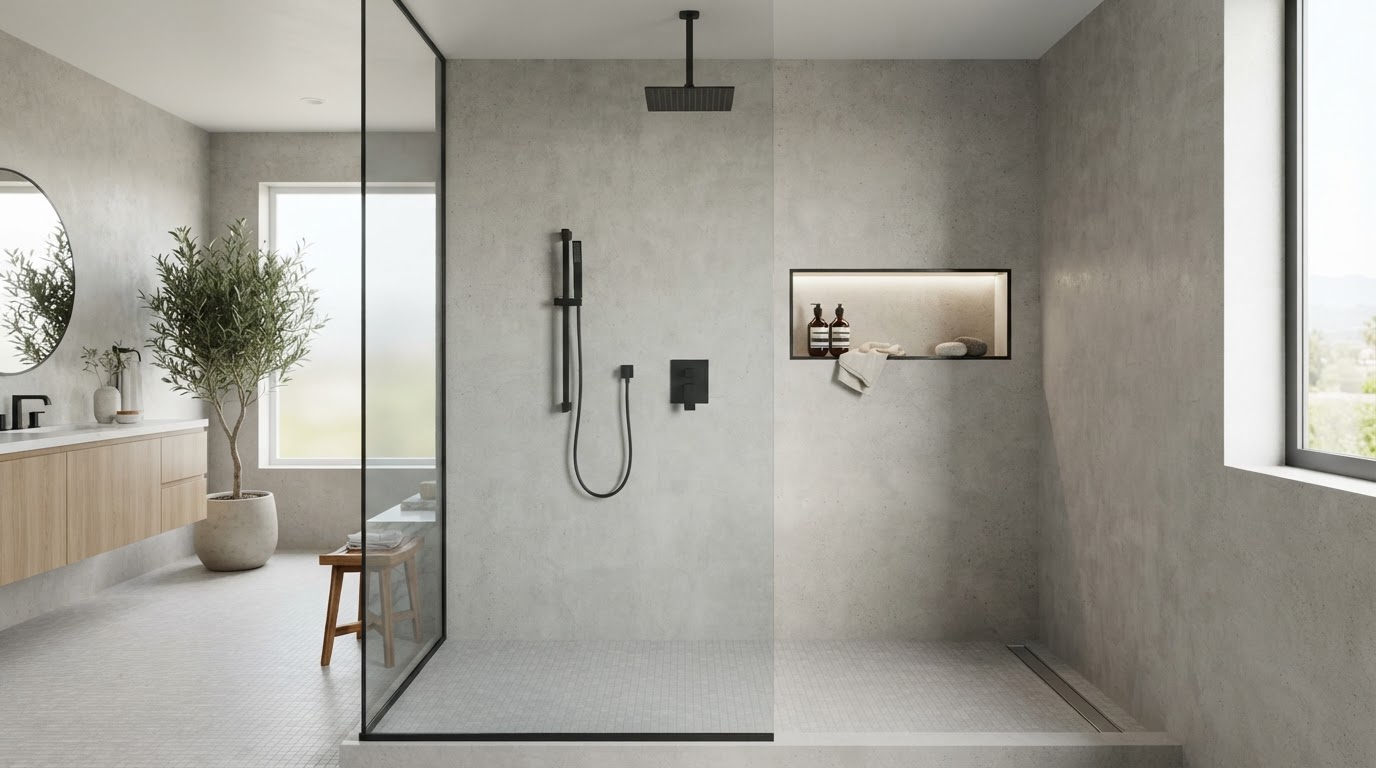
Matte black fixtures create dramatic contrast against light tile and stone—coordinate every visible finish for a cohesive look.
Common Shower System Mistakes
Mistake 1: Choosing Fixtures After Construction Starts
This can result in plumbing conflicts. Better approach: Select major fixtures during the design phase.
Mistake 2: Buying Fixtures Before Checking the Valve
Not every trim kit works with every rough-in valve. Better approach: Confirm compatibility between the trim, valve, diverter and outlets.
Mistake 3: Assuming Every Outlet Can Run Simultaneously
Multiple outlets may require specific plumbing and control configurations. Better approach: Decide which functions should operate independently and which together.
Mistake 4: Ignoring Water Pressure
A beautiful multi-outlet system can perform poorly if the home's supply cannot support it. Better approach: Have the plumber evaluate the system before finalizing fixtures.
Mistake 5: Forgetting the Shower Niche
The niche may end up competing with controls, body sprays or framing. Better approach: Include every wall component in the shower elevation.
Mistake 6: Installing Body Jets Without Considering the Bench
A seated user and standing user need different spray patterns. Better approach: Design body sprays around actual use.
Mistake 7: Treating Waterproofing as an Afterthought
Every shower penetration needs to be properly integrated into the waterproofing system. Better approach: Use a complete waterproofing system and follow manufacturer requirements.
Mistake 8: Choosing Style Over Maintenance
Some highly detailed shower systems have more components to clean and maintain. Better approach: Balance luxury features with long-term practicality.
2026 Shower System Design Ideas
1. Large Rain Shower + Handheld
One of the most versatile configurations, combining the spa-like appearance of a rain shower with the practical flexibility of a handheld.
2. Ceiling Rain Shower + Linear Drain
A minimalist combination that works particularly well with large-format tile, frameless glass, curbless showers, and floating benches.
3. Matte Black Shower System
Matte black fixtures create dramatic contrast against white tile, warm wood, light stone, or concrete-look porcelain.
4. Brushed Metal Fixtures
Brushed finishes provide a softer alternative to high-contrast black. Popular choices include brushed nickel, brushed brass, and brushed stainless. Confirm all visible components use compatible finishes.
5. Concealed Shower Controls
Minimalist designs can hide much of the mechanical hardware while keeping the controls accessible, creating a cleaner wall elevation.
6. Rain Shower + Handheld + Bench
For a primary bathroom, this combination prioritizes both comfort and practicality—sitting, shaving, bathing, accessibility, and temporary storage.
7. Large-Format Tile + Minimal Fixtures
Large-format tile reduces visual interruptions while a minimalist shower system keeps the space visually clean. Pairs well with contemporary Southern California design.
Should You Install Body Jets?
Body jets are a luxury feature—not a requirement for a good shower. They may make sense if you have a large shower, you want a spa-style experience, your plumbing can support them, you're already opening the walls, and you are comfortable with additional installation cost. They may not make sense if the shower is small, you rarely use multiple outlets, you're trying to control the remodeling budget, you prefer simple maintenance, or the existing plumbing makes installation difficult. A well-designed rain shower and handheld system can provide an excellent experience without adding multiple body sprays.
What to Ask Your Bathroom Remodeling Contractor
Can my existing plumbing support the system?
What water pressure does my home currently have?
Can the rain shower and handheld run simultaneously?
Can the body jets operate at the same time?
What valve configuration is required?
Will the plumbing need to be relocated?
Does the system require ceiling access?
Where should the controls be placed?
Where should the handheld be positioned?
How should the body jets be arranged?
How will the fixtures coordinate with the shower niche?
How will they coordinate with the bench?
What waterproofing system will be used?
What drain configuration is appropriate?
Are permits required for the planned plumbing work?
Are the selected fixtures compatible with the rough-in valves?
What happens if hidden plumbing damage is discovered?
Which components are covered by manufacturer warranties?
Shower System Planning Checklist
Final Thoughts: Design the Shower as a Complete System
A great shower isn't created by simply purchasing expensive fixtures. It comes from coordinating the entire system. The showerhead, handheld, body sprays, valves, plumbing, waterproofing, tile, niche, bench, drain and glass enclosure all need to work together. For a bathroom remodel in Orange County or Los Angeles, this is especially important when changing the shower layout or adding multiple water outlets.
The most effective approach is to plan the shower during the design phase—not after construction has already started. If you're considering a bathroom remodel, start by defining how you actually want to use the shower. Simple and practical? Choose a quality showerhead and handheld. Spa-inspired? Consider a rain shower with a handheld. Luxury and highly customized? Explore a rain shower, handheld and body-spray configuration. Then have the plumbing, waterproofing and layout designed around those choices. A well-planned shower should look beautiful, perform consistently and remain practical for years. Ready to get started? Contact Venguard Construction to discuss your project.
Related Bathroom Remodeling Resources
Frequently Asked Questions
What is the best shower system for a bathroom remodel?+
The best system depends on the shower size, plumbing capacity, budget and how you use the bathroom. A rain shower with a handheld is a practical combination for many primary bathrooms, while larger showers may accommodate body sprays and additional outlets.
Is a rain shower better than a handheld shower?+
They serve different purposes. A rain shower provides broad overhead coverage, while a handheld provides flexibility and directional control. Many homeowners choose both.
Are body jets worth it?+
Body jets can add a spa-like experience, but they also increase plumbing complexity and cost. They make the most sense when the shower is large enough and the homeowner will actually use them.
Can I add a handheld shower to my existing shower?+
Often, yes. However, compatibility with the existing valve and plumbing should be confirmed before purchasing the fixture.
Can a rain shower and handheld run at the same time?+
It depends on the valve, diverter, plumbing configuration, fixture flow requirements and applicable code requirements. Your contractor or plumber should confirm this before installation.
Do rain shower heads use more water?+
Not necessarily. Flow depends on the specific fixture. Current products are available with different flow rates, including WaterSense-labeled models.
Should I install a ceiling-mounted rain shower?+
A ceiling-mounted rain shower can create a clean, luxurious appearance, but it requires the plumbing to reach the ceiling location. A wall-mounted rain shower can be easier to incorporate into some remodeling projects.
How much does a shower system cost?+
The fixture package itself can range widely. The total installed cost depends on plumbing, waterproofing, tile, glass, labor, valves and other remodeling work. As a 2026 national benchmark, Angi reports most new shower installation projects at approximately $4,449–$12,373, while Los Angeles shower remodel data averages about $7,952.
Should I choose the shower fixtures before tile?+
Yes. Major fixtures should ideally be selected before finalizing the plumbing and wall layout. This allows the contractor to coordinate rough-ins, controls, niches, benches and tile elevations.
What is the most practical luxury shower configuration?+
For many homeowners, a rain shower plus handheld provides a balance between luxury, flexibility and relatively manageable complexity. Larger bathrooms can support more elaborate configurations when the plumbing and budget justify them.