When homeowners remodel a bathroom, most of the attention goes toward the things they can see. Tile. Glass. Vanities. Lighting. Countertops. Showerheads. But behind the finished shower wall is one of the most important parts of the entire system: the shower valve and control system.
The valve determines how hot and cold water are mixed, how water flow is controlled, and—depending on the system—how the homeowner switches between a rain shower, handheld shower, body sprays and other outlets. Choosing the wrong valve configuration can create problems long after the beautiful tile has been installed. That's why shower controls should be selected before plumbing rough-in and before the walls are closed.
This guide explains the different types of shower valves and controls, including thermostatic valves, pressure-balancing valves, diverters, volume controls and digital shower systems. It also explains how they work together, what homeowners should consider during a remodel, and what can affect installation costs in Orange County and Los Angeles.
What Is a Shower Valve?
A shower valve is the plumbing component installed behind the wall that controls water entering the shower. Depending on the valve type and configuration, it can control water temperature, water volume, water pressure balance, which shower outlet receives water, and multiple shower functions. The visible handle or trim is only the decorative and user-facing portion of the system. The actual valve is located behind the finished wall.
This distinction is important because the trim and the valve are not necessarily the same component. A homeowner might choose a beautiful brushed brass shower trim, for example, but that trim must be compatible with the rough-in valve installed behind the wall.
Why Shower Valve Selection Matters
A shower valve isn't something you want to choose after the tile has already been installed. Changing the valve later can require opening the finished wall, removing tile, repairing waterproofing, reworking plumbing, replacing trim, and reinstalling tile.
During a full bathroom remodel, the plumbing is already accessible. That makes the remodeling stage the ideal time to determine whether the shower will use a pressure-balancing valve, a thermostatic valve, a diverter, separate volume controls, multiple valves, or a digital control system. For a broader overview, see our shower system guide.
The Main Types of Shower Controls
The most common systems fall into several categories. These components can sometimes be combined. For example, a luxury shower might use a thermostatic valve plus a volume control plus a diverter to manage a rain shower, handheld, and body sprays. The exact configuration depends on the manufacturer's system.
Pressure-balancing valves
Thermostatic valves
Diverter valves
Volume controls
Transfer valves
Digital shower controls
Pressure-Balancing Shower Valves
A pressure-balancing valve is designed to help maintain a relatively stable water temperature when the pressure of the hot or cold water supply changes. For example, imagine someone turns on a toilet or sink elsewhere in the house. That can change the pressure available to the shower. A pressure-balancing valve responds to the pressure difference between hot and cold water and adjusts the mixture to reduce sudden temperature changes. This is one reason pressure-balancing valves are widely used in residential showers.
How a Pressure-Balancing Valve Works
The valve monitors the relationship between hot and cold water pressure. If cold-water pressure suddenly drops, the valve can reduce the amount of hot water entering the shower. Likewise, if hot-water pressure changes, the valve responds accordingly. The goal isn't to maintain a specific temperature automatically. Instead, the valve helps prevent dramatic temperature fluctuations caused by pressure changes.
Advantages of Pressure-Balancing Valves
- ✓Familiar to plumbers
- ✓Widely available
- ✓Relatively straightforward
- ✓Suitable for many standard showers
- ✓Available in many trim styles
Often appropriate for guest bathrooms, standard shower remodels, simple walk-in showers, and single-outlet shower systems.
Limitations of Pressure-Balancing Valves
A pressure-balancing valve doesn't necessarily provide the same level of temperature precision as a thermostatic system. It also doesn't automatically give you independent control of every shower function. If you want a rain shower plus handheld plus body sprays, you may need additional components such as a diverter or separate controls.
What Is a Thermostatic Shower Valve?
A thermostatic valve is designed to regulate water temperature more precisely. Instead of simply responding to pressure changes, a thermostatic system uses a temperature-sensing mechanism to regulate the mixture of hot and cold water. This allows the user to set a preferred temperature while another control can manage the water volume or shower function, depending on the system.
Thermostatic vs. Pressure-Balancing
The easiest way to understand the difference: pressure-balancing responds primarily to pressure changes, while thermostatic regulates temperature more directly. The appropriate choice depends on the shower design, plumbing configuration and homeowner's preferences.
| Feature | Pressure-Balancing | Thermostatic |
|---|---|---|
| Temperature regulation | Good | More precise |
| Responds to pressure changes | Yes | Yes, with temperature regulation |
| Separate temperature control | Usually no | Yes |
| Independent volume control | Depends on system | Common |
| Multiple shower outlets | Possible with additional components | Well suited |
| Luxury shower applications | Good | Excellent |
| Complexity | Lower | Higher |
| Installation cost | Usually lower | Usually higher |
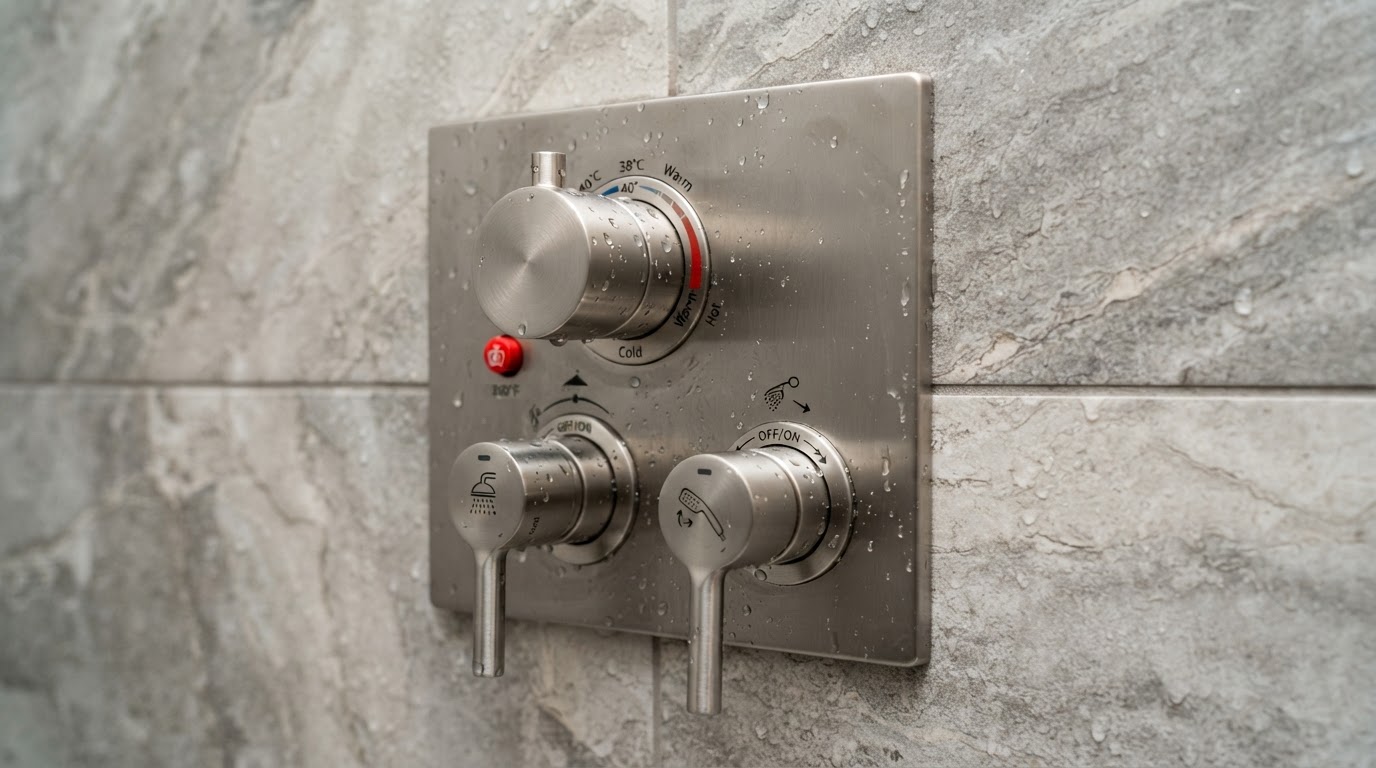
A thermostatic valve lets you set temperature independently from water volume and shower function.
Why Thermostatic Valves Are Popular in Luxury Showers
Imagine a shower with a rain shower, handheld shower, two body sprays, and a four-function diverter. A thermostatic system can make it easier to manage the shower because temperature can be established separately from the individual functions.
Temperature: 100°F
Volume: 50%
Function: Rain shower
Then the homeowner can change the function without having to completely reset the desired temperature. The exact controls vary by manufacturer.
What Is a Shower Diverter?
A diverter determines where the water goes. For example, it may allow the user to switch between a showerhead, handheld, body sprays, or tub spout. A diverter is particularly useful when one shower has multiple outlets.
Diverter vs. Transfer Valve
These terms are sometimes used differently by manufacturers, so homeowners should always check the specific product documentation. Generally, a transfer/diverter component allows water to be directed between different outlets or combinations. Depending on the system, the control may allow Outlet A, or Outlet B, or Outlet A + B. Not every diverter supports every combination. That is why the manufacturer's specifications matter.
What Is a Volume Control?
A volume control regulates how much water is flowing. This is different from a diverter. Think of the controls this way:
Temperature control
How hot?
Volume control
How much water?
Diverter
Where does the water go?
A luxury shower may use separate controls for each function. With separate controls, you can reduce the water volume without significantly changing the temperature setting. This can make a multi-function shower easier to operate and create a cleaner, more organized control layout.
What Is a Transfer Valve?
A transfer valve is commonly used in multi-function shower systems to direct water between different outlets. For example, Position 1 might be the rain shower, Position 2 the handheld, and Position 3 the body sprays. Some systems allow combinations. Others don't. The number of available positions depends on the specific valve. To see how this fits the broader fixture picture, read our shower system guide.
Single-Handle Shower Controls
A single-handle shower typically combines temperature and flow control into one user interface. This is common in standard showers, smaller bathrooms, guest bathrooms, and simple remodels. Advantages include simple operation, minimal wall hardware, easy installation, and lower complexity. For a straightforward shower, a single-handle control can be perfectly adequate.
Two-Handle Shower Controls
Two-handle systems may separate hot and cold water controls. They are more common in certain traditional or vintage-inspired designs. They can create a distinctive appearance but require more user adjustment than modern pressure-balancing or thermostatic systems.
Thermostatic Shower Controls With Separate Volume Controls
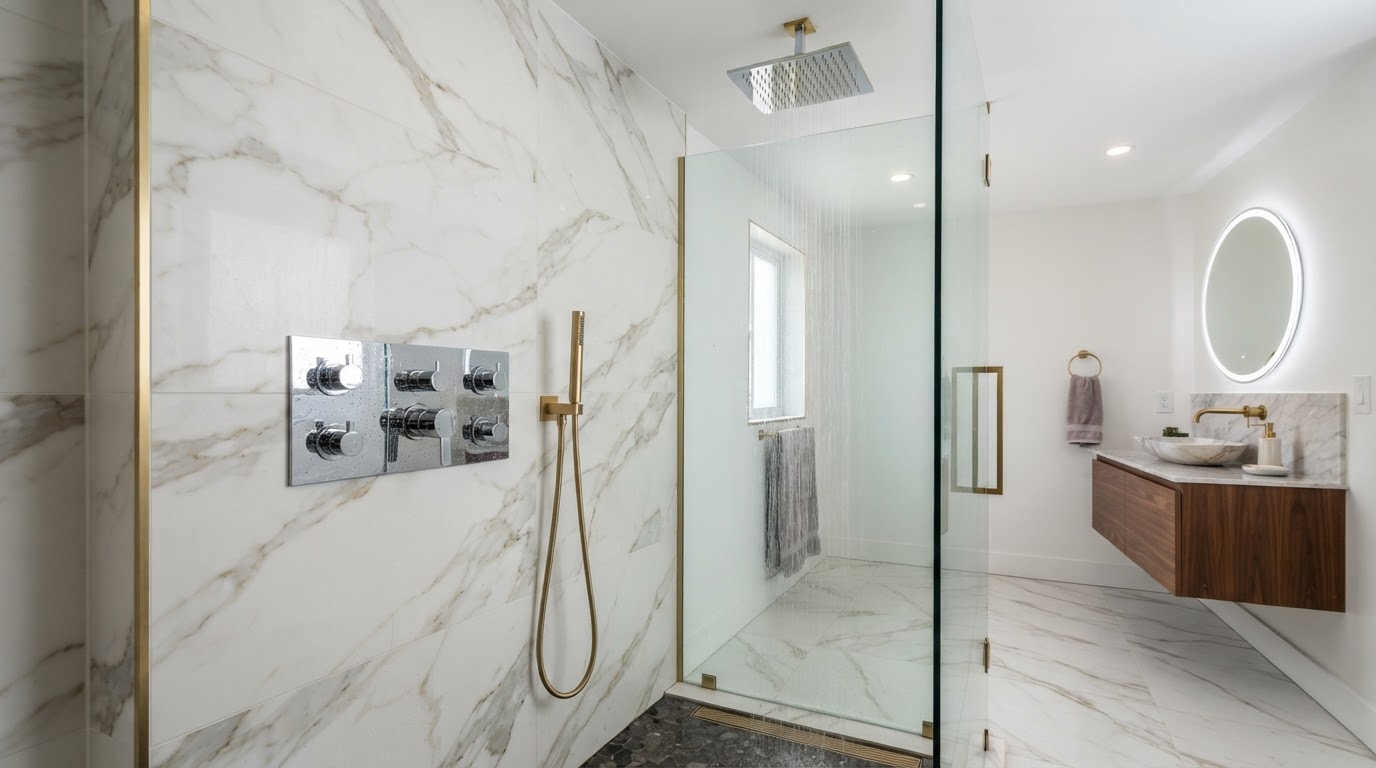
This is one of the most popular configurations for higher-end showers. The controls might look like the layout below. This creates a highly customizable shower, but it also means more planning. Every control needs to be properly positioned, compatible with the valve, accessible, and coordinated with tile, the shower door, the niche and the bench.
Temperature
Rain shower volume
Handheld volume
Body sprays
Digital Shower Controls
Digital shower systems take shower control a step further. Depending on the product, digital systems can allow users to control temperature, water flow, shower outlets, preset temperatures, multiple functions, and sometimes remote or smart-home features. Some systems use digital interfaces while still relying on conventional plumbing behind the wall. Others integrate electronic valves and control modules.
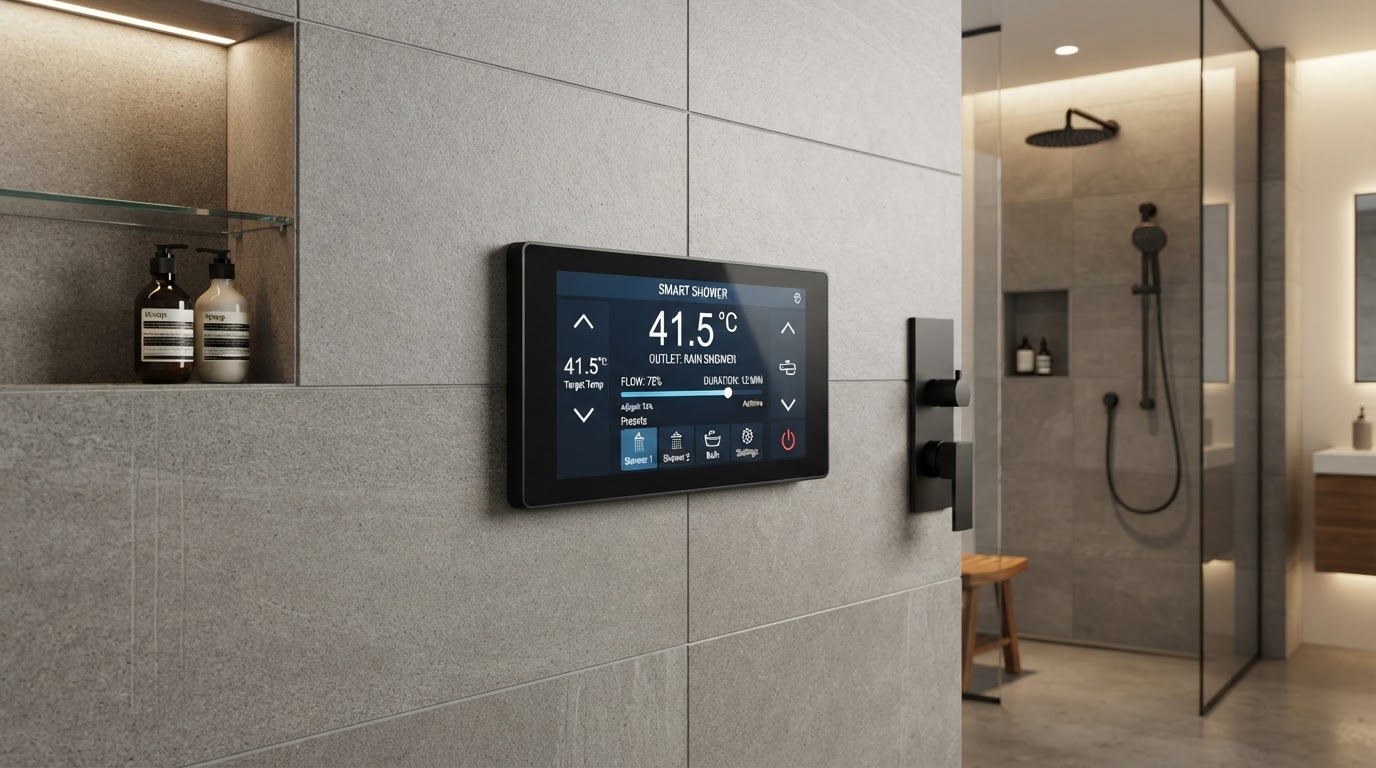
Digital shower systems offer precise presets and minimal visible hardware for a tech-forward bathroom.
Are Digital Showers Worth It?
They may make sense when you want:
- ✓Precise temperature settings
- ✓Preset shower temperatures
- ✓Multiple shower outlets
- ✓Modern technology
- ✓Minimal visible controls
- ✓Smart-home integration
They may not make sense when the priority is:
- ✓Simplicity
- ✓Easy maintenance
- ✓Lower installation complexity
- ✓Traditional styling
The best choice depends on the homeowner's priorities.
How Many Shower Controls Do You Need?
This depends on the number of functions. A basic shower with one showerhead needs one control. A rain shower plus handheld needs two controls or a compatible combination system. A rain shower plus handheld plus body sprays may need three to four control functions. The exact number depends on the selected valve architecture. This is why homeowners shouldn't simply count fixtures. Instead, determine what functions need independent control.
How Should Shower Controls Be Positioned?
Control placement should be considered during the design stage. The controls should generally be easy to reach, comfortable to operate, accessible without standing directly under the shower spray, clear of the shower door, clear of niches, and coordinated with the tile layout.
A useful design principle is to allow the user to turn the shower on without immediately standing underneath the water. This lets the homeowner test the temperature before stepping into the spray.
Coordinating Controls With the Rest of the Shower
Controls and Shower Door
The controls need to remain accessible when the door is opened or closed. Placing controls directly behind a hinged glass door may make them awkward to reach. Coordinate with door swing, glass panels, entry, bench, niche, and showerhead. See our shower door guide.
Controls and Shower Niche
Avoid a layout where controls are cramped against the niche, the niche interrupts the tile layout, plumbing conflicts with the niche, bottles obstruct the controls, or the control is difficult to reach. See our shower niche guide.
Controls and Body Jets
With a rain shower, handheld, and four body sprays, the valve system needs to be designed around the required functions. The controls should make it obvious which outlet is operating—particularly important when several controls look nearly identical.
Can You Replace an Existing Shower Valve?
Sometimes. The feasibility depends on the existing valve, new valve dimensions, existing plumbing, wall access, manufacturer compatibility, available space, existing tile, and waterproofing. If you're already performing a complete bathroom remodel, replacing an outdated valve can make sense because the wall is already being opened. If the bathroom is otherwise finished, the work can become more invasive.
When Should a Shower Valve Be Replaced?
Consider evaluating the existing valve when the shower is being completely remodeled, the valve is very old, parts are difficult to source, the temperature fluctuates, the valve leaks, the homeowner wants multiple shower outlets, the new trim isn't compatible, or the plumbing configuration is being changed. A full remodel is often the logical time to address hidden plumbing components.
Shower Valve Brands and Compatibility
One of the most important rules: do not assume shower trim is universally interchangeable. Many manufacturers design trim around specific rough-in valves. Before purchasing, confirm the rough-in valve model, trim compatibility, diverter compatibility, cartridge compatibility, number of functions, maximum flow, and installation requirements. If you're using an existing valve, verify compatibility before ordering the new trim.
Shower Valve and Water Pressure
Your home's water pressure matters. A multi-function shower can place greater demand on the water supply than a single showerhead. The plumber should consider incoming pressure, pipe size, fixture flow rates, number of simultaneous outlets, existing plumbing condition, and hot-water capacity. Do not assume that adding more outlets automatically creates a better shower.
Why More Showerheads Don't Necessarily Mean a Better Shower
A shower with one excellent rain shower and one high-quality handheld may provide a better experience than a shower with four body sprays, one oversized showerhead, and multiple poorly matched controls. The goal should be performance and usability, not simply the number of fixtures.
Water Efficiency and Shower Controls
California homeowners should pay attention to water efficiency. Showerheads and other plumbing fixtures can be subject to state and local requirements, and products may carry WaterSense certification when they meet applicable EPA efficiency and performance criteria. The EPA WaterSense program identifies labeled showerheads as using no more than 2.0 gallons per minute, while providing performance requirements intended to maintain effective spray coverage.
California requirements can differ from general national guidance, so your contractor should verify the current requirements applicable to your project and the specific fixtures being installed.
How Much Do Shower Valves and Controls Cost?
There is no single installed price because shower-control costs depend on the system. A basic pressure-balancing valve with standard trim may be relatively inexpensive. A high-end thermostatic system with multiple volume controls, a diverter, rain shower, handheld, and body sprays can cost considerably more. The total project cost also includes plumbing labor, wall access, valve installation, waterproofing, tile repair, fixture installation, and permit and inspection requirements where applicable.
For a complete shower remodel, Angi's 2026 cost data puts typical shower installation projects in a broad national range of approximately $4,449 to $12,373, illustrating how widely costs can vary depending on scope and materials. Los Angeles projects can also vary significantly based on the existing bathroom, labor, materials and scope. For local context, see our walk-in shower remodel cost guide.
What Makes Shower-Control Installation More Expensive?
1. Multiple valves
Every additional valve or control adds components and labor.
2. Additional outlets
Body sprays and multiple showerheads increase plumbing complexity.
3. Moving plumbing
Relocating a valve can require additional demolition and wall work.
4. Ceiling-mounted fixtures
A ceiling rain shower can require additional access.
5. High-end finishes
Premium finishes can increase fixture costs.
6. Digital systems
Electronic components can increase both material and installation costs.
7. Existing-condition problems
Old plumbing, corrosion, leaks or damaged framing can increase the scope.
Shower Valve Installation During a Bathroom Remodel
Step 1: Design
Determine the shower functions.
Step 2: Fixture selection
Select showerheads, handhelds and controls.
Step 3: Valve selection
Choose compatible rough-in valves.
Step 4: Plumbing layout
Determine exact pipe and outlet locations.
Step 5: Rough plumbing
Install the valve and water lines.
Step 6: Inspection
Complete required plumbing inspection steps where applicable.
Step 7: Waterproofing
Install the shower waterproofing system.
Step 8: Tile
Complete wall and floor finishes.
Step 9: Trim installation
Install visible controls and fixtures.
Step 10: Testing
Verify temperature, flow, diverter operation, outlet operation, leaks, and drainage.
Common Shower-Control Mistakes
Mistake #1: Choosing the trim before the valve
The trim may not match the rough-in. Solution: Choose the complete compatible system.
Mistake #2: Adding too many shower functions
More fixtures can mean more complexity. Solution: Choose functions you'll actually use.
Mistake #3: Forgetting the diverter
Homeowners may buy multiple fixtures without planning how to switch between them. Solution: Design the control architecture first.
Mistake #4: Not checking simultaneous operation
Some systems don't support every outlet combination. Solution: Verify the manufacturer's specifications.
Mistake #5: Placing controls underneath the showerhead
This forces you to stand under cold water while turning the shower on. Solution: Position controls where they're accessible from outside the primary spray.
Mistake #6: Ignoring the tile layout
Controls can end up awkwardly positioned relative to grout lines. Solution: Coordinate plumbing and tile elevations.
Mistake #7: Forgetting maintenance access
Complex systems may require future service. Solution: Understand how cartridges and serviceable components are accessed before closing the wall.
Thermostatic vs. Pressure-Balancing: Which Should You Choose?
A pressure-balancing valve may make sense for:
- ✓Standard showers
- ✓Guest bathrooms
- ✓Simpler remodels
- ✓Single-outlet systems
- ✓Homeowners who prefer straightforward controls
A thermostatic system may make sense for:
- ✓Primary bathrooms
- ✓Multi-outlet showers
- ✓Luxury remodels
- ✓Rain shower + handheld systems
- ✓Body-spray systems
- ✓Homeowners wanting more precise temperature control
The correct decision should be based on the entire plumbing and fixture system.
Shower Control Design Ideas for 2026
1. Minimalist Control Wall
Use one thermostatic control, one diverter, concealed fixtures, and large-format tile. This keeps the wall visually clean.
2. Luxury Multi-Function Wall
Use a thermostatic temperature control, separate volume control, diverter, rain shower, handheld, and body sprays. Best suited to larger primary showers.
3. Traditional Shower
Use classic exposed trim, a pressure-balancing valve, a wall-mounted showerhead, and a handheld if desired. Works well with traditional bathroom designs.
4. Digital Shower
Use digital temperature control, preset temperatures, multiple outlets, and minimal visible hardware. Ideal for homeowners who prioritize technology.
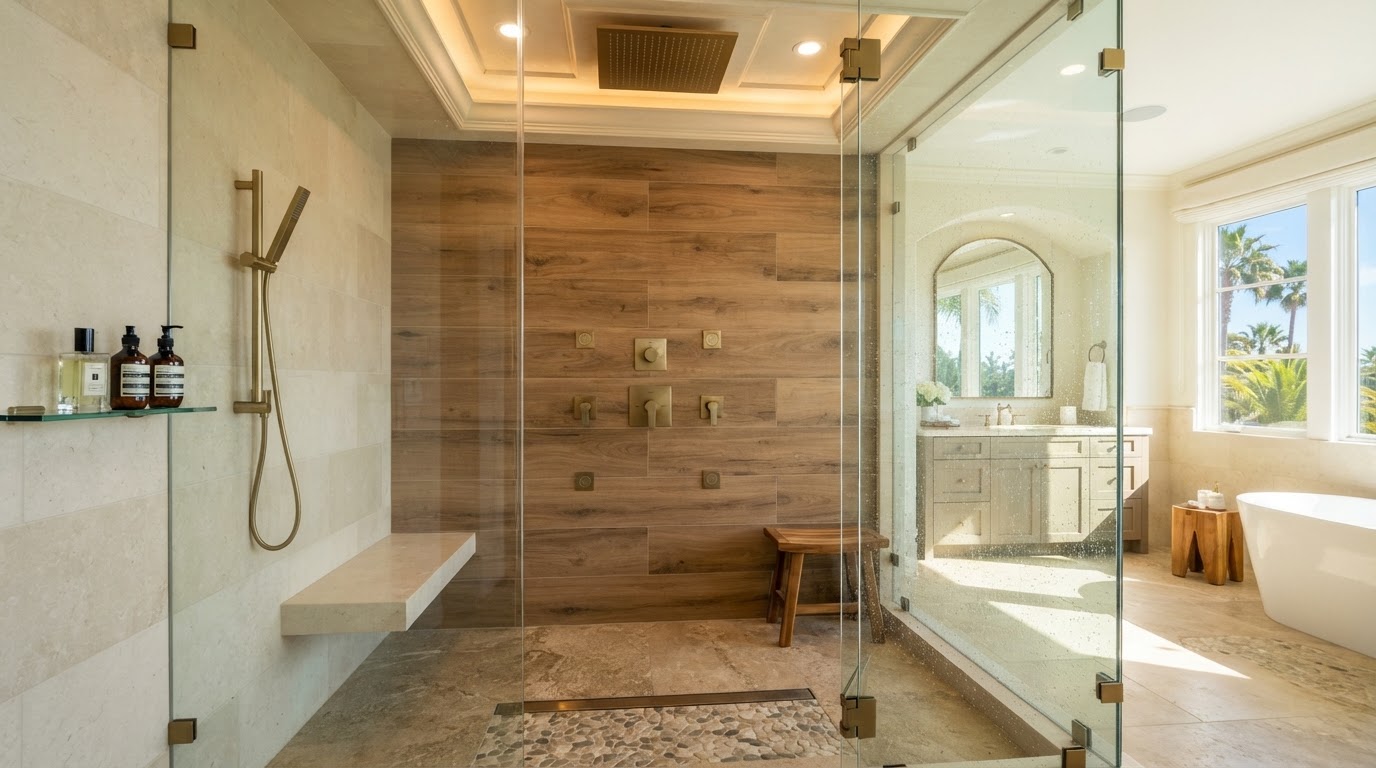
A well-planned control wall coordinates temperature, volume, and function in one clean elevation.
Shower Control Checklist Before Construction
Final Thoughts
The shower valve is one of the least visible components of a bathroom remodel—but it can have one of the biggest effects on how the finished shower operates. A beautiful rain shower, handheld and body-spray system won't perform properly if the valve configuration, water supply and plumbing aren't designed to work together.
The best approach is to start with the shower experience you want, then work backward. Ask how many outlets you want, whether you want independent temperature and volume control, whether multiple outlets should operate simultaneously, whether you need a diverter, whether a thermostatic valve would make sense, and whether your existing plumbing can support the system. Then coordinate those decisions with your shower layout, waterproofing, niche, bench, drain and tile. When everything is planned together, the result is more than an attractive shower. It's a shower system designed to work properly for years.
Planning a Bathroom Remodel in Orange County or Los Angeles?
If you're planning a bathroom renovation, Venguard Construction can help coordinate the design and construction of your shower system as part of a complete bathroom remodel. From shower layout and plumbing coordination to waterproofing, tile, glass and finishing details, the goal is to design the bathroom as one complete system rather than treating each component as an isolated upgrade. Ready to plan your bathroom remodel? Contact Venguard Construction to discuss your project, goals, preferred design and remodeling scope.
Related Bathroom Remodeling Guides
Frequently Asked Questions
What is the difference between a thermostatic and pressure-balancing shower valve?+
A pressure-balancing valve primarily responds to changes in hot and cold water pressure to reduce temperature fluctuations. A thermostatic valve is designed to regulate temperature more directly and can provide more precise temperature control.
Is a thermostatic shower valve better?+
It depends on the shower design and homeowner's needs. Thermostatic systems are particularly useful for showers with multiple functions and separate temperature/volume control, while pressure-balancing systems can be suitable for simpler showers.
What does a shower diverter do?+
A diverter directs water between different outlets, such as a showerhead, handheld shower or body sprays.
What does a shower volume control do?+
A volume control regulates how much water flows through a particular shower function.
Can one shower have multiple valves?+
Yes. A larger multi-function shower may use multiple valves and controls depending on the desired configuration.
Can I use a new shower trim with my existing valve?+
Sometimes, but compatibility must be confirmed. Many manufacturers design trim specifically for particular rough-in valves.
Should I replace my shower valve during a bathroom remodel?+
It may make sense if the existing valve is outdated, damaged, difficult to service, incompatible with the new trim or unable to support the desired shower configuration.
How many shower controls do I need?+
It depends on the number of functions and how independently you want to control them. A basic shower may need one primary control, while a multi-function shower may require several controls.
Are digital shower controls reliable?+
Digital systems can provide sophisticated control, but reliability depends on the specific product, installation and maintenance. Homeowners should evaluate manufacturer support, warranty and service requirements before selecting one.
Can I add body jets to an existing shower?+
Possibly, but body jets require additional plumbing and proper valve/diverter configuration. A professional should evaluate the existing wall, plumbing and water supply before the system is selected.